Moving From Lab Demonstrations to Real Routes
Autonomous trucking has spent more than a decade as a research and demonstration story — closed test tracks, single-route proof-of-concept runs, and press events with a truck parked beside a bank of sensors. What has changed more recently is that a growing number of autonomous trucking pilot programs now run on real, revenue-generating freight routes rather than purely controlled test environments, even though the scale of that deployment remains modest relative to the overall trucking industry. For anyone tracking how automation is reshaping transportation logistics, the pilot stage is the stage that actually matters right now — not because it proves the technology is ready for every highway everywhere, but because it shows where and how the industry is choosing to test it first, and those choices reveal a lot about what autonomous trucking can realistically do in the near term.
It's worth separating the marketing narrative from the operational reality here. Headlines about fully driverless trucks tend to generalize from a handful of specific demonstrations to the industry as a whole, which overstates how close autonomous trucking is to displacing conventional operations broadly. The more useful question for anyone in transportation logistics is not "is this technology real" — it clearly is, in a narrow and carefully managed sense — but "where specifically is it running today, under what conditions, and what does that tell us about where it might expand next." Answering that question requires looking past the press release and at the actual pilot corridors, permitting status and safety-driver requirements in place right now.
Why Sun Belt Highway Corridors Became the Preferred US Testing Ground
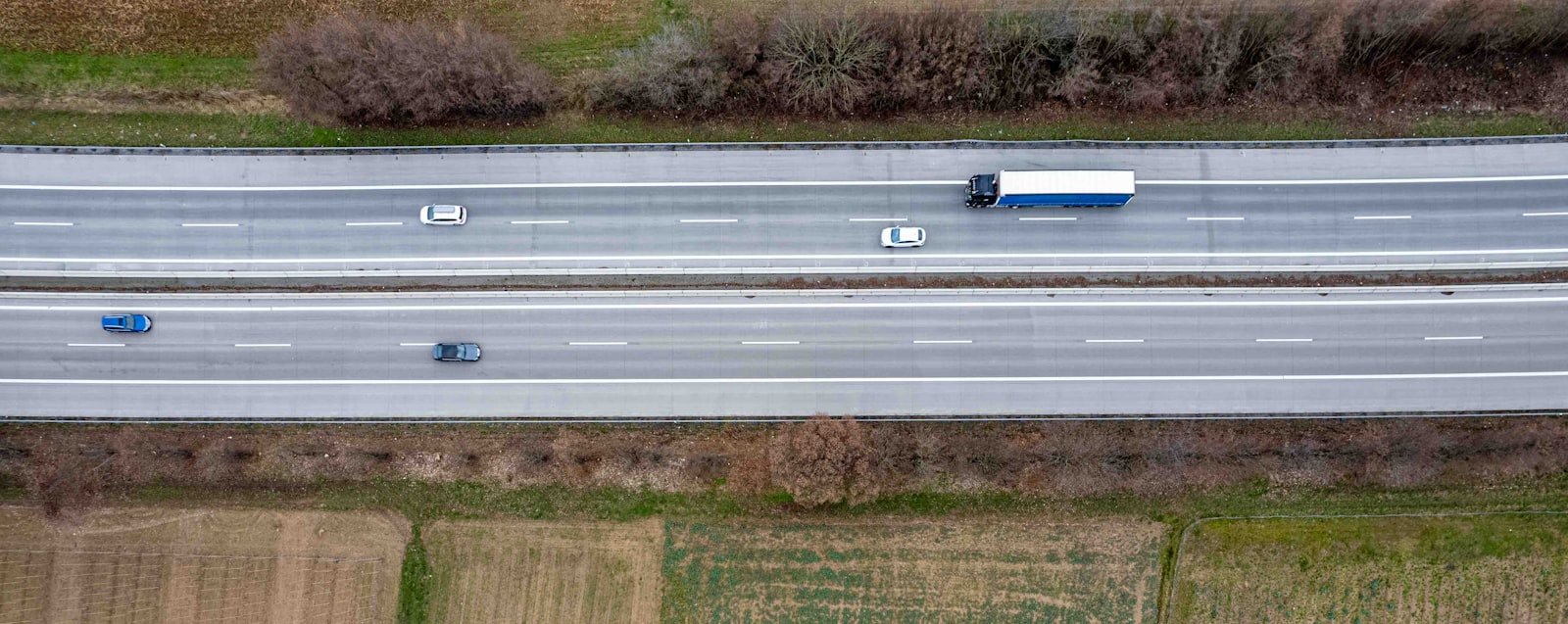
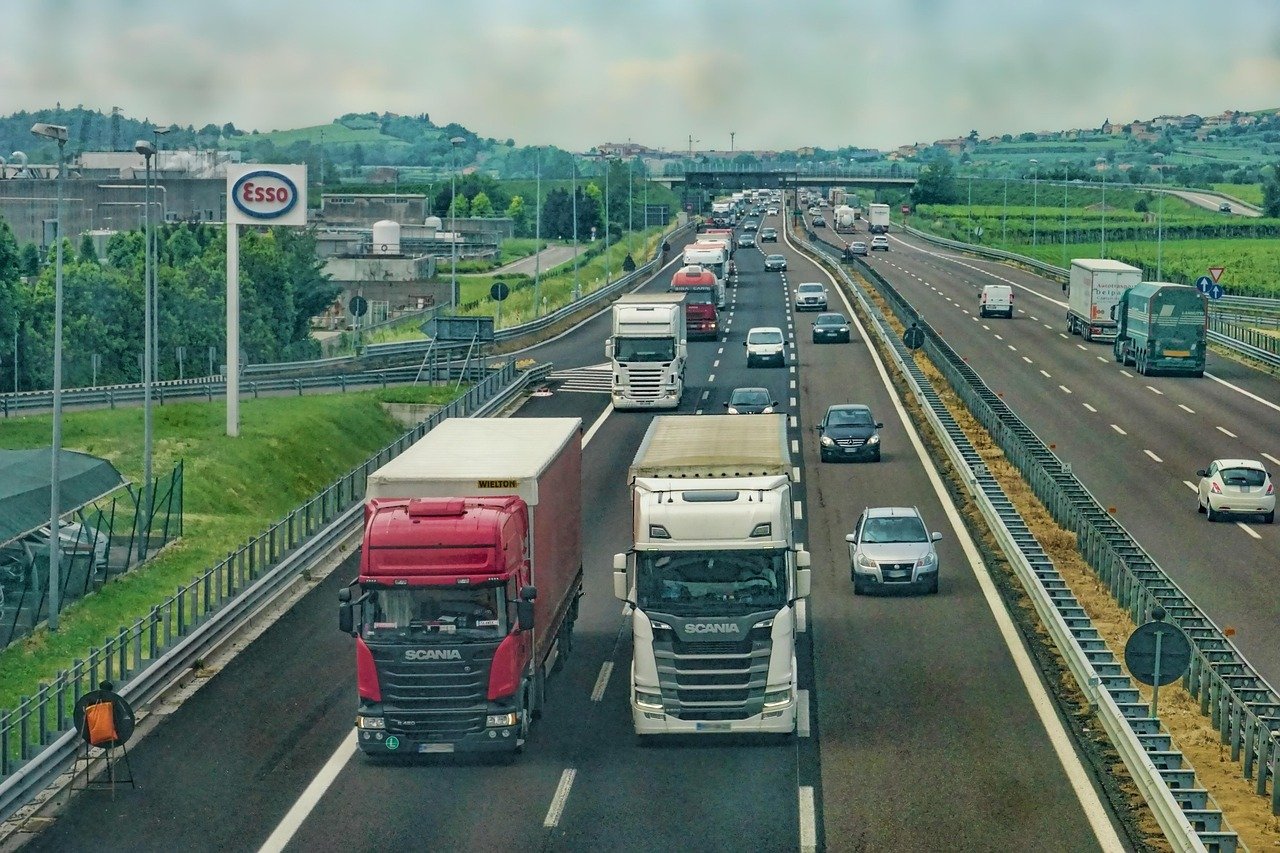
In the United States, autonomous trucking pilots have concentrated heavily on Sun Belt interstate corridors — routes across Texas and neighboring states connecting hubs such as Dallas, Houston, Phoenix and El Paso. This is not a coincidence. These corridors offer long, relatively straight interstate mileage, generally favorable weather with less snow and ice to complicate sensor performance, and some of the busiest freight lanes in the country, which gives operators a commercially meaningful route to test on rather than a token demonstration lane. Several autonomous trucking developers have built out mapped, validated "lanes" along these specific corridors, running repeated freight hauls with safety drivers aboard while gradually expanding the portion of each trip handled without human intervention. A small number of operators have begun running limited driverless operations — without a safety driver physically in the cab — on specific, tightly defined segments of these corridors under close regulatory and operational oversight, representing the furthest point current deployment has reached in that market.
Port Drayage: A Different and Arguably More Practical Testing Ground
Outside the long-haul highway story, a quieter but arguably more commercially advanced autonomous trucking application has been developing in port drayage — the short, repetitive movement of containers between a port terminal and a nearby rail yard, warehouse or logistics park. China's major container gateways have seen pilot deployments of autonomous drayage trucks operating within port terminal areas and on short approach roads, where routes are fixed, speeds are lower, and much of the operating environment is private or semi-private rather than open public highway. This matters because it sidesteps many of the hardest open-road problems — unpredictable merging traffic, varied weather, unmapped detours — while still delivering real operational value: ports run drayage moves around the clock, and even partial automation of that repetitive task can meaningfully change terminal throughput economics over time.
Comparing the Two Dominant Pilot Models
| Factor | Long-Haul Highway Corridors (US Sun Belt) | Port Drayage Routes (China & other gateways) |
|---|---|---|
| Typical route length | Hundreds of highway miles | A few kilometers, repeated continuously |
| Road environment | Open public interstate highway | Terminal roads and controlled approach routes |
| Operating speed | Highway speed | Low speed, yard-style operation |
| Current safety driver status | Mostly present; limited driverless segments | Varies by terminal and pilot stage |
What's Actually Driving Commercial Interest
- Addressing a persistent driver shortage. Our earlier coverage of the driver shortage facing transportation logistics outlines why carriers are motivated to explore every avenue for easing capacity constraints, and autonomous trucking is one of several approaches under active industry evaluation, alongside measures covered in our piece on driver retention technology.
- Reducing hours-of-service constraints on long hauls. A truck that doesn't need mandated rest breaks can theoretically run closer to continuously on a given corridor, though current pilots remain far from that level of unsupervised operation.
- Lower long-run operating cost potential. Developers argue that at scale, removing the driver from routine highway segments reduces a major line-item cost, though the pilots running today are still cost centers for most operators, not profit centers.
- Port and terminal throughput gains. For drayage specifically, continuous, fatigue-free operation of short repetitive moves is attractive to terminal operators managing around-the-clock container flow.
- Data generated by existing fleets. Conventional trucking fleets already running modern telematics and camera-based driver-assistance systems are inadvertently building some of the real-world driving data that autonomous trucking developers rely on to validate their systems against actual highway conditions, rather than simulation alone.
Why the Technology Hasn't Scaled Past Pilots Yet
The honest state of autonomous trucking in 2026 is that it remains a pilot-stage technology outside a small number of narrow, carefully chosen corridors. Regulatory frameworks for fully driverless commercial trucking are still being developed in most jurisdictions, insurance and liability questions remain partially unresolved for genuinely unsupervised operation, and the sensor and software stack still requires extensive validation data before expanding to new, unmapped routes. Weather remains a real constraint too — heavy rain, snow and fog all degrade sensor performance in ways that favor the climate-stable corridors where most pilots currently run, which is exactly why Sun Belt highways and controlled port roads have become the default testing ground rather than, say, mountain passes or routes with frequent severe weather.
How Regulators Are Approaching Validation
Regulatory treatment of autonomous trucking pilot programs varies considerably by jurisdiction, and that variation is itself one of the reasons deployment has clustered where it has. The U.S. National Highway Traffic Safety Administration maintains the federal framework automated driving system developers operate under in the United States, while individual states layer their own permitting requirements on top for on-road testing and deployment. US states running active pilots have generally built permitting frameworks around demonstrated safety-case data accumulated over millions of supervised miles before any driverless segment is approved, with regulators requiring operators to document how the system handles edge cases such as construction zones, emergency vehicles and sudden lane closures before easing safety-driver requirements. In China, autonomous vehicle trials — including freight applications — operate under a permit-based testing regime where local transport authorities designate specific approved roads and zones for trial operation, which is part of why port drayage pilots tend to run inside clearly bounded terminal areas rather than across the wider public road network. Neither regulatory model has yet produced a framework for nationwide, unrestricted driverless trucking, and most industry observers expect that to remain the case for a considerable while longer, with expansion continuing corridor-by-corridor rather than all at once.
The Economic Case Still Has to Prove Itself at Scale
Even on the most advanced pilot corridors, the economics of autonomous trucking are not yet unambiguously better than conventional driven operations once the full cost of sensor hardware, mapping, remote monitoring infrastructure and redundant safety systems is accounted for. Proponents argue the economics improve meaningfully once a fleet scales past a certain size and the upfront technology investment is spread across far more miles driven, but no operator has yet demonstrated that at a scale comparable to a major conventional carrier's network. This is part of why the current generation of pilots looks less like a race to replace drivers broadly and more like a series of narrow, carefully bounded experiments designed to build the operational and safety data needed before any larger capital commitment is justified. For an industry that plans in multi-year contracts and fixed capacity commitments, that cautious, incremental pace is a feature of responsible deployment, not a sign the technology has stalled.
What This Means for Freight Planning Today
For shippers and forwarders planning freight movements now, autonomous trucking pilot programs are not yet a routing option to factor into day-to-day planning — the vast majority of freight, including virtually all cross-border and long-haul international cargo, continues to move with human drivers, and will for the foreseeable future. What's worth tracking is the trajectory: pilot corridors expanding, safety-driver requirements loosening on specific validated segments, and port drayage automation maturing in parallel with broader truck platooning and highway automation technology. These developments may eventually influence capacity and cost structures on specific lanes, and a forwarder keeping a close eye on where the technology is actually being deployed — rather than where press coverage suggests it is — is better positioned to adapt sourcing and routing decisions as the picture evolves.
How RR Brothers and Logistics Can Help
RR Brothers and Logistics tracks road transportation logistics technology developments, including autonomous trucking pilots, as part of how we plan routing and carrier selection for clients moving freight by road freight. While most of today's shipments still rely on conventional driven trucking, understanding where the industry's capacity and cost structure may shift next helps our team give clients realistic, forward-looking advice rather than relying on outdated assumptions about the technology.
Frequently Asked Questions
In a limited number of specific pilot corridors, primarily in the Sun Belt region of the United States, select autonomous trucking operators have begun running without a human safety driver in the cab under close operational oversight. The large majority of pilot programs globally still run with a trained safety driver on board as the technology continues validation.
Pilot activity is concentrated on specific, carefully chosen corridors rather than general road networks — notably Sun Belt interstate corridors in the southern United States with favorable weather and mapped routes, and short, controlled port drayage routes in parts of China and other major container gateways, where trucks move repeatedly between a terminal and a nearby logistics park.
Port drayage routes are attractive testing ground because they are short, repetitive, and run largely on private or tightly controlled roads rather than open public highways, which reduces the range of scenarios the system needs to handle compared with long-haul interstate driving.
No. Current deployment remains limited to specific pilot corridors and controlled routes rather than the broad long-haul network, so the technology has not yet had a measurable effect on the industry-wide driver shortage, though it is one of several factors the logistics industry is watching as a potential partial response over time.