China+1 Is an Addition, Not an Exit
"China+1" has become one of the most widely used shorthand terms in global sourcing strategy, and it's worth being precise about what it actually means, because it's routinely confused with sourcing diversification in general. China+1 specifically describes a business adding a second manufacturing base alongside its existing China production — not replacing China, and not treating the move as a gradual exit. The "+1" is deliberate: one additional, carefully chosen location, most commonly Vietnam, India or Mexico depending on the buyer's end market and product category, run in parallel with continued China manufacturing rather than instead of it. For transportation logistics teams, that distinction matters enormously, because it means planning for two simultaneous origins with two different infrastructure profiles, rather than a clean handover from one country to another.
Why Businesses Keep China in the Mix
The reasons companies keep a China+1 structure rather than moving to a single alternative are largely practical. China's manufacturing base offers a depth of supplier networks, component availability and production scale that is genuinely difficult to replicate quickly anywhere else, particularly for complex electronics, machinery and mid-to-high complexity manufactured goods. Port infrastructure at hubs like Shanghai, Shenzhen and Ningbo remains some of the most efficient in the world, and the sheer density of sub-suppliers clustered around Chinese manufacturing regions means a factory there can often source components locally in ways a newer manufacturing base cannot yet match. China+1 lets a business capture the concentration-risk benefits of diversification without giving up those advantages entirely — hedging against disruption on one origin while still running the bulk of production wherever it remains most efficient.
China+1 vs. General Multi-Origin Sourcing
Our companion article on multi-origin sourcing beyond China covers the broader diversification trend, and China+1 sits as a specific, widely recognized version of it. Where multi-origin sourcing can mean spreading production across three, four or more countries, China+1 explicitly frames China as the anchor and adds exactly one deliberately chosen secondary base — a distinction that matters because it changes the transportation logistics planning problem from "manage many origins" to "manage two origins well, in a coordinated way." Businesses adopting China+1 are typically not trying to build a fully redundant global network; they're trying to solve a specific concentration-risk problem with the smallest operational complexity increase possible.
The Real Transportation Logistics Complexity: Split Shipments
The single biggest operational headache a China+1 strategy introduces is the split shipment problem. When a purchase order is fulfilled partly from a Chinese supplier and partly from a Vietnamese or Indian one, those two portions typically ship from different ports, on different carrier schedules, with different transit times — and then need to arrive at a destination warehouse close enough together to be usable as a complete order. Get the timing wrong and a business ends up holding partial inventory it can't ship to customers, or paying for expedited freight on whichever origin is running behind to catch up with the other. Coordinating this well requires a forwarder who can track both legs of the shipment simultaneously and proactively flag when one origin's schedule is drifting out of sync with the other, rather than treating each shipment as an isolated booking.
Two Sets of Customs and Compliance Requirements, Run in Parallel
- Separate certificates of origin — goods from China and goods from a China+1 location require distinct country-of-origin documentation, and mixing them up on a single consolidated shipment can create real customs delays at destination.
- Different tariff treatment — a China+1 origin may qualify for preferential duty rates under a trade agreement that doesn't apply to the China-origin portion of the same order, so landed cost has to be calculated per origin rather than blended.
- Different HS classification review cycles — even identical products can face different classification scrutiny depending on origin and destination customs authority, particularly during periods of active trade policy change.
- Separate compliance and product-safety documentation — testing certificates, safety standards documentation and labeling requirements sometimes differ by origin market even for the same end product, and need to be tracked per origin rather than assumed to be interchangeable.
Consolidation Strategies That Actually Work
Shippers who run China+1 well generally use one of two consolidation approaches. The first is destination consolidation, where both origins' cargo ships independently and is combined at a bonded warehouse or distribution center near the end market, which adds a handling step but allows each origin's leg to run on its natural schedule without artificially forcing synchronization upstream. The second is staggered departure planning, where the forwarder works backward from a required delivery date and schedules each origin's departure separately to account for its typical transit time, so both portions arrive within a matching window without needing a warehouse consolidation step. Which approach fits better depends on order volume, product category and how much buffer time a business can build into its ordering cycle — a conversation worth having directly with a forwarder who has handled genuine two-origin bookings before, not just single-lane freight.
Vietnam and India as the Leading China+1 Destinations
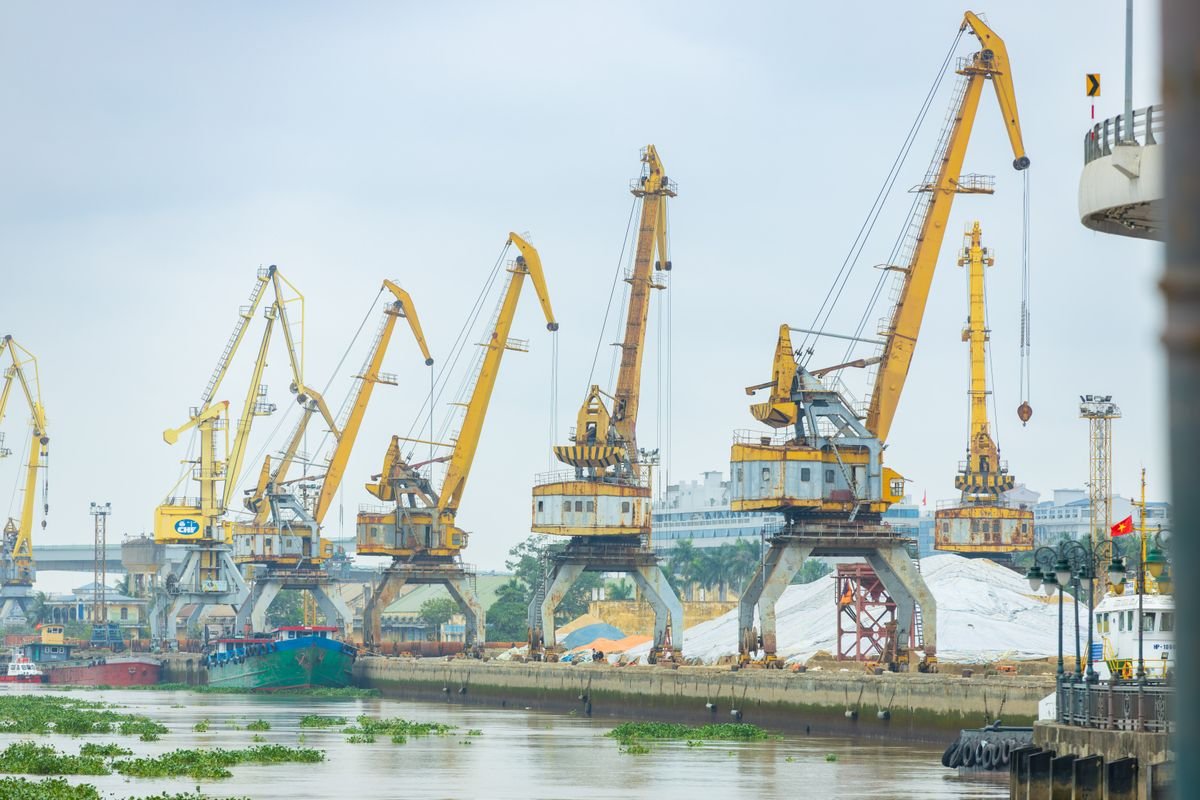
Vietnam has become the most commonly cited China+1 destination for electronics, footwear and textile manufacturing, benefiting from proximity to China's supply chains, an expanding port network at Cai Mep and Ho Chi Minh City, and years of foreign direct investment in manufacturing capacity. India has grown as a China+1 base particularly for electronics assembly and pharmaceuticals, supported by government manufacturing incentive programs and a large domestic supplier base, though port infrastructure and inland logistics maturity still vary more by region than in Vietnam's more concentrated manufacturing zones. Our related guide on China-Southeast Asia trade logistics across ASEAN covers Vietnam-specific routing and documentation considerations in more depth for businesses evaluating that particular China+1 pairing.
China+1 Origin Comparison for Transportation Logistics Planning
| Factor | China (anchor) | Typical "+1" (Vietnam/India) |
|---|---|---|
| Supplier depth | Very high, mature clusters | Growing, often still developing |
| Port infrastructure | World-leading throughput | Expanding, variable by region |
| Typical role in China+1 | Bulk of volume, complex goods | Risk-hedge volume, simpler goods |
Getting Started Without Overcomplicating the Transition
Businesses that adopt China+1 successfully tend to start smaller than they expect to end up — qualifying a secondary supplier for a subset of SKUs rather than attempting to split an entire product line on day one, and using that initial run to learn the new origin's real transit times, documentation quirks and consolidation logistics before scaling volume. The U.S. International Trade Administration has published guidance for businesses navigating exactly this kind of phased diversification, underscoring that the transportation logistics learning curve on a new origin is real and worth respecting rather than rushing. A phased approach also gives a forwarder time to build the split-shipment coordination and consolidation processes that make China+1 run smoothly at scale, rather than discovering the gaps under pressure during a large order.
How RR Brothers and Logistics Can Help
RR Brothers and Logistics has direct operational reach across China and the broader Asian manufacturing landscape that makes China+1 possible, giving us practical experience coordinating split shipments, managing parallel customs and compliance requirements, and consolidating multi-origin orders into a single, predictable delivery schedule. Whether you're just starting to qualify a secondary supplier or already running significant volume through a China+1 structure, our team can help make sure the transportation logistics side of that strategy runs as smoothly as the sourcing decision behind it.
Frequently Asked Questions
China+1 is a sourcing strategy where a business adds one or more secondary manufacturing locations — commonly Vietnam, India or Mexico — alongside its existing China production, rather than replacing China outright. The goal is reduced concentration risk while keeping China's scale, infrastructure and supplier depth for the parts of the business that still benefit from it.
They overlap but China+1 is more specific: it explicitly frames China as the anchor origin with one deliberately chosen secondary location, rather than a broader spread across several origins. Multi-origin sourcing is the wider umbrella term that China+1 sits under.
The main complications are split shipments across two origins, two separate sets of customs and compliance documentation to manage in parallel, and the challenge of consolidating partial orders from each location into a single delivery schedule without one origin's delay holding up the other.
Vietnam and India are the two most frequently cited secondary locations, largely due to established manufacturing infrastructure, growing port capacity and trade agreements that make them practical second bases for electronics, textiles and general manufacturing.