Why the Last Mile Costs So Much More Than the Rest of the Journey
A container moving from a Chinese port to a European distribution center covers thousands of kilometers at a cost per unit that, broken down per parcel, is remarkably low. The final few kilometers from a local depot to an individual customer's door routinely cost more than that entire long-haul journey on a per-parcel basis. Industry research tracing back to Capgemini's widely cited study on the last-mile delivery challenge has long put the final leg at somewhere between 40% and over half of total shipping cost, and that share has only grown as e-commerce volumes and customer delivery expectations have increased. For anyone managing transportation logistics costs end to end, this is the uncomfortable truth: the cheapest part of the journey to optimize is usually the one that's already efficient, while the most expensive part — the last mile — is also the hardest to fix, because it's inherently a one-to-one delivery problem rather than a one-to-many shipping problem. The strategies below aren't theoretical; they're the levers shippers and carriers are actively pulling in 2026 to bring that cost down without sacrificing the delivery speed and reliability customers now expect as standard.
Route Density and Delivery Consolidation
The single highest-leverage lever available to most shippers is increasing the number of successful stops a driver completes per hour, which is really a function of route density — how geographically clustered a day's deliveries are — rather than driver speed or vehicle capacity. A route with twenty tightly clustered stops in a three-kilometer radius will almost always cost less per parcel than twenty stops spread across a sprawling suburb, even if total driving distance looks similar on paper. Consolidation strategies — batching deliveries to the same building or neighborhood into a single run, holding non-urgent orders for a scheduled delivery window rather than dispatching immediately, and working with regional carriers who already have density in a specific postal code — all attack this same underlying problem. For SME shippers without the delivery volume to build density on their own, partnering with a forwarder or 3PL that aggregates multiple clients' parcels into the same local delivery network is often the fastest way to access route density that would otherwise take years to build independently.
Shifting Volume to Smart Lockers and Pickup Points
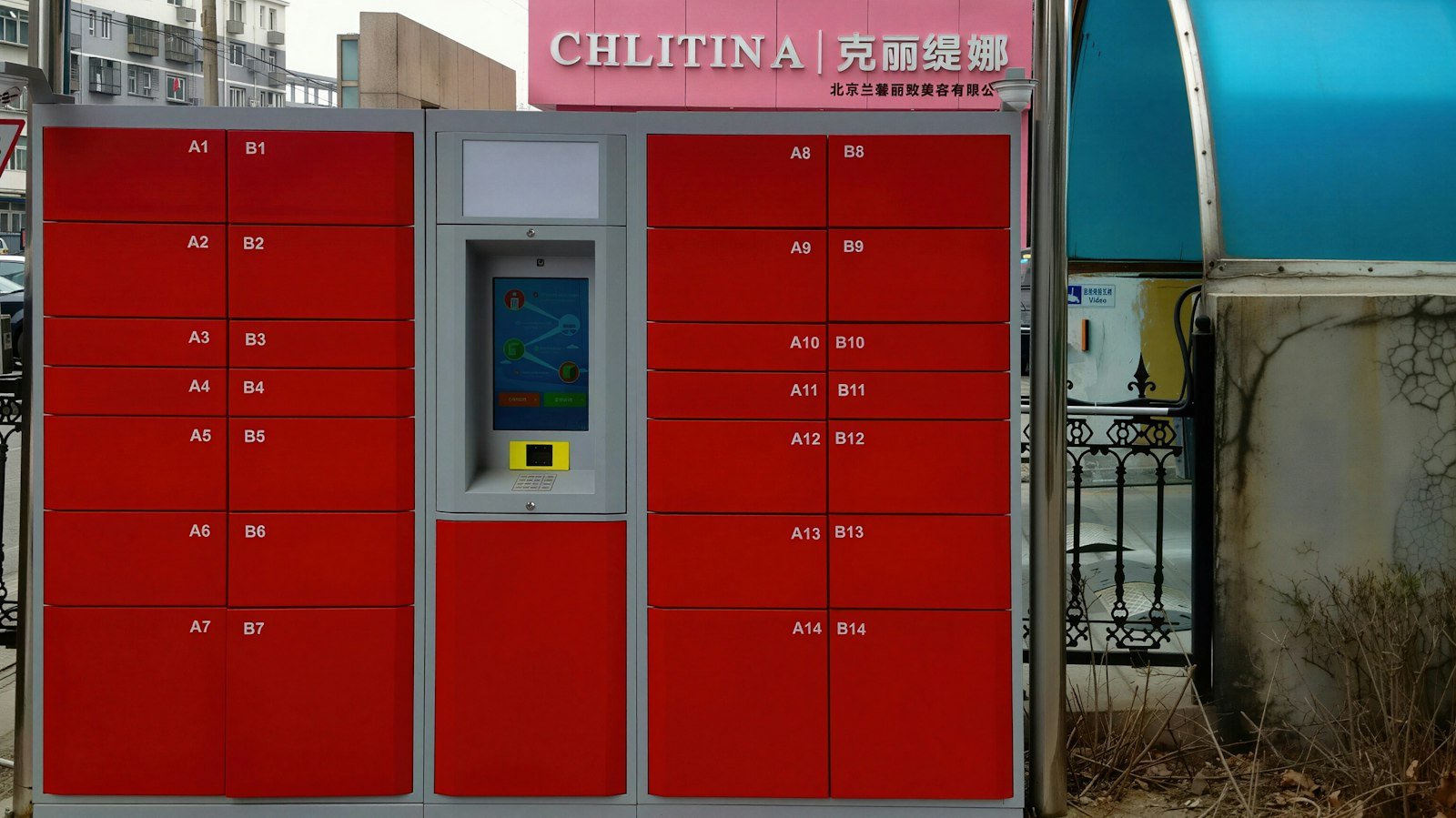
One of the most direct ways to cut last-mile cost is to avoid the individual doorstep delivery altogether for customers willing to make the trade-off. As we covered in our guide to smart lockers and parcel pickup networks, a single secure locker bank serving an apartment building or office complex lets a courier drop dozens of parcels in one stop instead of visiting each unit separately, while also eliminating the cost of failed delivery attempts and rescheduled visits that disproportionately drive up last-mile expense in dense residential buildings. The trade-off is customer convenience — not every shopper wants to walk to a locker — but offering it as a discounted or incentivized option, rather than the only option, lets a shipper capture meaningful savings from the portion of customers who don't mind the small extra step.
Cargo Bikes and Micro-Hubs in Dense Urban Zones
In city centers where congestion, parking restrictions and expanding low-emission zones make van-based delivery increasingly expensive and slow, cargo bikes dispatched from small urban micro-hubs are becoming a genuine cost lever rather than just a sustainability talking point. Our piece on cargo bikes and low-emission zones in urban delivery goes into the mechanics of this shift in more detail, but the cost logic is straightforward: a cargo bike making short-radius drops from a micro-hub avoids the parking fines, congestion charges and slow average speeds that increasingly erode a van's cost advantage in the densest parts of major cities. This isn't a fit for every market or every parcel type, but for last-mile operations concentrated in a handful of dense urban centers, it's increasingly one of the more effective levers available.
Zone Skipping and Carrier Selection
Before a parcel ever reaches a local courier, a surprising amount of last-mile cost is actually determined by how it got to the local depot in the first place. Zone skipping — consolidating parcels bound for a distant region into bulk linehaul shipments that bypass a national carrier's full hub-and-spoke network, injecting them instead directly into a regional sortation center closer to the final delivery zone — can meaningfully cut the per-parcel cost of that last stretch by avoiding multiple unnecessary handling and sorting steps along the way. This strategy works best at volume, since it requires enough parcels bound for the same region to justify a dedicated linehaul movement, which is exactly why it tends to suit larger shippers or aggregated multi-client networks rather than a single small business shipping a handful of parcels a day. Carrier selection matters alongside this: regional and local courier networks frequently beat national integrators on cost-per-stop in their home territory, precisely because that's where their route density is strongest, even if their national footprint looks smaller on paper.
Dynamic Routing Software and Real-Time Optimization
Static, pre-planned delivery routes leave savings on the table compared with dynamic routing software that re-optimizes stop sequencing in real time as new orders come in, traffic conditions change, or a delivery fails and needs to be reattempted. Modern routing platforms can also factor in delivery windows, vehicle capacity and even driver familiarity with a specific area when sequencing a route, squeezing more successful stops out of the same number of driver-hours. For shippers running their own last-mile fleet, this is often a lower-cost, faster-to-implement optimization than any physical network change, since it works with the delivery footprint a shipper already has rather than requiring new infrastructure like lockers or micro-hubs.
Comparing the Main Cost Levers
No single strategy fits every shipper or every delivery zone, and most mature last-mile operations end up combining several of these levers rather than betting everything on one. The table below is a rough guide to where each strategy tends to deliver the most value and what it typically takes to put in place.
| Strategy | Typical cost impact | Implementation effort |
|---|---|---|
| Route density / consolidation | High | Moderate — needs volume or a partner network |
| Smart lockers / pickup points | Moderate-High in dense areas | Moderate — infrastructure and customer buy-in |
| Cargo bikes / micro-hubs | High in dense city centers only | High — new fleet and hub setup |
| Dynamic routing software | Moderate | Low — software layer on existing fleet |
Measuring What Actually Matters
A surprising number of last-mile cost optimization efforts stall out simply because the shipper is tracking the wrong metric. Total delivery cost alone hides what's actually driving spend; cost-per-successful-delivery, cost-per-stop and failed-delivery rate by zone tell a much clearer story about where money is being wasted. A zone with a low cost-per-stop but a high failure rate may actually be more expensive overall than a zone with a higher base cost but near-perfect first-attempt success, once reattempt costs are factored in. Shippers that break last-mile spend down by zone, time window and delivery type — rather than looking at a single blended average across the whole network — tend to find far more targeted and durable savings than those chasing a single aggregate number, because the fix that works in a dense city zone is rarely the same fix that works in a sparse rural one.
Common Mistakes That Erase the Savings
- Chasing delivery speed over delivery density. Promising next-day or same-day delivery everywhere, regardless of route density, often adds more cost through inefficient routing than it earns back in customer satisfaction.
- Ignoring failed-delivery rates. A missed delivery doesn't just delay a parcel — it roughly doubles the last-mile cost of that order once a reattempt is factored in, which is why address verification and delivery-window communication matter more than they're usually given credit for.
- Treating every zone the same. A cost-optimization strategy that works in a dense city center — like cargo bikes or lockers — often doesn't translate to a rural or suburban zone, and forcing a one-size-fits-all approach wastes money in both directions.
- Optimizing cost in isolation from customer experience. Cutting corners on delivery communication or driver reliability to save money can increase return rates and support costs enough to erase the last-mile savings entirely.
How RR Brothers and Logistics Can Help
Controlling last-mile cost starts well before the final delivery leg — it depends on clean customs clearance, reliable warehousing close to demand centers, and a transportation logistics plan that accounts for the full journey rather than treating the last mile as a separate problem to solve later. Through our e-commerce logistics and warehousing & distribution services, RR Brothers and Logistics helps shippers moving cargo out of China structure their supply chain so that the last mile starts from the best possible position — the right stock in the right place, cleared and ready to move, rather than compensating for delays earlier in the chain with an expensive rush at the end. Get in touch with our team to talk through your specific last-mile cost challenges and how the rest of your supply chain can be structured to support them.
Frequently Asked Questions
The last mile involves moving a single package from a local hub to one specific address, which is far less efficient per package than moving a full truckload or container over a longer distance. Labor, fuel, failed-delivery reattempts and the sheer number of individual stops all concentrate their cost in this final, shortest leg of the journey.
There isn't one universal answer, but route density and delivery consolidation consistently deliver the largest gains for most shippers, because increasing the number of successful stops per hour of driver time improves nearly every other cost metric at the same time, from fuel per parcel to labor cost per delivery.
Yes, in dense urban or multi-unit residential settings, because a single locker drop replaces what might otherwise be several separate failed or rescheduled delivery attempts at individual doors, concentrating cost savings exactly where failed-delivery rates tend to be highest.
No. Smaller shippers and SMEs often have more to gain proportionally, since they typically lack the delivery density of a major retailer and can see outsized cost reductions from even modest improvements in routing, consolidation or carrier selection.