From Manual Yards to Software-Run Terminals
Twenty years ago, a container terminal ran on radios, forklift drivers and the judgment of yard planners tracking box locations on paper or basic spreadsheets. Today, the busiest gateways in global transportation logistics increasingly run on software that assigns every container a slot, dispatches equipment without a driver, and adjusts crane sequencing in real time based on vessel stow plans. Port automation has moved from a handful of showcase projects to a genuine competitive differentiator among the world's largest container hubs, and it is quietly reshaping how quickly cargo clears some of the busiest chokepoints in international trade. Understanding what these smart terminals actually do — and which ports have genuinely adopted them versus simply talking about it — matters for any shipper trying to predict how fast their container will move once it hits the quay.
The Core Technologies Behind an Automated Terminal
A fully automated terminal generally combines three layers of technology. The first is the terminal operating system, or TOS, the software brain that plans berth allocation, yard stacking positions and equipment dispatch across the whole facility. The second is automated stacking cranes, rail-mounted gantry cranes in the yard that stack and retrieve containers based on TOS instructions rather than a driver in a cabin. The third is a fleet of automated guided vehicles, or AGVs, that shuttle containers between the quay and the stacking yard along programmed or sensor-guided paths without a human driver on board. Increasingly, remote-controlled quay cranes complete the picture — the crane itself still needs a human in the loop for the more delicate task of landing a container precisely onto a vessel or chassis, but that operator now often sits in a climate-controlled control room rather than sixty meters above the dock, running several cranes in sequence from a bank of screens.
Real-World Examples Worth Knowing
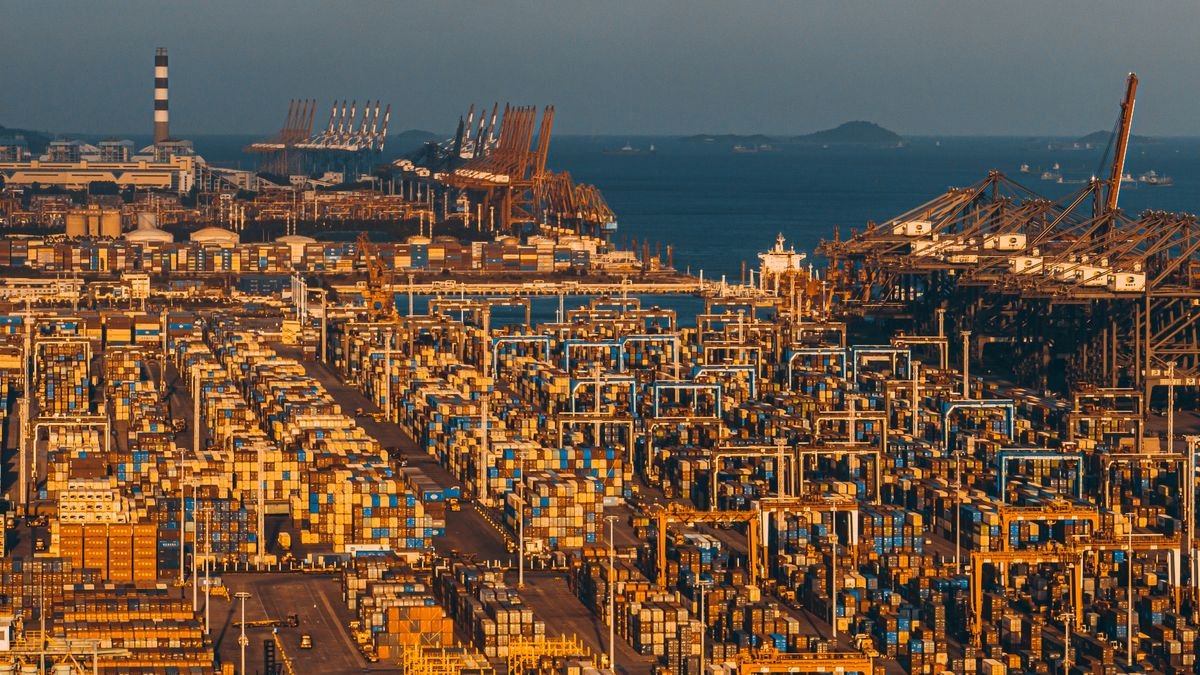
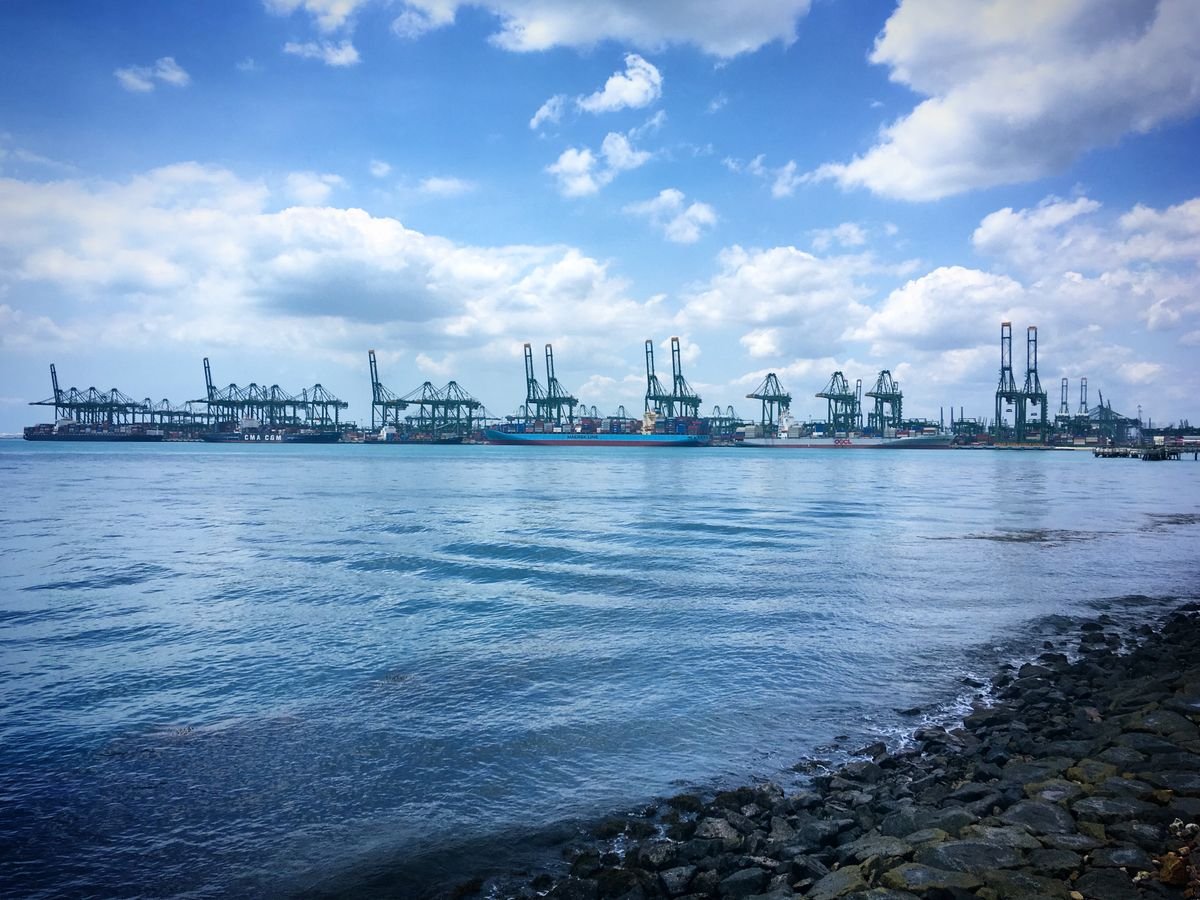
Rotterdam's Maasvlakte II development, home to the APM Terminals Maasvlakte II and Rotterdam World Gateway facilities, was among the earliest large-scale demonstrations that automated stacking cranes and AGVs could run at commercial container volumes rather than just in a pilot. In China, Qingdao's New Qianwan Container Terminal became one of Asia's first fully automated terminals and has since set widely cited productivity records for automated quay crane operations. Shanghai's Yangshan Deep-Water Port Phase IV, operated by the Shanghai International Port Group, is frequently described as the largest single automated container terminal in the world, running its yard largely without on-site labor through a combination of ASCs, AGVs and remote quay crane operation. Singapore's Tuas Port, still being built out in phases, is designed around the same automated principles at an even larger planned scale, aiming to eventually become the world's largest fully automated container port once fully commissioned. Each of these projects reflects the same underlying logic: at high enough volume, automating the repetitive, predictable parts of container handling pays for itself in throughput and consistency.
What Automation Actually Does to Vessel Turnaround Time
The commercial case for port automation ultimately comes down to two connected numbers: quay crane productivity, measured in container moves per hour, and vessel turnaround time, the total hours a ship spends occupying a berth. Automated terminals generally achieve higher and more consistent crane productivity than comparable manual operations, partly because software-directed yard moves eliminate much of the waiting time that comes from human coordination delays between crane, yard equipment and gate operations. A vessel that would once have spent an unpredictable extra day waiting on yard congestion or equipment availability can, at a well-run automated terminal, load and discharge on a tighter, more repeatable schedule. That reliability compounds across a vessel's entire rotation — a ship that turns around faster at one automated port can hold its schedule more easily at every subsequent port on its string, which is a meaningful contributor to overall transportation logistics reliability across an entire trade lane rather than just at a single gateway.
Smart Port Technology Extends Beyond the Crane Yard
Automated cranes and driverless yard vehicles get most of the attention, but smart port technology increasingly reaches well beyond the physical equipment moving containers. Modern terminals layer sensors across gates, yards and berths to track container condition, equipment location and gate throughput in real time, feeding that data back into the terminal operating system so it can replan yard moves on the fly rather than working from a static plan set hours earlier. Some of the largest hubs have also built digital twins of their own layouts — detailed virtual models that let planners simulate how a schedule change, a weather delay or a sudden surge in inbound volume will ripple through berth and yard operations before it actually happens, rather than finding out the hard way once trucks are already backed up outside the gate. Predictive analytics applied to vessel arrival patterns and historical dwell times is another piece of the same smart port technology stack, helping terminals anticipate congestion before it forms instead of only reacting after the fact. None of this replaces the physical automation described above, but it is what actually makes that automation deliver its full value — cranes and AGVs without a coordinating software layer would just be automating individual tasks without gaining the system-wide visibility that smart port technology is really about.
Automated vs. Manual Terminal Operations, Side by Side
| Factor | Manual / Semi-Automated Terminal | Fully Automated Terminal |
|---|---|---|
| Yard equipment | Driver-operated straddle carriers, RTGs | Automated stacking cranes, AGVs |
| Crane productivity consistency | Variable, shift and staffing dependent | More consistent across shifts |
| Vessel turnaround predictability | Lower | Higher |
| Upfront capital cost | Lower | Very high |
How Faster Terminals Reduce Congestion and Demurrage Risk for Shippers
The link between smart port technology and a shipper's bottom line runs through congestion. When a terminal can turn vessels around faster and more predictably, fewer ships end up queuing outside the breakwater waiting for a berth, which is one of the main mechanical causes of the kind of port congestion covered in our update on Shanghai's 2026 vessel backlogs. Less queuing means fewer missed connections at transshipment hubs, fewer containers sitting idle waiting for yard space to free up, and ultimately less exposure to demurrage and detention charges for shippers whose cargo gets caught in a backlog through no fault of their own. This is one of the more underappreciated commercial benefits of terminal automation: it's not just about a port's own throughput statistics, it's about reducing the number of days a shipper's container spends stuck in a queue waiting for capacity that a manual operation couldn't free up quickly enough.
The Limits of Automation Worth Keeping in Mind
- Capital intensity is severe — building or retrofitting a terminal around ASCs, AGVs and a modern TOS requires investment on a scale that only the highest-volume gateways can realistically justify.
- Not every layout can be automated cheaply — older terminals designed decades ago for manual equipment often need substantial civil works before automated systems can be installed, which is why automation has concentrated at newly built or purpose-redeveloped terminals like Maasvlakte II and Yangshan Phase IV rather than spreading evenly across existing infrastructure.
- Software and cybersecurity risk rises with automation — a terminal that runs on a centralized TOS becomes more exposed to the operational impact of a software outage or cyber incident than one where individual operators can keep working manually if a system goes down.
- Labor transitions require careful management — automated terminals still employ people, but in different roles such as remote crane operation and systems maintenance, and ports considering automation have had to work through workforce transition questions as part of any project.
What Gateway Port Choice Means for Shippers
For businesses moving cargo through China, the practical takeaway is that not all gateway ports offer the same level of automated efficiency, and that difference can show up in real transit predictability. Our guide to Ningbo-Zhoushan, one of the world's busiest ports, and our comparison of routing options in our China-to-Singapore shipping guide both touch on how a gateway's operational profile factors into overall transit planning. The World Bank and IHS Markit jointly publish a Container Port Performance Index that benchmarks turnaround efficiency across the world's major terminals, and it consistently shows highly automated facilities among the top performers globally. For time-sensitive or high-value transportation logistics, routing through a terminal with a strong operational track record — automated or not — is a legitimate factor to weigh alongside price when choosing a gateway, particularly for cargo where a few days of unpredictable dwell time at the terminal could matter more to a customer than a marginally cheaper freight rate.
How RR Brothers and Logistics Can Help
RR Brothers and Logistics routes ocean freight through a network of gateway ports across China and beyond, and part of that routing decision already accounts for which terminals reliably deliver faster vessel turnaround and lower congestion risk. Whether a client's priority is minimizing transit time through a highly automated hub or simply avoiding a terminal currently dealing with a backlog, our sea freight and multimodal transport teams factor real operational conditions into booking recommendations rather than defaulting to the same routing regardless of current port performance. As more of the world's major terminals adopt automation over the coming years, staying current on which gateways are genuinely delivering on that promise will keep mattering for anyone serious about transportation logistics reliability.
Frequently Asked Questions
An automated stacking crane, or ASC, is a rail-mounted gantry crane in a container yard that runs on pre-programmed or software-directed movements rather than a human operator physically driving it, stacking and retrieving containers based on instructions from the terminal operating system.
Rotterdam's Maasvlakte II terminals, Qingdao's New Qianwan Container Terminal, and Shanghai's Yangshan Deep-Water Port Phase IV are among the most cited fully automated terminals, using automated stacking cranes, automated guided vehicles and remote-controlled quay cranes with minimal on-site labor.
Automated terminals generally achieve faster, more consistent vessel turnaround and higher quay crane productivity than comparable manual terminals, which reduces the chance of a vessel missing its berth window and helps limit the kind of backlog that drives port congestion and demurrage exposure.
No. Full automation requires major capital investment, a terminal layout designed or rebuilt around automated equipment, and consistently high cargo volume to justify the cost, which is why most of the world's ports remain manual or only partially automated even as automation spreads at the largest gateway hubs.