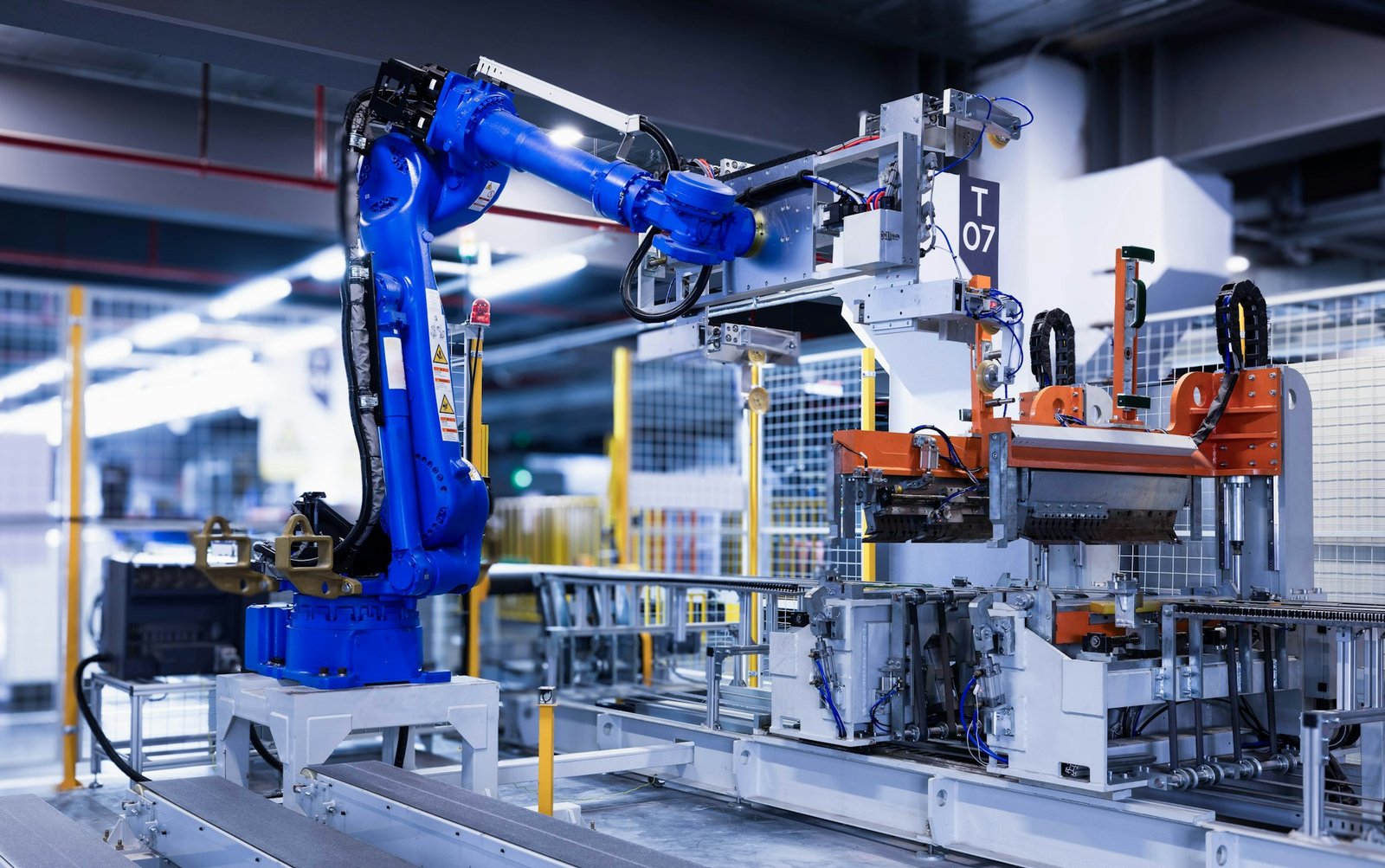
Walk into a modern distribution center and the first thing that stands out is usually not a person at all — it is an automated storage and retrieval system, a fleet of autonomous mobile robots, or a conveyor sorting system running without a human hand on it. What is easy to miss is that the facility still employs roughly the same number of people it did five years ago, or sometimes more. They are simply doing different work. This is the real story behind workforce upskilling in transportation logistics right now: automation is changing what the job is, far more than it is eliminating the job itself, and the companies managing this transition well are the ones investing deliberately in logistics workforce training rather than assuming staff will absorb new systems on their own.
Automation Is Changing the Job, Not Just Removing It
Warehouse automation now routinely handles picking, sorting, inventory movement and pallet handling — tasks that used to occupy the bulk of an entry-level warehouse worker's shift. That has not, in most operations, translated into fewer workers overall. Industry commentary on warehouse automation adoption has pointed out that a large share of operators report growing their workforce even after deploying AI-driven tools, because the technology reduces physical strain and increases accuracy rather than removing the need for people to run, monitor and maintain the systems. The World Economic Forum's Future of Jobs Report tracks this same pattern across industries, including transportation and storage, projecting a continued shift toward technology-assisted task execution and a rising share of roles that call for analytical thinking and technology skills through the rest of the decade. For transportation logistics employers, the practical takeaway is that the skills gap opening up is a training problem to solve, not a headcount problem to manage down.
From Manual Tasks to Technology Operation: What's Actually Shifting
- Physical handling to system oversight — workers increasingly monitor automated storage and retrieval systems, conveyor sortation and robotic picking arms rather than doing the lifting themselves, stepping in when a system flags an exception.
- Paper checklists to warehouse management software — inventory accuracy, cycle counts and putaway decisions now run through a WMS interface, which means basic digital literacy is a baseline requirement rather than a bonus skill.
- Route memory to telematics and fleet dashboards — drivers and dispatchers now work with GPS routing, electronic logging devices and real-time fleet telematics, shifting part of the job toward interpreting data the vehicle itself generates.
- Reactive maintenance to basic diagnostics — as fleets add electric vehicles and warehouses add robotics, frontline staff increasingly need to recognize early fault signals before escalating to a specialist, rather than waiting for a breakdown.
- Individual task completion to exception handling — because routine volume is increasingly automated, the human role concentrates on the harder cases automation cannot resolve cleanly, which requires more judgment than the repetitive tasks it replaces.
None of this makes the work easier in a simple sense — it makes it different, shifting the center of gravity from physical repetition toward monitoring, judgment and basic technical troubleshooting. That shift is exactly why logistics workforce training programs built around the old job description quickly become outdated, and why forward-looking operators treat training content as something to revisit yearly rather than something to set once.
The Driver Shortage Angle: Training as a Retention Tool
Workforce upskilling in transportation logistics is not only a warehouse story. Our companion piece on the global driver shortage lays out how persistent the gap between available drivers and industry demand has become, and the piece on driver retention technology explores how telematics, in-cab apps and better scheduling tools are being used to keep drivers in the industry longer. Training connects directly to both problems. Drivers who see a credible path toward higher-paid, technology-enabled roles — becoming a fleet technology specialist, a dispatch coordinator, or a trainer themselves — are measurably more likely to stay with a carrier than drivers who see the job as a dead end. Framing upskilling as a retention lever, not just a productivity lever, changes how much budget and leadership attention it tends to get inside a transportation logistics organization.
What Logistics Workforce Training Programs Look Like in Practice
The most effective programs share a few common features. They are modular, so a new hire learns core safety and system basics first and layers on more advanced technology-operation skills over months rather than in a single onboarding week. They are role-specific, since a forklift operator moving toward working alongside collaborative robots needs a different curriculum than a dispatcher learning a new transportation management platform. And they build in a credential or visible milestone — a certification, a badge, a pay-grade step — so workers can see the training translating into something concrete rather than treating it as unpaid extra effort layered on top of their existing job.
Who's Doing the Training, and Where It's Spreading
Larger operators increasingly run blended programs: equipment and software vendors provide initial certification training on their specific systems, while the employer runs ongoing refreshers, safety updates and cross-training internally. Smaller operators more often rely entirely on vendor-led training bundled with equipment purchases, which can leave gaps if the vendor's program does not cover how the new system fits into the broader workflow. Either way, the trend is toward treating training as a continuous program with a budget line, rather than a one-time onboarding cost that gets reduced in headcount-pressured years. A growing number of mid-size and large logistics operators have also started building internal "train the trainer" structures, where a small group of experienced staff is upskilled first and formally certified to coach the rest of the team, which keeps institutional knowledge in-house rather than permanently dependent on an outside vendor's schedule.
Industry associations and vocational programs have started filling some of the gap as well, particularly for roles like forklift certification, hazardous materials handling and basic fleet telematics, where standardized third-party credentials give employers a faster way to verify a new hire's baseline competence before they ever touch live equipment. For a transportation logistics company operating across several countries, this matters in a very practical way: safety and equipment-certification standards are not identical across China, India, Turkey, Kenya, Nigeria and Russia, so training programs that work in one market often need to be adapted rather than copied wholesale into another.
Upskilling discussions tend to focus heavily on warehouse floor roles, but the same shift is playing out in customs and documentation teams, where manual paperwork review is increasingly supplemented by digital customs platforms and electronic data interchange systems. Staff who once specialized purely in manual document checking now need enough comfort with these systems to spot an error the software missed, which is a different and arguably harder skill than the manual process it replaces. Dispatch and planning teams face a parallel shift as transportation management systems take over more of the routine scheduling work, pushing the human role toward handling exceptions, managing customer communication during disruptions, and interpreting the system's recommendations rather than building a schedule from scratch. Training programs that treat these office-based roles as an afterthought, focusing all of their budget on warehouse floor certification, tend to underperform because the bottleneck in an automated operation often shifts to whichever team has not kept pace with the new tools.
Measuring Whether Upskilling Is Working
The clearest signals are practical ones: reduced error rates on tasks that now involve a technology interface, lower time-to-productivity for new hires, and — critically — retention rates among staff who complete advanced training tracks compared with those who do not. Employers that track this last metric specifically often find it is one of the stronger arguments for continued training investment, since the cost of a formal training program is frequently smaller than the cost of replacing and re-training a worker who leaves within the first year. Some operators also track a simpler proxy: how quickly a newly trained worker starts correcting exceptions independently rather than escalating every unfamiliar situation to a supervisor, since that independence is usually a good sign the underlying training actually transferred rather than being a checkbox exercise completed and then forgotten.
It is worth being honest about the limits of measurement here too. Not every benefit of a stronger training program shows up quickly in a dashboard — improved morale, lower long-term turnover and a more resilient response to unexpected system outages often take longer to become visible than a quarterly metrics review allows for. Operators who only evaluate training programs against short-term productivity numbers risk cutting programs that were working, just slowly, in favor of whichever initiative produces the fastest visible result.
Common Pitfalls in Logistics Workforce Training
The most frequent mistake is treating training as a one-time event tied to a specific technology rollout, rather than an ongoing program that keeps pace with how quickly warehouse and fleet technology changes. A second is under-investing in the "why," not just the "how" — workers who understand why a new system exists and what problem it solves tend to adapt to it faster than workers who are simply handed a new procedure. A third is leaving early-career staff without a visible next step; survey data consistently shows younger logistics workers want clearer career paths alongside the technical training itself, and programs that skip that piece see weaker uptake even when the technical content is strong.
How RR Brothers and Logistics Can Help
As an NVOCC and freight forwarder operating warehousing, customs and multimodal transportation logistics services across our network, RR Brothers and Logistics depends on the same kind of technology-literate, well-trained workforce this shift demands — from warehouse staff running our bonded storage facilities to the coordinators managing shipment documentation and tracking systems across our China, India, Turkey, Kenya, Nigeria and Russia corridors. We see firsthand how training investment translates into fewer handling errors and more reliable transit times for the clients whose cargo moves through our network, which is part of why we continue to invest in our own teams even as the tools they use keep changing.
Frequently Asked Questions
The evidence so far points more toward a shift in task content than a straightforward reduction in headcount. Many warehouse operators report growing their workforce even after adopting automation and robotics, because the technology changes what workers do rather than eliminating the need for people.
The shift is from purely manual, physical tasks toward overseeing, troubleshooting and correcting automated systems, plus comfort with handheld scanners, warehouse management software, telematics dashboards and basic data interpretation.
Clear training pathways and visible career progression are among the retention tools carriers use to address driver shortages, since drivers who see a route toward better-paid, technology-enabled roles are less likely to leave the industry entirely.
Survey data suggests a gap here — a majority of workers say they want more employer investment in skills training, while many also report feeling they have to navigate the technology shift largely on their own, which points to an opportunity for employers who formalize training programs rather than leaving it informal.