This case study illustrates a representative shipment scenario based on the type of work RR Brothers and Logistics regularly handles on this corridor, compiled from common client requirements rather than describing a single named client.
A small home-decor and general-merchandise retailer based in southern India had spent months sourcing suppliers through Yiwu International Trade City, the sprawling wholesale market in Zhejiang province that supplies everything from stationery to seasonal decorations to small hardware. The owner had never imported before. The order — a mix of items from four different Yiwu suppliers — added up to roughly 2.8 cubic metres of cargo, nowhere close to filling even a 20ft container, and the business had no experience with export documentation, HS classification, or Indian customs procedure. The core challenge was straightforward but high-stakes for a first-timer: how do you move a small, mixed-supplier shipment affordably and legally without a single mistake turning into a costly hold at the port — a question that, at its heart, is really about getting the transportation logistics right before the goods ever leave the supplier's warehouse.
The Challenge
Most new importers sourcing from Yiwu run into the same wall: their order volume is real money to them, but it is far too small to justify booking a full container. A 20ft container typically holds around 28-30 CBM of general cargo, and paying for the whole box to move 2.8 CBM of goods would have erased most of the margin on the order before it even reached India. At the same time, the shipper had no visibility into how ocean freight consolidation actually works, no relationship with a customs broker on either end, and limited understanding of which of her products might need additional certification or registration before Indian customs would release them.
Compounding the volume problem was a documentation gap that is common among first-time importers. The shipper did not yet have an Importer Exporter Code (IEC) — the ten-digit registration issued by India's Directorate General of Foreign Trade (DGFT) that is legally required before any commercial import can clear customs — and had not registered for GST in a way that was linked to her import activity. She also did not know which Harmonised System (HS) code applied to several of her products, some of which sat in categories that occasionally draw extra scrutiny from customs, such as items containing small electronic components or decorative items with mixed material composition. Any misclassification risked a customs query, a reassessment of duty, or in the worst case a hold at Chennai Port while paperwork was corrected — every day of which adds demurrage and detention charges that can quickly outweigh any savings from a low product cost.
Finally, because the goods were coming from four separate Yiwu suppliers who don't normally coordinate with each other, someone needed to consolidate the cargo physically before it could even be booked as a single shipment — a logistics problem the shipper had no way to solve on her own from India.
There was also a cash-flow dimension that's easy to overlook when talking purely about freight mechanics. A small retailer placing her first overseas order typically has working capital tied up in the goods themselves for weeks before any of it can be resold, so an unplanned delay at customs isn't just an inconvenience — it's additional demurrage and detention cost stacked on top of a shipment that hasn't generated any revenue yet. For a business this size, one avoidable hold-up at port can wipe out the margin advantage that sourcing from Yiwu was supposed to deliver in the first place, which is exactly the kind of risk a first-time importer is least equipped to absorb.
Our Approach
The starting point for RR Brothers and Logistics was treating this as a transportation logistics problem with two distinct halves: getting scattered small-volume cargo physically consolidated into one exportable shipment in China, and making sure every document required on the Indian side was correct before the goods ever left port. Rather than quoting a container rate that didn't fit the shipper's volume, we structured the move around LCL (less-than-container-load) sea freight, which lets multiple shippers' cargo share space and cost inside a single container, with each shipper only paying for the volume or weight they actually use.
Because this was a first shipment, we treated documentation review as part of the core service rather than an afterthought. Before booking was confirmed, our team walked the shipper through what Indian customs would require, and cross-checked the products against their likely HS classifications so there were no surprises once the cargo reached Chennai.
- Coordinated pickup from four Yiwu suppliers and arranged consolidation at a container freight station (CFS) near the export gateway, since Yiwu itself is inland and cargo bound for export is routinely trucked to a coastal port for loading.
- Pre-screened HS codes for each product category against India's customs tariff schedule, flagging two items that needed a closer look before shipment rather than after arrival.
- Confirmed IEC and GST registration status with the shipper early, since an import cannot legally clear Indian customs without an active IEC on file with DGFT.
- Booked LCL space with a consolidator operating a reliable, regularly scheduled service on the Ningbo-to-Chennai lane rather than the cheapest available space, prioritizing predictability for a shipper who had no buffer for delay.
- Prepared a complete document set — commercial invoice, packing list, House Bill of Lading, and Certificate of Origin — in the format Indian customs brokers expect, reducing the back-and-forth that often slows first-time import clearance.
Implementation
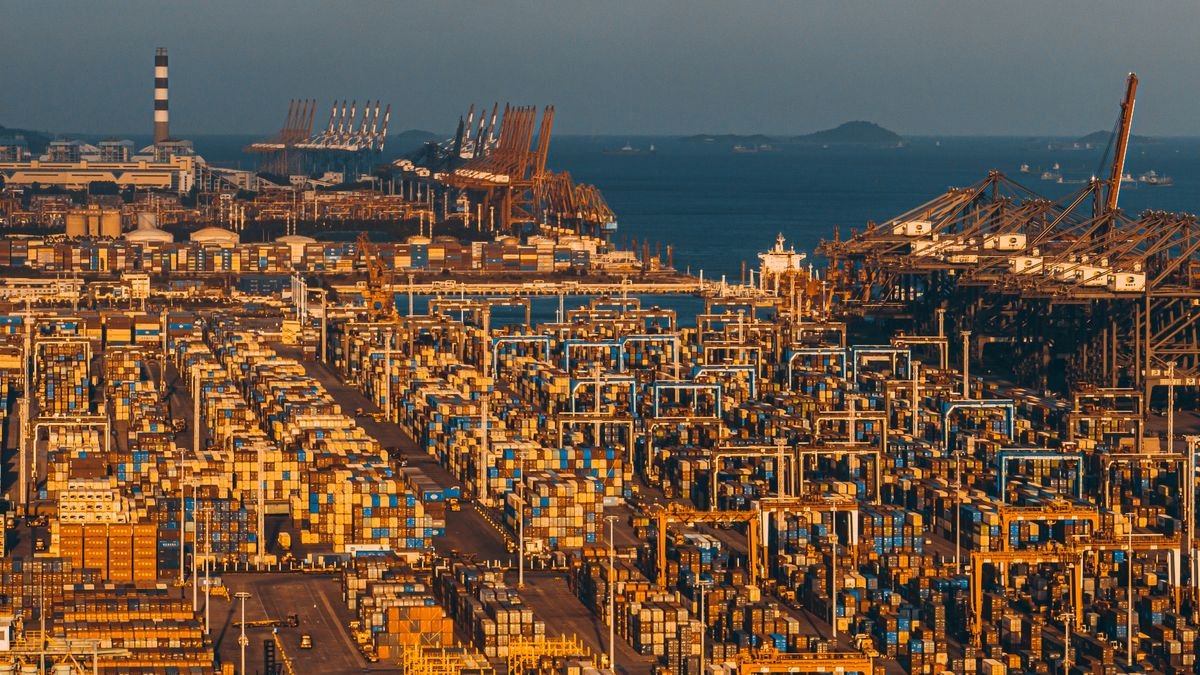
The shipment moved in five phases over roughly five weeks door-to-port. In the first phase, our China-side team coordinated collection of cartons from each of the four Yiwu suppliers and trucked them to a consolidation warehouse near Ningbo-Zhoushan Port — the deep-water container port that serves as the primary export gateway for cargo originating in the Yiwu region, given Yiwu's own location roughly 130 kilometres inland. At the CFS, the separate supplier cartons were physically consolidated, weighed, measured, and packed into a shared container alongside other shippers' LCL cargo.
Export customs clearance in China was handled in parallel with consolidation — a standard requirement under the General Administration of Customs of China before any commercial cargo can be loaded for export. Once cleared, the shared container was loaded aboard a scheduled vessel calling at Chennai. Transit time on this lane typically runs in the three-to-four-week range depending on vessel rotation and any transshipment involved, and the shipper was given a realistic window rather than an optimistic best-case estimate, which mattered once actual sailing schedules were confirmed.
On arrival at Chennai Port, the container was deconsolidated at a bonded CFS and the shipper's specific cartons were separated out for Bill of Entry filing — the formal import declaration lodged with the Central Board of Indirect Taxes and Customs (CBIC) that triggers duty assessment and, ultimately, release of the goods. Because the HS codes had already been pre-verified and the document set matched what was declared, the filing moved through standard assessment without a query being raised, and the goods were released for final delivery to the shipper's premises without incident.
| Phase | Activity | Approx. Duration |
|---|---|---|
| Supplier pickup & consolidation | Cartons collected from 4 Yiwu suppliers, trucked to Ningbo CFS | 4-5 days |
| Export customs & loading | China export clearance, container stuffing at CFS | 2-3 days |
| Ocean transit | Ningbo to Chennai, scheduled vessel service | 21-26 days |
| Import clearance | Deconsolidation, Bill of Entry filing, duty assessment | 2-4 days |
| Final delivery | CFS to shipper's premises | 1-2 days |
Results
The shipment cleared Chennai customs without a query on classification or valuation, which for a first-time importer moving mixed general merchandise is not something to take for granted. The pre-shipment HS code review meant there were no mismatches between what was declared and what customs assessed, and the complete, correctly formatted document set meant the Bill of Entry moved through standard processing rather than triggering additional scrutiny. LCL consolidation brought the shipper's freight cost down to a level proportional to her actual cargo volume, rather than forcing her to either absorb a full-container rate or delay the order until she had enough volume to justify one. For a shipper this size, that's the whole value proposition of LCL shipping from China: it turns ocean freight from an all-or-nothing decision into something scaled to what you're actually moving.
Just as importantly, the shipper came out of the process with a working template for future orders: a verified IEC and GST setup, a pre-checked HS classification for her core product range, and a known transit-time benchmark for the Yiwu-Ningbo-Chennai lane. That's arguably worth more than the savings on this one shipment, since it removes the uncertainty that keeps many small importers from scaling up their sourcing from China.
It's also worth being specific about what "predictable" meant in practice here. The shipper was given a transit-time window rather than a single promised date, was kept informed at each phase — consolidation complete, export cleared, vessel departed, vessel arrived, Bill of Entry filed, goods released — and knew in advance roughly what her total landed cost would look like before the cargo ever left Ningbo. For someone making her first import decision, that kind of visibility matters as much as the freight rate itself, because it turns an unfamiliar, opaque process into something she could explain to her own customers and plan future orders around — which is ultimately what good transportation logistics should do for a small shipper: make the unfamiliar predictable.
Lessons for Similar Shippers
- Get your IEC and GST registration sorted before you place your first order, not after the goods are already in transit — Indian customs cannot release an import without a valid IEC on file with DGFT, and sorting this out at the last minute is a common cause of avoidable delay.
- Don't assume your order needs a full container. LCL shipping from China exists precisely for shippers whose volume doesn't justify FCL, and a good forwarder will quote it transparently rather than pushing you toward a container you don't need.
- Verify your HS codes before booking, not after arrival. A pre-shipment classification review costs nothing compared to the demurrage and detention charges that accumulate while customs queries an incorrect declaration.
- Consolidating from multiple suppliers requires a forwarder with a physical presence near your sourcing hub. Someone has to coordinate pickup, warehousing, and container stuffing on the ground in China — this isn't something that can be managed purely by email from India.
- Treat transportation logistics as part of your sourcing decision, not an afterthought. Freight cost, transit time, and customs risk should factor into which suppliers you choose and how you time your orders, the same way price and quality do.
- Build a realistic transit-time buffer into your first shipment, especially around Chinese public holidays or peak shipping periods, rather than promising customers a delivery date based on best-case sailing schedules.
How RR Brothers and Logistics Can Help
For first-time importers, the biggest risk in transportation logistics usually isn't the ocean freight itself — it's the documentation and classification decisions made before the container is even loaded. RR Brothers and Logistics combines LCL and FCL sea freight booking with hands-on customs clearance and brokerage support on both the China and India sides, so shippers moving their first order from Yiwu, Guangzhou, or any other sourcing hub have a single point of contact managing consolidation, documentation, and delivery rather than juggling multiple vendors alone. Whether you need a one-off LCL shipping from China arrangement for a trial order or a repeatable process for regular restocking, our team can scope the right mix of consolidation, customs support, and scheduling to match your order size.