The Headline vs. the Reality
"Robots are coming for warehouse jobs" is an easy headline, and it isn't entirely wrong — automation is visibly changing what work looks like on a warehouse floor or in a dispatch office. But the more useful question for anyone actually running or working in transportation logistics isn't whether automation is happening; it clearly is. It's whether that automation is net-reducing the number of people employed in the sector, or reshaping which tasks people do while overall headcount holds steady or keeps growing. The honest answer, based on what's actually observable in warehouses and fleets today rather than speculative long-range forecasts, is closer to the second description than the first — with one important exception worth examining carefully: long-haul trucking, where chronic labor shortages mean automation is filling gaps rather than displacing an already-scarce workforce.
Where Automation Is Actually Displacing Tasks
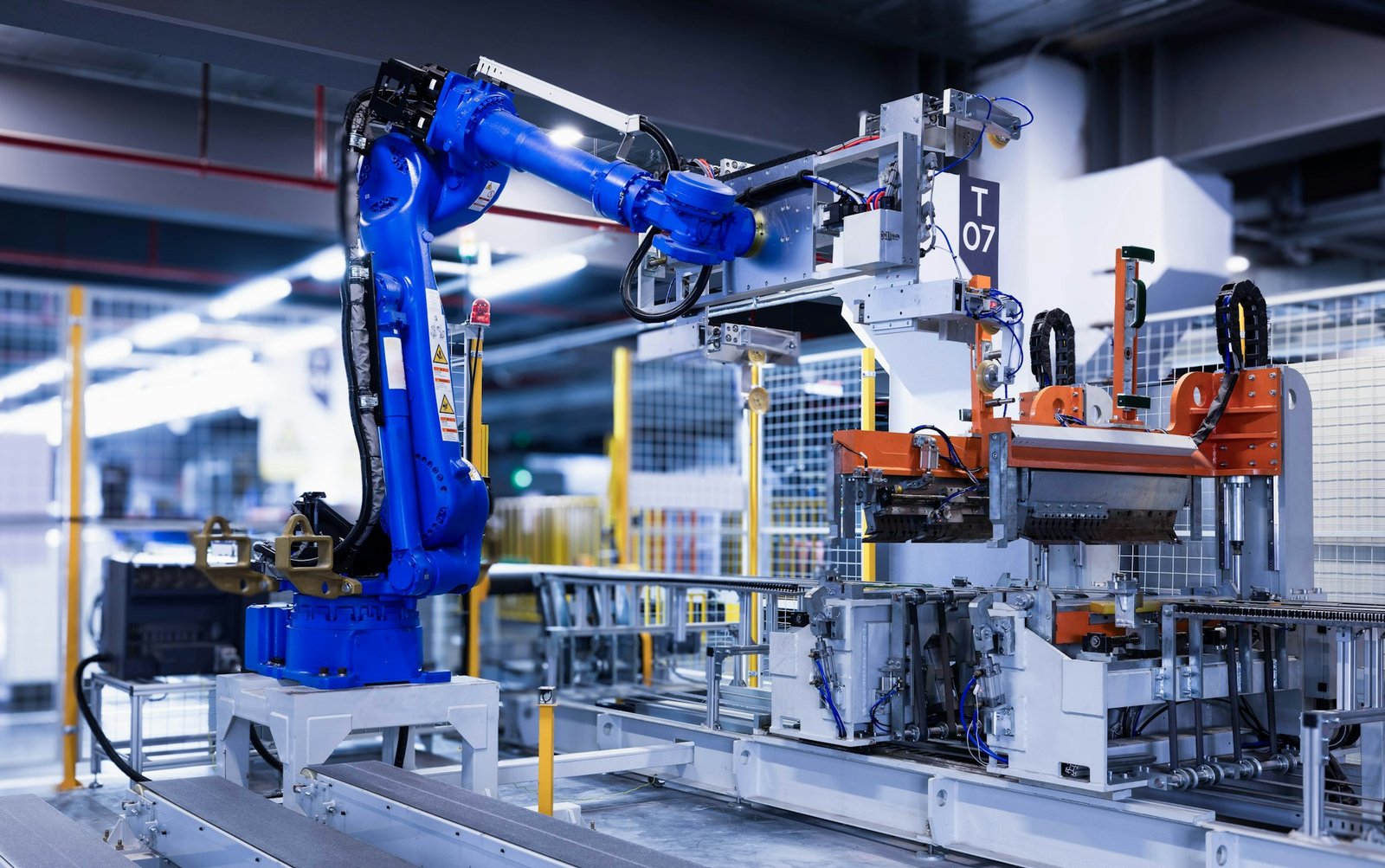
It would be dishonest to claim automation isn't eliminating certain tasks, because it clearly is. Long-distance pallet moves inside large distribution centers are increasingly handled by autonomous mobile robots rather than a worker driving a pallet jack back and forth across a facility floor. High-volume case picking is being automated through goods-to-person systems and automated storage and retrieval. And as we covered in our piece on collaborative robots in logistics warehouses, cobots are increasingly handling the physically repetitive, injury-prone components of tasks that a human used to do start to finish, such as lifting heavy cases onto a conveyor repeatedly through an eight-hour shift. These are real changes to specific tasks, and workers whose roles consisted primarily of those exact repetitive motions have genuinely seen their day-to-day work change or, in some cases, disappear entirely from a given facility.
Where Automation Is Filling Gaps, Not Cutting Jobs
The picture looks different in roles facing chronic labor shortages rather than labor surplus, and long-haul trucking is the clearest example. The International Road Transport Union has reported more than three million unfilled truck driver positions across the 36 countries it studied, with the shortage projected to roughly double in severity over the following five years absent a significant change in recruitment or retention. In the United States specifically, the American Trucking Associations has projected the driver shortfall could exceed 160,000 positions before the end of the decade. Autonomous trucking companies such as Aurora have begun scaling driverless operations on specific long-haul highway lanes — including a roughly 1,000-mile Texas-to-Arizona route — but they are doing so against a backdrop where carriers are already struggling to find enough qualified drivers, not one where drivers are sitting idle waiting to be replaced. In that context, automation reads less like displacement and more like capacity relief for a system that has been short-staffed for years.
What the Research Actually Shows
One of the more rigorous academic attempts to quantify this question came from a 2022 study by researchers at the University of Michigan and Carnegie Mellon University, which modeled the labor effects of widespread trucking automation. Rather than projecting the million-plus job losses that some earlier, more alarmist estimates had suggested, the study found automation could eliminate a few hundred thousand jobs under a full-automation scenario — a meaningfully smaller number, concentrated specifically in long-haul routes rather than the full spectrum of trucking and logistics work. One of the study's co-authors also made a point worth sitting with: many of the roles most exposed to automation, such as truck-stop and rest-stop services tied to long-haul driver routines, are low-paid and unpleasant jobs to begin with, and the same research suggested new positions tied to automated freight hubs could offset at least part of the loss. That's a far more measured picture than either "robots will take all the jobs" or "automation changes nothing" — the reality sits in between, and it varies significantly by role. It's also a useful corrective to coverage that treats every automation and logistics jobs headline as evidence of an imminent mass layoff wave, when the underlying research points to something more gradual and more concentrated in specific route types than the alarmist framing usually suggests.
Roles Under Pressure vs. Roles in Demand
| Role type | Automation pressure | Current demand trend |
|---|---|---|
| Manual pallet transport / case picking | High | Declining in automated facilities |
| Long-haul truck driving | Moderate, gradual | Still in significant shortage |
| Robot/AMR maintenance technicians | N/A (automation-adjacent role) | Growing |
| WMS/TMS configuration specialists | N/A (automation-adjacent role) | Growing |
A Regional Note: Automation and Logistics Jobs in China
The automation-and-logistics-jobs debate plays out somewhat differently across regions, and China is a particularly instructive case given how much of the world's manufacturing and export volume moves through its ports, warehouses and distribution centers. Chinese e-commerce and logistics operators have been among the most aggressive global adopters of warehouse automation, goods-to-person picking systems and automated sortation, driven by enormous parcel volumes during major shopping events and intense cost competition among domestic logistics providers. At the same time, China's logistics and delivery workforce has continued to grow substantially, reflecting the same dynamic seen elsewhere: automation absorbing a growing share of repetitive, high-volume tasks inside increasingly large facilities, while the total number of people employed across the broader logistics sector keeps expanding alongside overall shipping and e-commerce volume. For a freight forwarder coordinating cargo in and out of China, this matters practically — it means working with facility partners that combine automated throughput with experienced staff rather than facilities betting entirely on one or the other.
The Warehouse Headcount Picture
If automation were simply eliminating jobs wholesale, it would be reasonable to expect warehouse employment figures to have declined as automation adoption increased over the past decade. That isn't what's happened. Analyst firm Gartner has projected that roughly half of new warehouses will rely primarily on robots by 2030, with humans playing a smaller direct role in physical material movement — but overall warehouse workforce numbers have continued to grow substantially during the same period that automation adoption accelerated, driven by the broader expansion of e-commerce and distribution capacity outpacing the efficiency gains automation delivers per facility. The honest summary is that automation changes the ratio of workers to throughput within a given facility far more clearly than it changes total sector employment, which continues to be shaped primarily by overall shipping volume growth rather than automation alone.
What Port Automation Already Taught the Industry
Warehouses and fleets aren't the first part of the logistics chain to go through this debate — container terminals went through a very similar transition over the past two decades, and the outcome offers a useful preview. Fully automated container terminals, including facilities at Qingdao and Rotterdam among others, replaced manual crane operation and yard truck driving with remote-controlled and autonomous equipment, and the initial fear in the industry mirrored today's warehouse and trucking conversation almost exactly. What actually happened at most of these terminals was a shift rather than a wholesale disappearance of jobs: dockworkers who previously operated cranes from a cab moved into remote operation centers controlling multiple cranes from a seated console, while new roles emerged around systems monitoring, equipment maintenance and exception handling when containers or equipment behaved unexpectedly. Terminal throughput per worker rose substantially, which is exactly the efficiency gain port operators were after, but it didn't translate into the across-the-board job losses some had predicted before automation rolled out. That precedent is one reason labor economists studying warehouse and trucking automation today tend to expect a similar pattern — concentrated task displacement and role transformation rather than a uniform collapse in total employment.
What This Means for Warehouse and Fleet Workers Today
For workers and employers alike, the practical response to this shift isn't panic, and it isn't denial — it's adaptation. As we've covered in our guide to workforce upskilling for the transportation logistics industry, the roles growing fastest alongside automation adoption tend to require comfort working alongside automated systems rather than displacement by them: exception handling when a robot or automated sorter encounters something outside its normal routine, basic maintenance and troubleshooting, and configuration work on the warehouse management and transportation management systems that coordinate automated equipment. Workers who build those adjacent skills tend to be the ones who move into better-paid, more stable roles as a facility automates, rather than the ones automation displaces.
How RR Brothers and Logistics Can Help
Understanding where automation genuinely changes operations — and where experienced people remain essential — is part of how we plan warehousing, customs clearance and multimodal transport for clients across our network spanning China, India, Turkey, Kenya and Nigeria. RR Brothers and Logistics works with facility and carrier partners who are investing thoughtfully in automation to improve speed and accuracy in transportation logistics, while keeping experienced staff in the roles — exception handling, customer service, customs documentation — where human judgment still matters most. If you're planning a shipment and want a clear-eyed view of how a partner facility actually operates rather than a sales pitch about robots, our team can walk you through it directly, including which parts of the process are automated and which still depend on an experienced person making a judgment call.
Frequently Asked Questions
The evidence so far points to automation reshaping which roles exist rather than causing an outright reduction in total employment. Warehouse workforce numbers have grown substantially over the past decade even as automation adoption increased, though the mix of tasks workers perform is shifting toward technology operation and exception handling.
Autonomous trucking is scaling gradually on specific long-haul highway lanes rather than replacing drivers broadly, and it is emerging against a backdrop of a persistent global driver shortage, which means automation is more likely to help fill unmet capacity than to displace a workforce that is already in short supply.
The most repetitive, physically strenuous tasks — long-distance pallet moving, high-volume case picking, and manual cycle counting — are the ones automation targets first, largely because those are the tasks where robots and automated systems offer the clearest efficiency and safety gains over manual labor.
Automation adoption has increased demand for roles such as robot and automation maintenance technicians, warehouse management system configuration specialists, and staff who supervise exception handling when automated systems encounter something outside their normal routine.