The Store as a Fulfillment Center
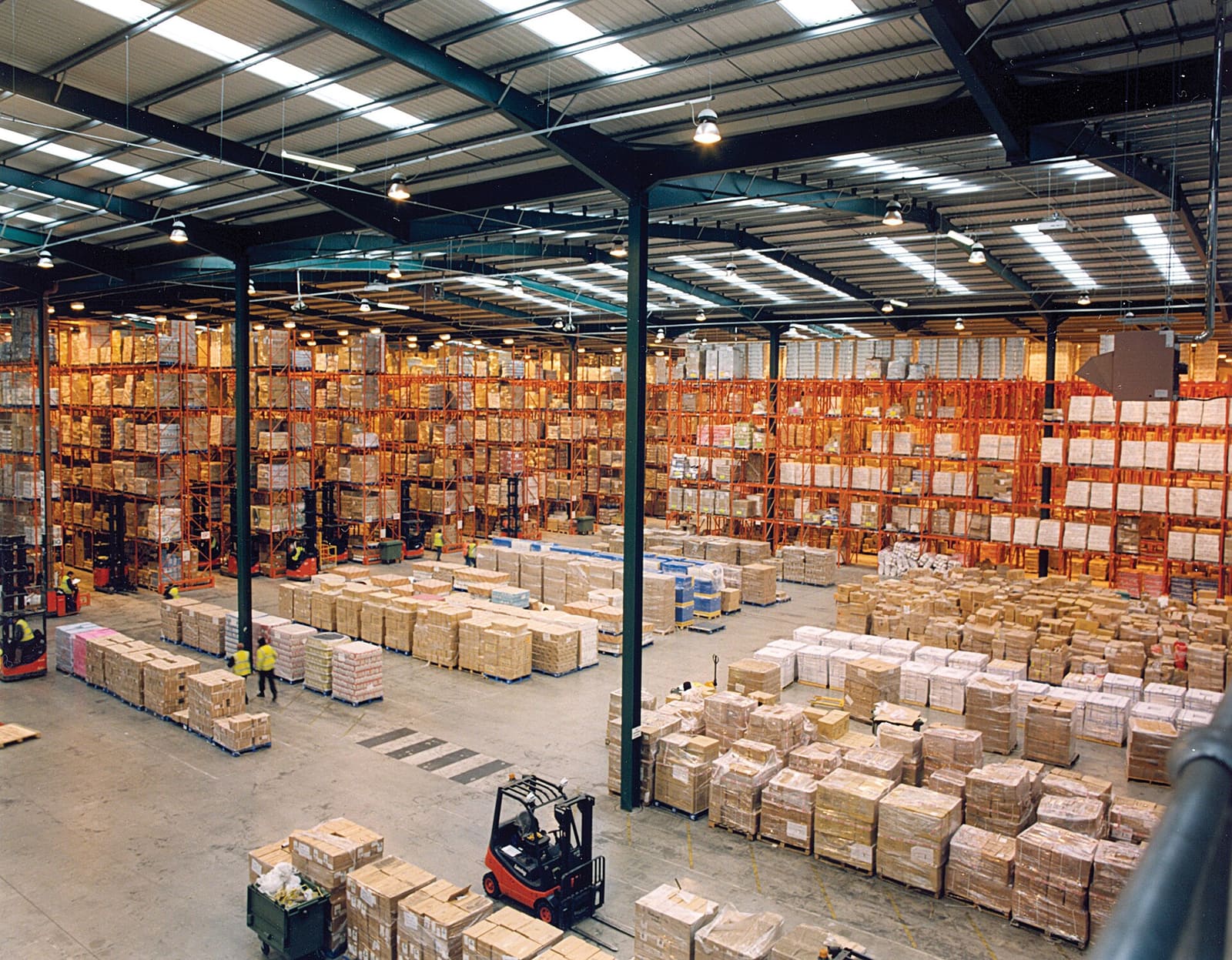
BOPIS — Buy Online, Pick Up In Store — flips the usual logic of e-commerce fulfillment. Instead of shipping an order from a distribution center to a customer's door, the retailer uses its existing store network as the final fulfillment point, letting the customer provide the last mile themselves by walking or driving in to collect it. For a retailer with a physical footprint, this turns every store location into a de facto mini fulfillment center — inventory that's already sitting on a shelf a few miles from the customer can be picked, packed and ready for collection within hours, often faster and cheaper than shipping the same item from a regional warehouse. For businesses thinking seriously about transportation logistics costs, BOPIS logistics is one of the few fulfillment models that eliminates the last-mile delivery leg for a given order entirely, rather than just making it faster, which is a meaningfully different value proposition than same-day or expedited shipping options that still rely on a delivery vehicle completing the final leg.
Why BOPIS Adoption Keeps Climbing
Store pickup has quietly become one of the most consistent growth trends in retail fulfillment. According to EMARKETER's May 2026 survey of US digital buyers, 29% reported picking up their most recent online order in-store, up from 22% in 2023 — making it the only delivery method that has grown every year the firm has tracked it. That steady growth reflects a combination of cost pressure on retailers, who save on last-mile delivery and shipping-related packaging for every BOPIS order, and a genuine convenience factor for customers who want same-day access to a purchase without paying for expedited shipping. Retailers have also found that BOPIS drives incremental revenue: shoppers who visit a store to collect an online order frequently make an additional, unplanned purchase while they're there — a dynamic that a pure e-commerce shipment never creates.
The Inventory Visibility Problem
BOPIS logistics lives or dies on one capability: knowing, accurately and in real time, what's actually available at a specific store location. A retailer's e-commerce platform has to reflect true on-shelf, available-to-promise inventory at each store — not just total company-wide stock — or customers will routinely place BOPIS orders for items that turn out not to be physically present when they arrive to collect them. This is a harder problem than it sounds: in-store inventory counts drift from system records constantly, due to shrinkage, misplaced stock, and sales that haven't yet synced back to the central system. Retailers serious about BOPIS typically invest in frequent cycle counts, RFID tagging, or point-of-sale systems that update inventory in near real time, specifically because the credibility of the entire BOPIS promise depends on the online inventory figure actually matching the physical shelf.
How a BOPIS Order Actually Flows
Once inventory visibility is solid, the operational flow itself is fairly standardized across most BOPIS logistics implementations. A customer places and pays for an order online, specifying a pickup location. The order routes to that store's fulfillment queue, where a staff member — sometimes dedicated to online order picking, sometimes a regular sales associate during a quiet period — locates the item, verifies it against the order, and stages it in a designated pickup area or holds it at a service counter. The customer receives a notification once the order is ready, typically within a few hours, and collects it either by walking to a counter or, in the curbside variant of the same model, having staff bring it out to their vehicle. The transportation logistics involved is minimal by design — a short internal movement from shelf to pickup point — which is precisely why the model is so much cheaper to operate than shipping the same order to a home address.
BOPIS vs. Smart Lockers: Two Approaches to the Same Problem
BOPIS isn't the only model built around eliminating traditional last-mile delivery. Our companion piece on smart lockers and parcel pickup networks covers a related but distinct approach, where a retailer or carrier uses automated, unattended locker banks — often placed in high-traffic locations rather than retailer-owned stores — for customers to collect parcels on their own schedule without needing a staff interaction at all. BOPIS requires an existing retail footprint and dedicated store staff capacity; smart lockers can be deployed almost anywhere there's foot traffic and don't depend on a retailer owning physical stores at all. Each model solves the same underlying problem — removing the cost and unpredictability of home delivery — through a different operational structure, and larger omnichannel retailers increasingly run both simultaneously, letting the customer choose whichever option fits their specific order, timeline and location best.
BOPIS vs. Standard Home Delivery
| Factor | BOPIS | Standard Home Delivery |
|---|---|---|
| Last-mile delivery cost to retailer | None — customer provides it | Full delivery cost borne by retailer or customer |
| Typical fulfillment speed | Hours (same day) | Days, depending on carrier |
| Requires physical store footprint | Yes | No |
| Incremental in-store purchase opportunity | High | None |
The Staffing and Operational Trade-Off
BOPIS logistics looks simple from the customer's side — order, wait for a notification, walk in and collect — but it adds real operational load on the store side that retailers have to plan for deliberately. Picking online orders competes for the same staff hours that would otherwise go toward helping walk-in customers, stocking shelves or running the register, and a store that underestimates online order volume during a peak period can end up with picking backlogs that blow past the same-day promise the website made. Some retailers solve this by designating specific staff or shifts purely for online order fulfillment; others build a separate, smaller "dark" pickup area within the store specifically to keep online order staging from colliding with the regular shopping floor. Either way, BOPIS logistics only works at scale when it's treated as a distinct operational workflow with its own staffing plan, not an extra task layered onto existing store duties with no additional resourcing.
There's a sequencing challenge too: an order placed online needs to be picked, verified and staged before the customer arrives, and customers increasingly expect that window to be short — often under two hours for in-stock items. Meeting that expectation consistently requires the store's point-of-sale and online order systems to communicate in close to real time, flagging new online orders to floor staff immediately rather than batching them for periodic review. Retailers that get this sequencing wrong tend to see it show up directly in customer satisfaction scores for the BOPIS channel specifically, even when their standard in-store shopping experience is otherwise strong.
Measuring Whether a BOPIS Program Is Working
A few metrics separate a BOPIS program that's actually delivering value from one that's just technically available. Order-ready time — how long between an order being placed and the customer being notified it's ready — is the clearest operational signal, since this is the number customers feel most directly. Pickup conversion rate, the share of customers who actually use BOPIS once it's offered at checkout, indicates whether the option is positioned clearly enough and whether store inventory accuracy is good enough that customers trust it won't fail. And attach rate — how often a BOPIS visit turns into an additional in-store purchase — is the metric that justifies the operational cost of running the program in the first place, since it's the main revenue upside beyond the delivery-cost savings. Retailers that track these consistently across store locations can identify which stores are executing BOPIS logistics well and which need additional staffing, training or inventory-accuracy investment before the model delivers its full potential.
What This Means for Suppliers Stocking BOPIS-Enabled Retailers
For brands and suppliers whose products end up on the shelves of retailers running BOPIS programs, the practical implication is that store-level inventory accuracy and replenishment speed now matter even more than they did when stores only had to keep walk-in customers satisfied. A stockout at a single store location doesn't just lose a potential walk-in sale anymore — it can cancel an already-placed and paid-for BOPIS order, which is a worse customer experience than a product simply being unavailable online in the first place. This puts more pressure on the transportation logistics feeding retail stores to be predictable and frequent, since BOPIS-enabled retailers increasingly need smaller, more frequent replenishment shipments to keep store-level stock aligned with what their e-commerce platform is promising customers, rather than the larger, less frequent shipments that worked fine when stores were the only sales channel being served and online inventory accuracy wasn't yet a customer-facing promise.
How RR Brothers and Logistics Can Help
RR Brothers and Logistics supports brands and retailers moving China-origin inventory into store networks that rely on BOPIS and other omnichannel fulfillment models, where predictable, on-time replenishment at the store level is what actually keeps the online promise of same-day pickup credible. Whether that means more frequent smaller shipments timed to store-level demand, or coordinating with a retailer's distribution centers feeding a BOPIS program, our e-commerce logistics and multimodal transportation logistics services are built to support exactly this kind of omnichannel retail flow, alongside our broader work supporting marketplace fulfillment and last-mile logistics solutions for e-commerce sellers.
Frequently Asked Questions
BOPIS stands for Buy Online, Pick Up In Store. A customer places and pays for an order online, the retailer picks the item from store or nearby fulfillment inventory, and the customer collects it in person at a chosen store location, usually within a few hours.
BOPIS traditionally means the customer walks into the store to collect their order at a counter or designated pickup area, while curbside pickup has store staff bring the order out to the customer's vehicle; many retailers now offer both as variants of the same underlying inventory and fulfillment system.
Real-time inventory visibility that accurately reflects what's physically available at each store location is the core requirement, since promising online stock that isn't actually on the shelf is the single most common cause of a failed BOPIS order.
For the specific order fulfilled through BOPIS, yes — the customer provides the final-mile transportation themselves by picking it up — but retailers still need last-mile delivery logistics for the orders customers choose to have shipped rather than collected in person.