Two Coastlines, Two Very Different Gateways
France is unusual among major European import markets in having two genuinely distinct maritime gateways serving different halves of the country and different service networks: Le Havre, on the English Channel at the mouth of the Seine, and Marseille-Fos, on the Mediterranean coast. Rather than treating "France" as a single port decision, shippers who understand the difference between these two gateways can generally get their China-origin cargo closer to its final destination with less inland transport. As a freight forwarder handling both French gateways daily, RR Brothers and Logistics routinely sees shippers overpay on inland transport simply because they defaulted to the wrong port.
Le Havre: France's Channel Gateway
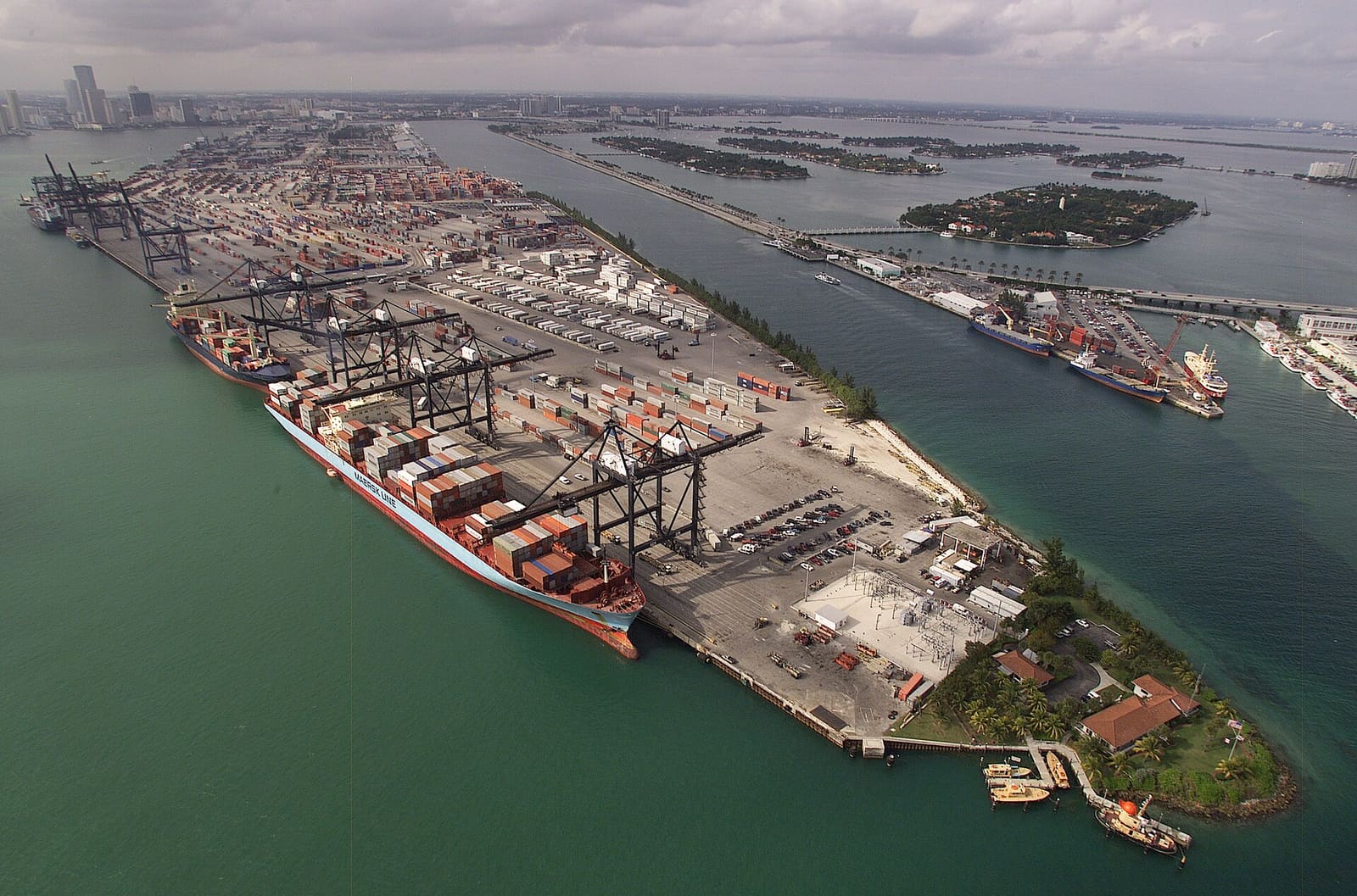
Le Havre is France's largest container port and its main gateway for cargo serving Paris and northern and western France. It sits on the North Europe rotation used by most major Asia-Europe container services, generally called alongside or near Rotterdam, Hamburg and Antwerp on the same string. For importers whose distribution centre or customer base sits in or around the Paris region, or across northern France, Le Havre is typically the more direct option, with good onward road and rail connections along the Seine corridor.
Marseille-Fos: The Mediterranean Alternative
Marseille-Fos, on France's southern coast, serves the Mediterranean rotation rather than the North Europe one, and is the natural gateway for cargo destined for southern France, and for onward distribution into parts of Spain, Italy and Switzerland via road and rail. Because Mediterranean ports are often called earlier on westbound Asia-Europe service loops, before vessels continue on to North Europe, cargo destined for Marseille-Fos can sometimes see a shorter overall transit time than the same cargo continuing on to a North European port — a detail worth checking against your specific carrier's rotation rather than assuming North Europe is always faster.
Sea Freight Transit Times
From major Chinese load ports, typical transit time to Le Havre runs in the region of roughly 32–42 days, broadly in line with other North European gateways given its position on the same rotation. Marseille-Fos, as a Mediterranean call, typically sees somewhat shorter transit, in the range of roughly 26–36 days, though this depends heavily on whether the specific service transships through an intermediate Mediterranean hub such as Piraeus or Valencia before reaching Marseille-Fos, or calls directly.
FCL vs. LCL Considerations
Le Havre has a well-developed LCL consolidation market given its role as France's primary container gateway, making it a practical option for smaller and mid-volume importers as well as full-container shippers. Marseille-Fos, while a major port, generally has a somewhat thinner LCL groupage network for China-origin cargo than Le Havre, meaning full-container-load shipping is often the more straightforward option for that gateway, particularly for shippers without an established consolidation partner already using Marseille-Fos as a regular deconsolidation point. Businesses shipping smaller volumes to southern France should check LCL scheduling frequency into Marseille-Fos with their forwarder rather than assuming it matches Le Havre's cycle.
Customs and Documentation
France sits inside the EU customs union, and import clearance follows the same broad framework as other EU member states, administered on the French side by French Customs (Douane). Importers need a valid EORI number, correct HS classification on every product line, and accurate commercial documentation: a commercial invoice reflecting the agreed Incoterm and transaction value, a detailed packing list, and the bill of lading or sea waybill issued by the carrier or NVOCC. Certain product categories — food-contact materials, electronics subject to CE marking, and textiles among them — carry additional compliance documentation on top of the standard customs paperwork, so it is worth confirming product-specific requirements with your forwarder or customs broker before the shipment departs China.
Documentation Checklist
- Commercial invoice with correct Incoterm and transaction value
- Detailed packing list matching the invoice, with weights and dimensions
- Bill of lading or sea waybill from the carrier or NVOCC
- Correct HS classification for every product line
- Certificate of origin or product-specific compliance documents where required
Practical Tips for Shippers
- Choose the French gateway based on your final destination, not habit. A shipper who has always used Le Havre for northern French distribution may find Marseille-Fos meaningfully faster and cheaper on inland transport for cargo actually destined for the south of the country.
- Check LCL availability into Marseille-Fos before committing to it for smaller orders. If groupage frequency into the Mediterranean port is limited for your product category, consolidating through Le Havre or another nearby hub with more frequent LCL service may work out faster overall despite a longer inland leg.
Whether your cargo is bound for Paris and the north or Marseille and the south, RR Brothers and Logistics books China to Europe sea freight into both French gateways and coordinates the customs clearance and inland distribution needed to get cargo the rest of the way to its final destination.
Frequently Asked Questions
It depends on your final destination. Le Havre is the more direct gateway for Paris and northern or western France, while Marseille-Fos better serves southern France and onward distribution into Spain, Italy and Switzerland.
Not necessarily. Because Mediterranean ports are often called earlier on westbound Asia-Europe service loops, cargo destined for Marseille-Fos can sometimes see a shorter overall transit than the same cargo continuing on to a North European port.
Le Havre has a well-developed LCL market given its role as France's primary container gateway, but Marseille-Fos generally has a thinner groupage network, making full-container-load shipping often the more straightforward option there.
A valid EORI number, correct HS classification, a commercial invoice reflecting the agreed Incoterm, a packing list, and the bill of lading — plus additional compliance documents for categories like food-contact materials, CE-marked electronics and textiles.