The Netherlands as Europe's Distribution Hub
The Netherlands occupies a distinctive position in China to Europe trade: rather than being simply a destination market, it operates largely as a distribution hub for the wider European continent. A very large share of the containers landing at Rotterdam are not consumed locally — they are redistributed by truck, barge or rail to Germany, France, Belgium and beyond within days of arrival. Amsterdam plays a smaller, complementary role, particularly for certain bulk, breakbulk and specialized cargo categories. For importers deciding where to route China-origin freight, understanding this hub function matters as much as the port's raw size.
Rotterdam: Europe's Largest Container Port
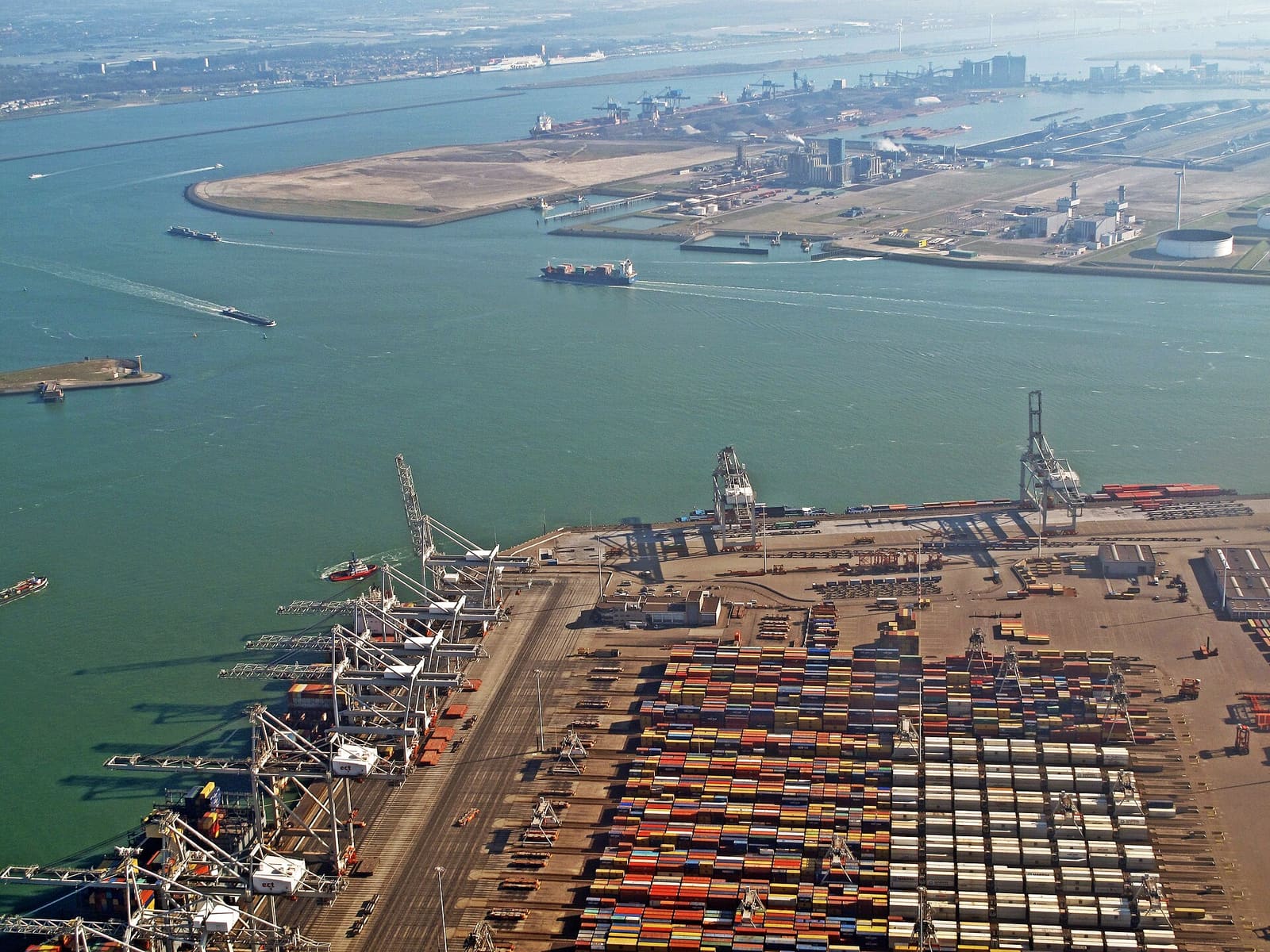
Rotterdam is the largest container port in Europe by volume and one of the busiest in the world, built around deep-water terminals at Maasvlakte that can accommodate the largest container vessels operating on Asia-Europe services. Its scale brings genuine advantages for China-origin shippers: dense direct-call service frequency from major Chinese ports, well-developed inland connections by barge along the Rhine into Germany and further into Central Europe, and one of the most developed LCL consolidation and bonded-warehousing markets in the region. For cargo that will be redistributed across several European countries rather than staying in one market, Rotterdam's onward connectivity is often unmatched.
Amsterdam's Complementary Role
Amsterdam's port handles a smaller container volume than Rotterdam but remains an important gateway for certain trades, including bulk commodities, breakbulk cargo, and specific manufacturing and agricultural sectors. For standard containerized China-origin cargo, Rotterdam is generally the more direct and better-served option, but Amsterdam can be a practical alternative when a shipper's specific carrier relationship, cargo type or final destination in the northern Netherlands makes it the more efficient call.
Transit Times From China to the Netherlands
Sea freight transit time from major Chinese ports to Rotterdam typically runs in the range of roughly 30–40 days, reflecting Rotterdam's position as one of the first major North European calls on many westbound Asia-Europe strings — often slightly ahead of ports further along the same rotation. As with any lane, actual transit depends on the carrier's specific service loop, whether the shipment transships at an intermediate hub, and prevailing congestion levels, so shippers should treat this as a planning range rather than a fixed schedule.
FCL vs. LCL Through Rotterdam
Rotterdam's scale supports one of the deepest LCL markets in Europe, with frequent consolidation and deconsolidation cycles that make less-than-container-load shipping a genuinely practical option even for relatively small and frequent orders. Full-container-load shipping remains more cost-efficient at higher volumes and gives a shipper a dedicated container and a single, uncomplicated bill of lading. Many importers who distribute across multiple European countries from a Dutch base use a mix of both — FCL for their highest-volume product lines, LCL for smaller or more seasonal ones — and a forwarder that can manage both under one account simplifies that mix considerably.
Customs Clearance and the Dutch Advantage
The Netherlands sits inside the EU customs union, so the core clearance framework mirrors that used across the EU: a valid EORI number, correct HS classification for every product line, and accurate supporting documentation. One feature that makes Dutch customs particularly attractive to importers who plan to redistribute cargo across the EU is the Article 23 import VAT deferment license, administered by Dutch customs (Douane), which allows import VAT to be declared and offset in a periodic VAT return rather than paid in cash at the moment of import — a meaningful cash-flow advantage for high-volume importers using Rotterdam as a distribution base. This is one reason many businesses that sell across several EU countries choose to structure their China-Europe import flow through the Netherlands even when their end customers sit elsewhere.
Documentation Requirements
- Commercial invoice with transaction value, Incoterm and full buyer/seller details
- Detailed packing list matching the invoice, with accurate weights and dimensions
- Bill of lading or sea waybill from the carrier or NVOCC
- Correct HS codes for all product lines
- EORI number for the importer of record, and an Article 23 license application where VAT deferment is desired
Practical Tips for Shippers
- Consider Rotterdam as a redistribution base, not just a destination. If your business sells into several European markets, importing through Rotterdam and distributing onward by road, rail or barge can be more efficient than separate direct shipments to each country.
- Ask your forwarder about VAT deferment early. Setting up an Article 23 license takes lead time and requires a Dutch fiscal representative in many cases, so it is worth arranging well before your first shipment rather than after cargo has already landed.
Rotterdam and Amsterdam both offer solid entry points for China to Europe cargo, and the right choice depends on whether your priority is maximum direct-call frequency and onward connectivity, or a specific cargo type better suited to Amsterdam's terminals. RR Brothers and Logistics books both Dutch gateways as part of its sea freight network and can help structure VAT deferment and onward distribution for importers using the Netherlands as a European base.
Frequently Asked Questions
Often yes — Rotterdam functions primarily as a distribution hub, with the large majority of containers redistributed by truck, barge or rail to other European countries within days of arrival, so it can be more efficient than a direct call closer to your end market.
It's a Dutch import VAT deferment license, administered by Dutch customs, that lets import VAT be declared and offset in a periodic return rather than paid in cash at the border — a meaningful cash-flow advantage for high-volume importers using the Netherlands as a distribution base.
For standard containerized cargo, Rotterdam is usually the more direct and better-served option, but Amsterdam can be the practical choice for certain bulk, breakbulk or agricultural cargo, or when a specific carrier relationship favors it.
Well before the container is loaded — an Article 23 license typically requires a Dutch fiscal representative and takes real lead time to arrange, so it should be set up ahead of the first shipment rather than after cargo has already landed.