Manual handling injuries remain one of the most persistent and expensive safety problems in warehousing. Repeated lifting, bending, and reaching — the physical reality of order picking, case handling, and loading work that even heavily automated facilities still rely on — accumulates strain on the lower back, shoulders, and knees over months and years rather than causing a single dramatic incident. Wearable exoskeletons have emerged as one of the more practical responses to that problem: rather than trying to eliminate manual lifting entirely, which is neither affordable nor always possible, they redistribute the physical load a worker's body absorbs during each lift. As adoption spreads beyond early pilot programs into day-to-day use, warehouse exoskeletons are becoming a genuine line item in safety planning for transportation logistics operations that still depend heavily on manual labor.
Passive vs. Powered: Two Different Approaches to the Same Problem
Not all exoskeletons work the same way, and the distinction matters when evaluating whether one fits a given warehouse task. Passive exoskeletons use springs, elastic bands, or mechanical linkages to store energy during part of a lifting motion and release it to assist the worker, without any battery or motor involved. They're lighter, cheaper, require no charging, and are mechanically simple enough that most workers adapt to them within a shift or two. Powered exoskeletons, by contrast, use electric actuators to actively add lifting force rather than just redirecting the body's own energy — they provide more substantial assistance, particularly for heavier or more frequent lifts, but add weight, cost, battery management, and maintenance requirements that passive units don't have. Most warehouse deployments to date have leaned toward passive back-support exosuits for exactly this reason: they're the lower-friction option for a large workforce, even though powered units may eventually see more use in applications involving consistently heavier loads.
The Injury Case for Wearable Support
Musculoskeletal injuries from repetitive lifting are a well-documented occupational hazard in warehousing and distribution, consistently ranking among the leading causes of lost-time injury in the sector according to occupational safety researchers, including guidance published by the U.S. National Institute for Occupational Safety and Health on manual material handling risk. These injuries are costly in ways that go beyond the immediate medical claim — they drive absenteeism, increase workers' compensation premiums, and contribute to turnover in a labor segment that is already difficult to staff and retain in many markets. For operations running high-volume case-picking or repetitive load-and-unload tasks, even a modest reduction in strain injuries translates into fewer missed shifts and lower total claims cost over a full year, which is the underlying business case driving exoskeleton adoption alongside the direct worker-wellbeing argument. In markets where warehouse labor is already in short supply, reducing the physical toll of a job also plays directly into recruitment and retention — a factor that matters just as much to transportation logistics providers competing for reliable warehouse staff as the safety numbers themselves.
What the Early Field Data Shows
The most substantial field evidence published so far comes from a multi-site distribution center study that followed case-picking workers wearing a back-assist exosuit across roughly 311,000 cumulative work hours over periods of 8 to 23 months. The study reported a 62% reduction in total strain and sprain injuries among workers using the device, with the injury rate falling from a historical baseline of roughly 10.2% to 3.8% per 100 workers annually, and back injuries specifically dropping to zero among the case-picking group studied. Just as importantly, the researchers looked specifically for evidence that the exoskeleton simply shifted injury risk to other joints or muscle groups — a legitimate concern that has made some safety managers cautious about adoption — and found no such shift in the data collected. It's worth noting this study was sponsored by the device manufacturer, so independent, peer-reviewed replication is still an important next step, but separate academic research, including a 2025 Brock University-led study on passive lower-back exoskeletons in simulated warehouse tasks, has reached broadly consistent conclusions about reduced fatigue and injury risk, even while stopping short of the larger injury-reduction percentages reported in industry data.
Common Warehouse Tasks Where Exoskeletons Are Being Deployed
- Case picking and order fulfillment — repetitive bending and lifting of cartons from low shelf positions is one of the most common applications, since the cumulative strain over a full shift is exactly what passive back-support units are designed to offset.
- Manual palletizing and de-palletizing — where automation hasn't been installed or isn't cost-justified for lower-volume SKUs, workers building or breaking down pallets by hand benefit from reduced lower-back loading on repeated lifts.
- Loading and unloading trailers and containers — awkward postures reaching into trailers or containers, often combined with repetitive carrying over short distances, are a frequent target for both passive back-support and shoulder-assist exoskeleton models.
- Overhead and above-shoulder work — shoulder-assist exoskeletons specifically target fatigue from sustained overhead reaching, a task profile common in high-bay put-away work and certain maintenance tasks.
Exoskeletons vs. Automation: Augmenting, Not Replacing, the Worker
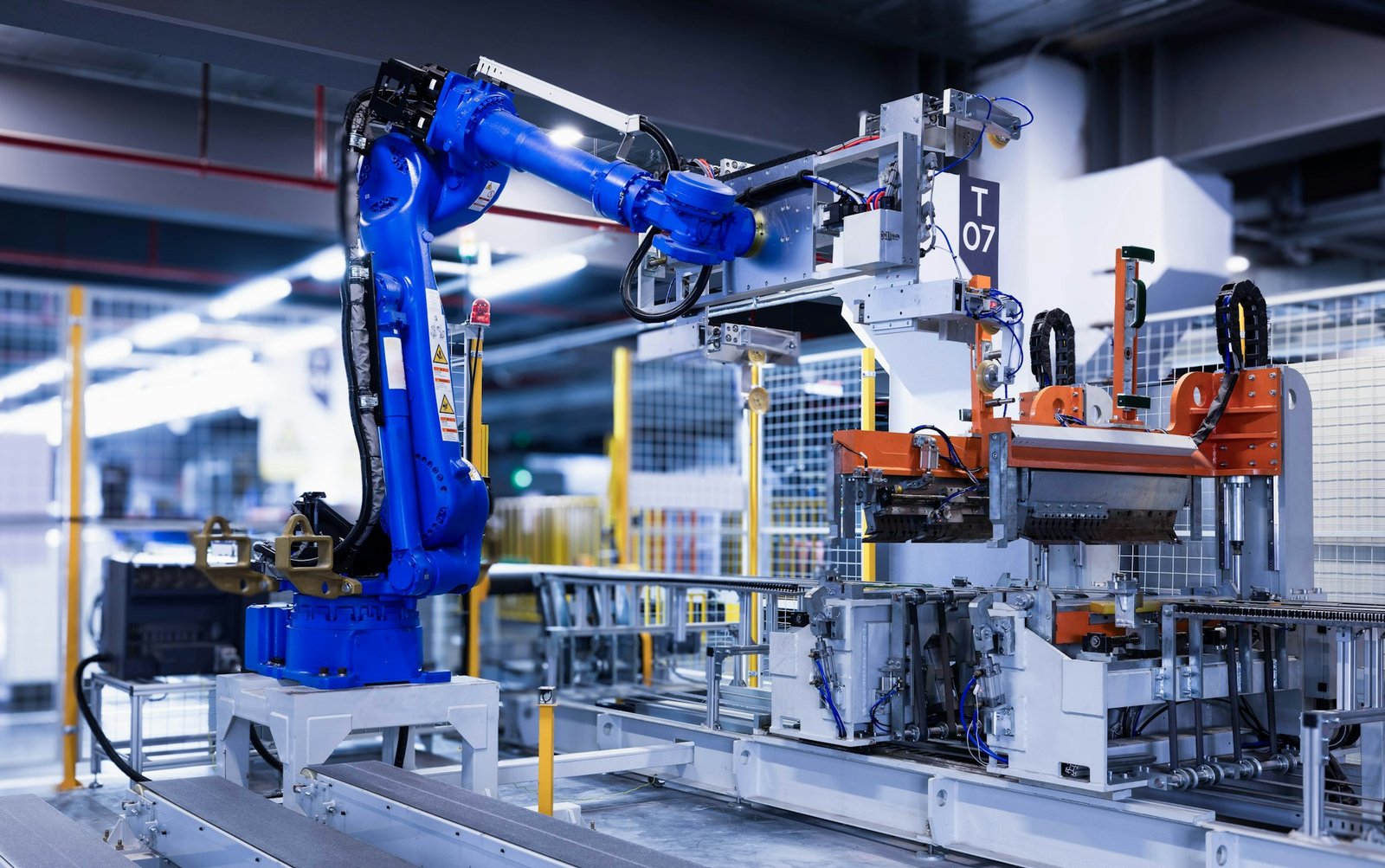
It's worth being clear about what exoskeletons are not: they are not a form of robotic automation, and they don't replace the kind of task elimination that collaborative robots provide. Our companion article on cobots in logistics warehouses covers how collaborative robots take over specific repetitive movements entirely, reducing the number of times a human needs to perform a given motion at all. Exoskeletons work differently — they stay on the worker's body and assist with tasks that still require a person's judgment, dexterity, or flexibility to perform, such as navigating irregular freight shapes or handling items too varied for a robotic gripper. In practice, the two technologies are complementary rather than competing: a warehouse might deploy cobots to handle high-volume, repetitive single-SKU moves while equipping pickers working mixed, irregular orders with exoskeletons, since neither technology alone addresses the full range of physical tasks found on a typical floor. Broader automation trends covered in our piece on warehouse robotics and automation are part of the same overall shift toward reducing physical strain on the workforce, just through a different mechanism.
Cost and ROI Considerations for Facility Operators
Passive exoskeletons typically cost a few hundred to a little over a thousand dollars per unit depending on the model and body coverage, while powered exoskeletons with battery-driven actuators cost substantially more and carry ongoing maintenance and charging-infrastructure needs. For a facility deciding whether the investment makes sense, the calculation usually comes down to comparing that per-unit cost against the facility's actual injury and workers' compensation claims history for manual handling tasks — a distribution center with a documented pattern of back strain claims among pickers has a much clearer payback case than one with a largely automated floor and only occasional manual lifting. Pilot programs have become the standard way facilities de-risk this decision: rather than committing to a full fleet of devices across every shift, operators typically equip a subset of volunteer workers on the highest-strain tasks first, track injury and comfort data over a period of months, and only scale up once the pilot demonstrates measurable benefit specific to that facility's actual task mix. This matters for any transportation logistics provider weighing wearable technology against other safety investments, since the right answer depends heavily on how much manual handling the specific operation still involves relative to what's already been automated.
Adoption Challenges: Fit, Comfort, and Worker Buy-In
The biggest practical obstacle to exoskeleton adoption isn't usually the technology itself but getting workers to wear the devices consistently across a full shift. Poor fit, discomfort in hot or humid facility environments, and a learning curve for new users can all lead to abandoned pilots if rollout isn't managed carefully. Facilities that have had the most success typically start with a small group of volunteer users, involve workers directly in fit and model selection rather than mandating a single device company-wide, and track usage data alongside injury metrics to demonstrate value early rather than assuming adoption will happen on its own. Sizing also matters more than it might seem — a poorly fitted unit can create new pressure points or restrict movement in ways that actually reduce productivity, which is part of why vendor trials over a meaningful pilot period, rather than a one-time demo, have become standard practice before a facility-wide purchase decision. Climate is a practical factor too: a facility running in a hot, humid environment without climate control needs to weigh breathability and added body heat from a wearable device, which is one reason passive designs with minimal bulk have generally seen faster uptake than heavier powered units in markets with less temperature-controlled warehouse space.
How RR Brothers and Logistics Can Help
Worker safety in manual handling operations is a direct priority across RR Brothers and Logistics' warehousing and distribution facilities, where case picking, palletizing, and load/unload tasks remain part of daily operations even as we invest in automation where it makes sense. As wearable safety technology continues to mature, we evaluate it the same way we evaluate any operational investment in our transportation logistics network — based on measurable impact on worker safety and throughput rather than novelty. Clients storing or distributing goods through our network can be confident that our facility teams take manual handling risk seriously as part of the broader service we provide, alongside the core freight forwarding, customs, and multimodal transport services that move their cargo end to end.
Frequently Asked Questions
A passive exoskeleton uses springs, elastic bands, or mechanical linkages to redirect load away from strained muscle groups without any motor or battery, while a powered exoskeleton uses electric actuators to actively assist movement — passive units are lighter and cheaper, powered units provide more assistance for heavier or more frequent lifting tasks.
No — exoskeletons augment a human worker's own body rather than replacing the task, which makes them a complement to, not a substitute for, robotic automation; many warehouses deploy both, using cobots for repetitive high-volume moves and exoskeletons for tasks that still require a person's judgment and dexterity.
Early field data is promising — one multi-site distribution center study following case-picking workers over hundreds of thousands of work hours reported a 62% reduction in strain and sprain injuries among workers wearing a back-assist exosuit, though the dataset so far is primarily vendor-sponsored and independent peer-reviewed confirmation is still developing.
It's a fair concern researchers have specifically investigated — so far, published pilot data has not shown injuries shifting to other joints or muscle groups, but this remains an active area of ergonomics research as more exoskeleton models reach wider warehouse deployment.