A decade ago, "weather risk" in a logistics plan usually meant a line about typhoon season and a note to build in a few extra days during winter storms. That framing no longer matches reality. Ports, canals and highway corridors across multiple continents have faced weather-driven disruption with enough frequency and severity in recent years that treating it as background noise is no longer a defensible planning assumption. For transportation logistics networks moving cargo across multiple climates and chokepoints, the practical question has shifted from "will weather cause a delay this year" to "how many separate weather events will the network need to absorb, and how fast can it recover from each one."
A Pattern, Not Isolated Incidents
Industry risk-monitoring reports covering late 2025 and heading into 2026 describe a consistent pattern rather than a cluster of unrelated bad luck. Storms across South and Southeast Asia, flooding across Europe and the UK, and continued drought and storm activity across North and Central America have all triggered multi-day port closures, inland transport disruption and delayed export manufacturing within the same reporting window. One widely cited industry briefing specifically flagged that recovery from a Q4 disruption wave was still carrying into the following quarter, which is the signature of a resilience problem rather than a single bad storm — the system was not snapping back to normal between events. Building genuine supply chain weather resilience starts with recognizing that this is now a recurring operating condition rather than a once-a-decade event worth a footnote in a risk register.
Specific cases from that same reporting window illustrate how varied the exposure is. In Indonesia, severe operational constraints at the Port of Belawan were driven not by damage to the port itself but by inaccessible roadways feeding it, cutting off cargo movement even though terminal operations could otherwise continue. In southern Thailand, storm damage to roadways and rail lines halted the flow of high-tech and automotive components and disrupted cross-border trade with Malaysia for an extended stretch. In Europe, flooding from a mid-November storm disrupted local road and rail corridors across several regions, hitting last-mile and parcel networks specifically rather than the long-haul ocean and air legs that get most planning attention. None of these three events would show up in a textbook "canal closure" or "hurricane makes landfall" case study, which is precisely the point — supply chain weather resilience has to account for the much wider and messier set of ways weather actually interrupts a transportation logistics network in practice.
The World Meteorological Organization has tracked a long-term rise in the frequency and intensity of extreme weather events as part of its climate monitoring work, which is part of the backdrop against which this logistics-specific pattern is playing out. The structural reason behind this is not only that severe weather events are becoming more frequent in some regions, but that the infrastructure absorbing them is aging at the same time. Ports, bridges, power grids and transportation networks built decades ago are being asked to handle both higher cargo volumes and more severe weather than they were designed for, and that combination compounds the disruption each event causes rather than simply repeating it.
Where Weather Hits Hardest: Ports, Canals, Highways
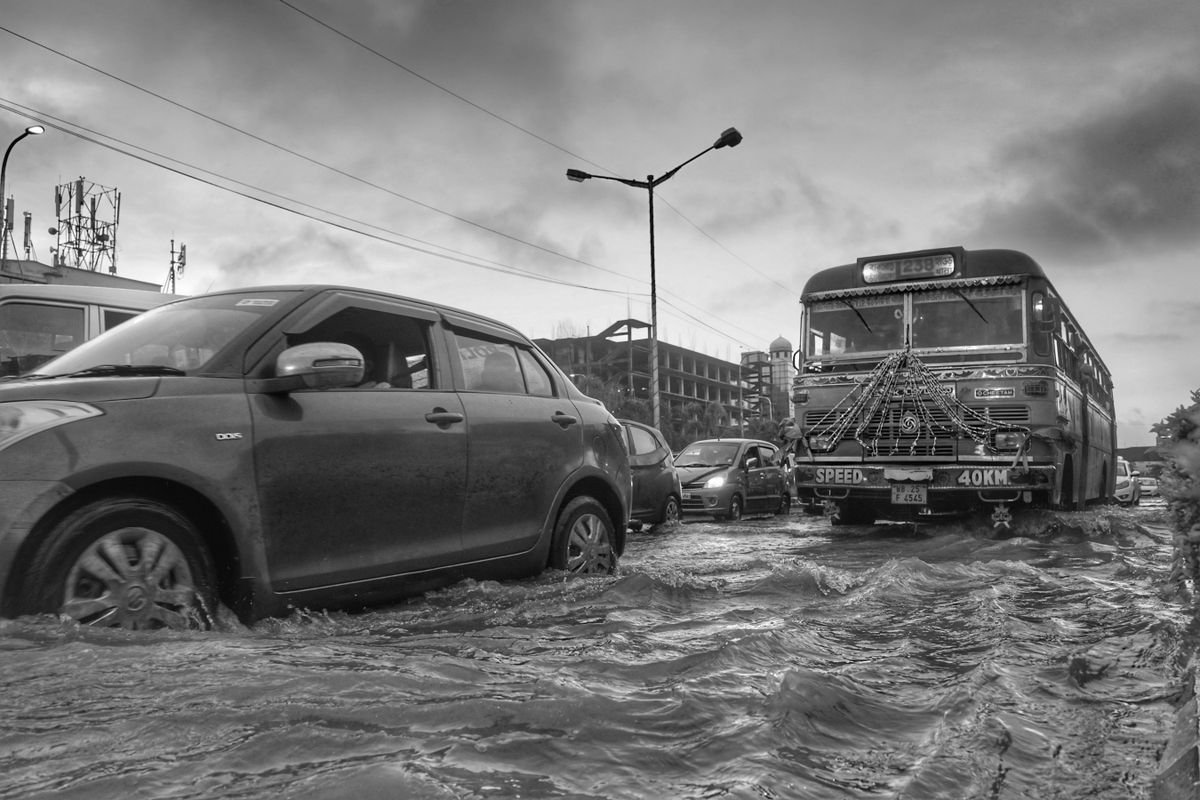
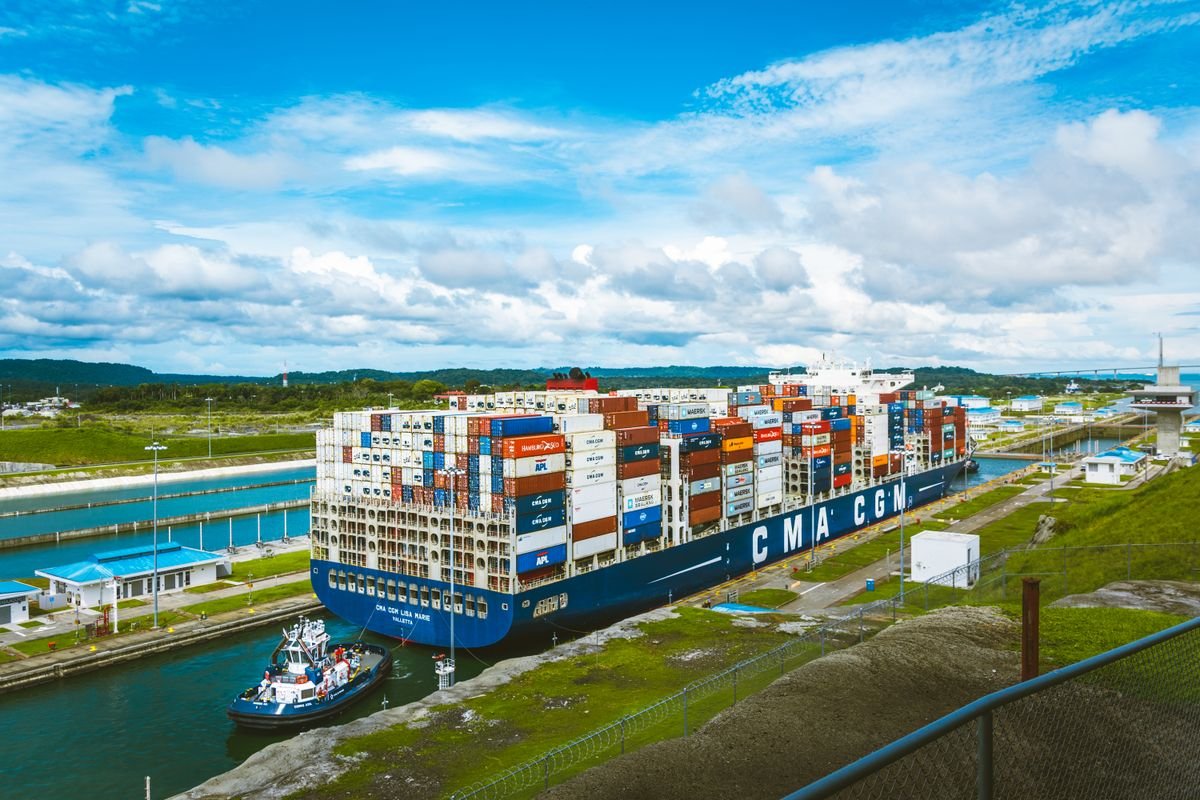
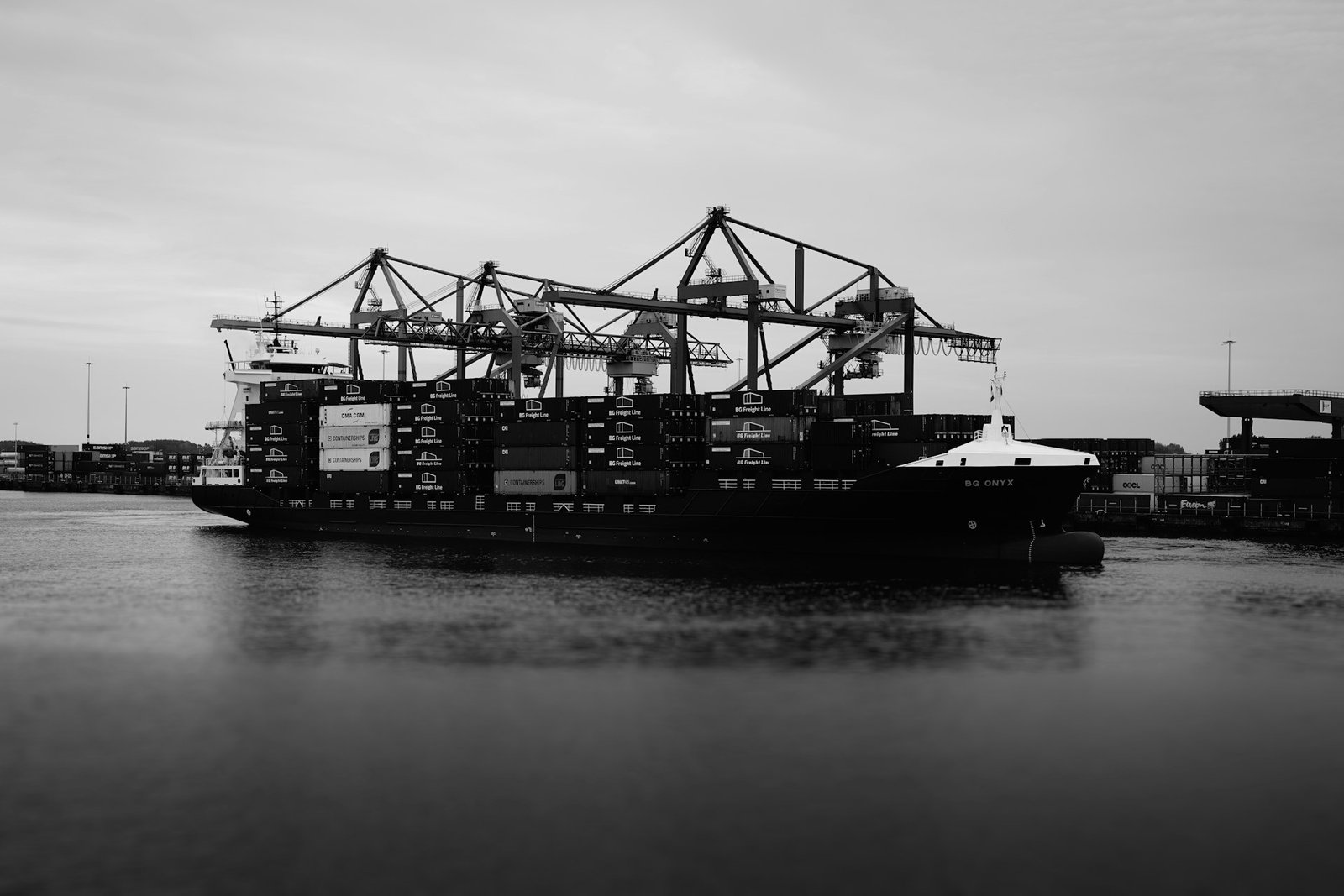
Three categories of infrastructure carry a disproportionate share of weather-driven transportation logistics risk. Port operations are vulnerable both directly — storm damage to cranes, flooded yards, and wind limits on crane operations — and indirectly, through inaccessible access roads and rail lines that strand cargo even when the port terminal itself is undamaged. Canal and waterway chokepoints carry a different kind of weather exposure: the Panama Canal drought showed how a slow-building climate condition, rather than a single storm, can constrain vessel draft and daily transit slots for an extended period, forcing carriers to reduce load or reroute entirely. And inland road and rail corridors face the most geographically distributed exposure, since a single washed-out bridge or flooded highway segment can cut off access to an otherwise undamaged region, as our companion piece on monsoon season shipping delays in India covers in more detail for that specific corridor.
Compound Events: When Multiple Disruptions Stack
Risk analysts increasingly use the term "compound event" to describe what makes recent disruptions harder to plan around than historical weather risk. A compound event is when two or more extreme weather phenomena hit in close succession or simultaneously — a storm striking a region already dealing with flood damage, or a drought-constrained canal facing an unrelated labor disruption at the same time. These overlapping crises overwhelm traditional single-hazard risk management, which typically plans for one disruption type recovering before the next begins. Academic research on weather-disrupted ports, including a study of Brazilian maritime imports, has found that these events don't just pause port activity temporarily — they prompt firms to adjust their route choices in ways that persist even after the port itself reopens, meaning the effective disruption window is longer than the weather event that caused it.
Building a Resilience Framework That Actually Holds
The useful response to this pattern is not a single tactic but a layered framework, since no individual lever covers every type of weather risk a shipping network faces. The table below sets out the core components of a practical supply chain weather resilience framework.
| Resilience Lever | What It Does | Main Trade-Off |
|---|---|---|
| Route diversification | Avoids total reliance on one port, canal or corridor | Alternative routes are often slower or costlier day-to-day |
| Buffer stock timed to risk season | Absorbs delay without a stockout | Ties up working capital in inventory |
| Weather-data-informed booking | Shifts sailing or departure dates ahead of forecast risk windows | Requires active monitoring and flexible booking terms |
| Pre-agreed alternate ports/modes | Cuts decision time once a disruption hits | Needs advance contractual and customs groundwork |
| Parametric insurance | Pays out automatically against a defined weather trigger | Covers financial loss, not the physical delay itself |
Route Diversification in Practice
Diversification works best when it is planned before a disruption, not improvised during one. That means qualifying more than one port of entry per region, maintaining active relationships with carriers across more than one alliance, and understanding in advance which inland corridors can absorb overflow volume if a primary route becomes unusable. This is also where mode flexibility matters — a transportation logistics plan that can shift part of a shipment from sea to rail, or from one inland corridor to another, has meaningfully more resilience than one locked into a single mode and route for the entire journey. The broader principle connects directly to our analysis of geopolitical risk and supply chain resilience, since weather and geopolitical disruptions both point toward the same underlying fix: networks that depend on a single node or corridor are fragile, almost regardless of what specific risk eventually triggers the disruption.
Buffer Stock and Weather-Data-Informed Booking
Buffer stock timed to known high-risk seasons — monsoon windows, Atlantic and Pacific storm seasons, dry-season canal draft restrictions — is a more targeted and capital-efficient approach than carrying extra inventory uniformly year-round. Pairing that with weather-data-informed booking, where shipment timing is actively adjusted around forecast risk windows rather than fixed to a standard schedule, lets a transportation logistics operation absorb a meaningful share of climate-driven delay before it ever reaches the customer. Neither tool eliminates weather risk on its own, but together with route diversification they materially shrink the range of outcomes a shipper has to plan around, which is usually the more realistic goal than trying to eliminate weather disruption altogether.
Getting the timing of buffer stock right requires treating risk seasons as calendar inputs to procurement planning, not just a note in an annual risk review. A shipper that knows its primary origin port faces a defined monsoon window, for example, can pull forward orders that would otherwise ship during the highest-risk weeks, trading a small amount of extra carrying cost for a meaningful reduction in the odds of a stockout. Weather-data-informed booking takes a shorter-horizon view of the same idea — tracking forecast models two to four weeks out and shifting a sailing date, choosing a different departure port, or splitting a shipment across two vessels when a specific voyage looks likely to run into a storm system. Neither approach requires exotic technology; what it requires is building the monitoring and decision process into standard operations so that acting on a weather forecast is routine rather than an emergency improvisation made after a shipment is already at risk.
A genuinely resilient transportation logistics operation treats these levers as complementary rather than substitutes for one another. Route diversification limits how much damage any single disrupted node can do; buffer stock absorbs the delay that diversification cannot avoid; and weather-data-informed booking reduces how often a shipment is exposed to the worst of a forecastable event in the first place. Companies that invest in only one of the three tend to discover its limits quickly — diversification alone does not help if every alternate route is also affected by the same storm system, and buffer stock alone becomes extremely expensive if it has to cover every possible delay rather than the specific, forecastable high-risk windows a weather-informed approach can narrow down in advance.
How RR Brothers and Logistics Can Help
Operating across China, India, Turkey, Kenya, Nigeria and Russia means RR Brothers and Logistics plans around a wide range of regional weather risk as a matter of course — from monsoon timing on the Indian subcontinent to winter conditions affecting overland routes into Russia. Because we book across multiple carriers, ports and modes rather than being tied to a single route, we can help clients build real supply chain weather resilience into their shipping plans, including pre-identified alternate routings and realistic buffer timing, so a single weather event doesn't become a single point of failure for the whole shipment.
Frequently Asked Questions
Multiple recent industry risk reports point to a genuine rise in weather-related disruption, driven partly by more frequent severe weather events and partly by aging port, road and rail infrastructure that was not built to handle today's conditions.
A compound event is when multiple extreme weather phenomena occur simultaneously or in rapid succession, such as a storm striking a region already dealing with flooding or infrastructure strain, overwhelming the kind of single-hazard risk planning most companies have traditionally used.
Not necessarily. Research on weather-disrupted ports has found that shippers often adjust their routing decisions for a period after a port reopens, meaning the practical effects on transit times and capacity can outlast the storm itself.
Route and mode diversification tends to deliver the broadest protection, since it means a single port closure, canal restriction or highway washout does not strand an entire shipment with no alternative path forward.