Risk Has Stopped Being a Footnote in Transportation Logistics Planning
Five years ago, most shippers treated geopolitical risk as a line in an annual report rather than a variable they actively planned around week to week. That has changed. Between Red Sea attacks that rerouted a large share of Asia-Europe container traffic, escalating tariff actions between major economies, and an expanding web of sanctions regimes affecting specific countries, carriers and even individual entities, geopolitical risk now sits alongside fuel cost and vessel availability as a core input into transportation logistics planning. The shippers who have weathered this period best are not the ones who guessed correctly about any single event — nobody has a perfect record on that front — but the ones who built enough flexibility into their routing, sourcing and inventory decisions that no single disruption could stop their cargo from moving. That flexibility is what the industry now calls supply chain resilience, and it has moved from a nice-to-have into a genuine competitive differentiator.
The Red Sea Crisis as the Clearest Recent Case Study
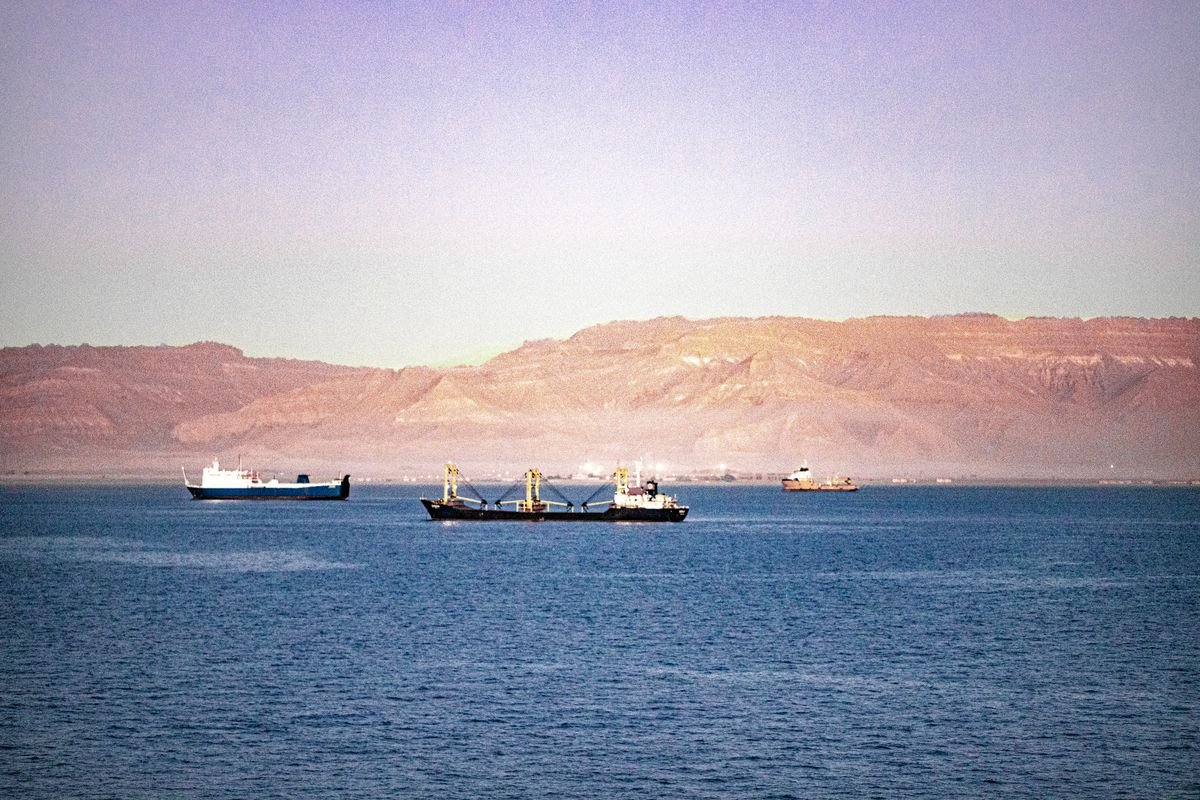
The most visible geopolitical shock of the past three years has been the disruption to Red Sea shipping. Since late 2023, Houthi attacks on commercial vessels transiting the southern approach to the Suez Canal have pushed most major container lines to reroute around the Cape of Good Hope instead, a detour that typically adds 7 to 14 days to an Asia-Europe voyage. We cover the mechanics of that shift in detail in our companion article on the Red Sea crisis and shipping reroutes, but the broader lesson for this discussion is simpler: a security situation in one narrow maritime chokepoint reshaped freight rates, transit times and vessel supply on a trade lane responsible for a significant share of global container volume, and it did so with almost no advance warning. That is precisely the kind of shock that resilience planning exists to absorb.
Tariff Escalation Adds a Second, Slower-Moving Layer of Risk
Alongside sudden shocks like the Red Sea situation, shippers are also navigating a slower but equally consequential form of geopolitical risk: tariff policy. Trade tension between the United States and China, along with a broader wave of tariff actions affecting other bilateral relationships, has made landed cost far less predictable than it was a decade ago. A sourcing decision that made sense under one tariff schedule can become significantly more expensive under the next one, and the lag between a policy announcement and its implementation is often too short for a business to fully restructure its supply chain in response. This is one of the clearest drivers behind the diversification trend covered in our related piece on multi-origin sourcing beyond China — not abandoning a manufacturing base that still offers real advantages, but making sure a single tariff change or trade action cannot single-handedly derail a sourcing plan.
Sanctions Regimes and the Cost of Getting Compliance Wrong
Sanctions add a third dimension that is less about cost and more about outright feasibility. Restrictions tied to specific countries, vessels, ports, banks or named individuals can make a previously routine shipment legally impossible to complete, or expose a shipper to penalties if screening is inadequate. This is a genuine operational risk, not a theoretical one — banks and carriers routinely decline to process transactions or bookings that touch a sanctioned party even indirectly, and the compliance burden of screening counterparties, vessels and routings has grown accordingly. A resilient transportation logistics setup treats sanctions screening as a standing process built into every booking, not a one-time check performed when a new lane opens.
Insurance and Contractual Terms Are Part of the Resilience Picture Too
Resilience planning tends to focus on physical routing and sourcing, but the contractual and insurance side of a shipment matters just as much when geopolitical risk materializes. War risk premiums on vessels transiting higher-risk waters, force majeure clauses that may or may not cover a specific sanctions action, and cargo insurance policies that assume a "normal" routing can all leave a shipper exposed if they haven't been reviewed against the actual current environment. A shipment that gets rerouted around a closed canal or diverted away from a newly sanctioned port is exactly the kind of change in circumstances that should trigger a quick check with an insurer or forwarder, rather than an assumption that existing coverage automatically follows the cargo regardless of route. Building this review into standard operating procedure, rather than treating it as an afterthought only considered after a claim is denied, is a low-cost but frequently overlooked piece of genuine transportation logistics resilience.
What Genuine Resilience Looks Like in a Transportation Logistics Network
- Multi-origin sourcing — qualifying more than one supplier or manufacturing location for critical goods so that a disruption, tariff change or sanctions action affecting one origin doesn't halt the entire flow of a product line.
- Carrier and route diversification — booking across multiple ocean carriers, alliances and, where relevant, transport modes, so that capacity constraints or a closed route on one string don't leave a shipper with no alternative.
- Right-sized safety stock — recalibrating inventory buffers lane by lane based on actual disruption history rather than a single blanket policy applied across an entire catalog.
- Scenario-based contingency planning — having a pre-agreed playbook for specific plausible events (a canal closure, a new tariff tier, a sanctions expansion) rather than improvising a response after the fact.
- A forwarder with genuine multi-country reach — working with a partner that has real operational capability across multiple origin and destination markets, rather than a single-lane specialist who has no fallback when that one lane is disrupted.
Safety Stock Recalibration: A More Nuanced Conversation Than It Sounds
Increasing safety stock across the board is the easiest resilience lever to pull and often the most expensive. Holding extra inventory ties up working capital, increases warehousing cost, and for some categories introduces obsolescence risk that can outweigh the benefit of the buffer. The more disciplined approach that resilient shippers have adopted is lane-specific: reviewing which routes have actually experienced disruption in the past two to three years, what that disruption cost in stockouts or expedited freight, and sizing safety stock against that real history rather than a uniform percentage applied everywhere. A lane with a clean disruption record for three years running doesn't need the same buffer as one that has seen repeated congestion, rerouting or customs delays.
Scenario Planning: Building the Playbook Before the Crisis, Not During It
The businesses that responded fastest to the Red Sea disruption in early 2024 were generally not the ones with the best information — the situation was public knowledge within days for everyone — but the ones who had already asked "what would we do if a major route became unusable" before it happened. That kind of scenario planning doesn't require predicting the exact next disruption; it requires having pre-identified alternate routings, a shortlist of backup suppliers, and clear internal authority to activate a contingency plan quickly rather than waiting for a committee decision while transit times stretch and costs climb. Reviewing these scenarios annually with a forwarding partner who has visibility across multiple trade lanes is one of the more practical, low-cost steps a shipper can take toward genuine transportation logistics resilience.
Geopolitical Risk Factors and Practical Resilience Responses
| Risk Factor | Typical Impact | Resilience Response |
|---|---|---|
| Maritime chokepoint disruption | Longer transit, higher freight rates | Route and mode diversification, buffer time |
| Tariff escalation | Higher landed cost, margin pressure | Multi-origin sourcing, tariff engineering review |
| Sanctions expansion | Blocked transactions, booking refusals | Standing compliance screening, counterparty vetting |
| Regional conflict or instability | Port closures, insurance surcharges | Scenario playbooks, alternate port options |
Why Diversified Networks Outperform During Disruption
The common thread across every resilience lever described above is diversification — of origin, of route, of carrier, of mode. A supply chain resilience strategy built entirely around a single origin country, a single ocean carrier or a single trade lane is, by definition, fragile: any disruption affecting that one point of failure affects the entire flow of goods. The UNCTAD Review of Maritime Transport has repeatedly highlighted how concentrated trade lanes and chokepoint dependency amplify the impact of localized disruptions across the wider global economy, which is exactly why diversification at every layer of a transportation logistics network — not just sourcing, but routing and carrier selection too — has become the standard resilience playbook rather than an optional extra for risk-averse shippers alone.
How RR Brothers and Logistics Can Help
RR Brothers and Logistics operates across China, India, Turkey, Kenya, Nigeria, Russia and other global markets, which means resilience isn't an abstract concept for us — it's built into how we structure freight bookings every day. When a route tightens or a single lane faces disruption, we can shift cargo across our multimodal network of sea, air, rail and road freight, work with clients on realistic safety stock recommendations for specific lanes, and provide the kind of standing compliance screening that keeps shipments moving without last-minute surprises. Download our company brochure (PDF) for a full overview of our services and global network. If your current transportation logistics setup depends heavily on a single origin, carrier or route, that concentration is exactly the kind of risk our team can help you plan around before the next disruption forces the issue.
Frequently Asked Questions
Supply chain resilience is the ability of a transportation logistics network to absorb a disruption — a closed route, a sanctions regime, a tariff change — and keep cargo moving with manageable delay and cost, rather than stopping altogether. It's built through diversification, buffer capacity and pre-planned contingencies rather than achieved after a shock hits.
Since late 2023, Houthi attacks on commercial shipping have pushed most major carriers to reroute Asia-Europe cargo around the Cape of Good Hope instead of the Suez Canal, adding 7 to 14 days of transit time and tightening effective global vessel capacity even without any reduction in the underlying fleet.
No. For most shippers, multi-sourcing means adding a second or third origin alongside China rather than replacing it outright, since China's manufacturing base, port infrastructure and supplier density remain difficult to fully replicate elsewhere in the short term.
There's no universal number — it depends on the cargo's shelf life, the lane's disruption history and the cost of a stockout versus the cost of holding extra inventory. A practical starting point is reviewing safety stock lane by lane against actual disruption frequency over the past two to three years, rather than applying one blanket buffer across an entire product range.