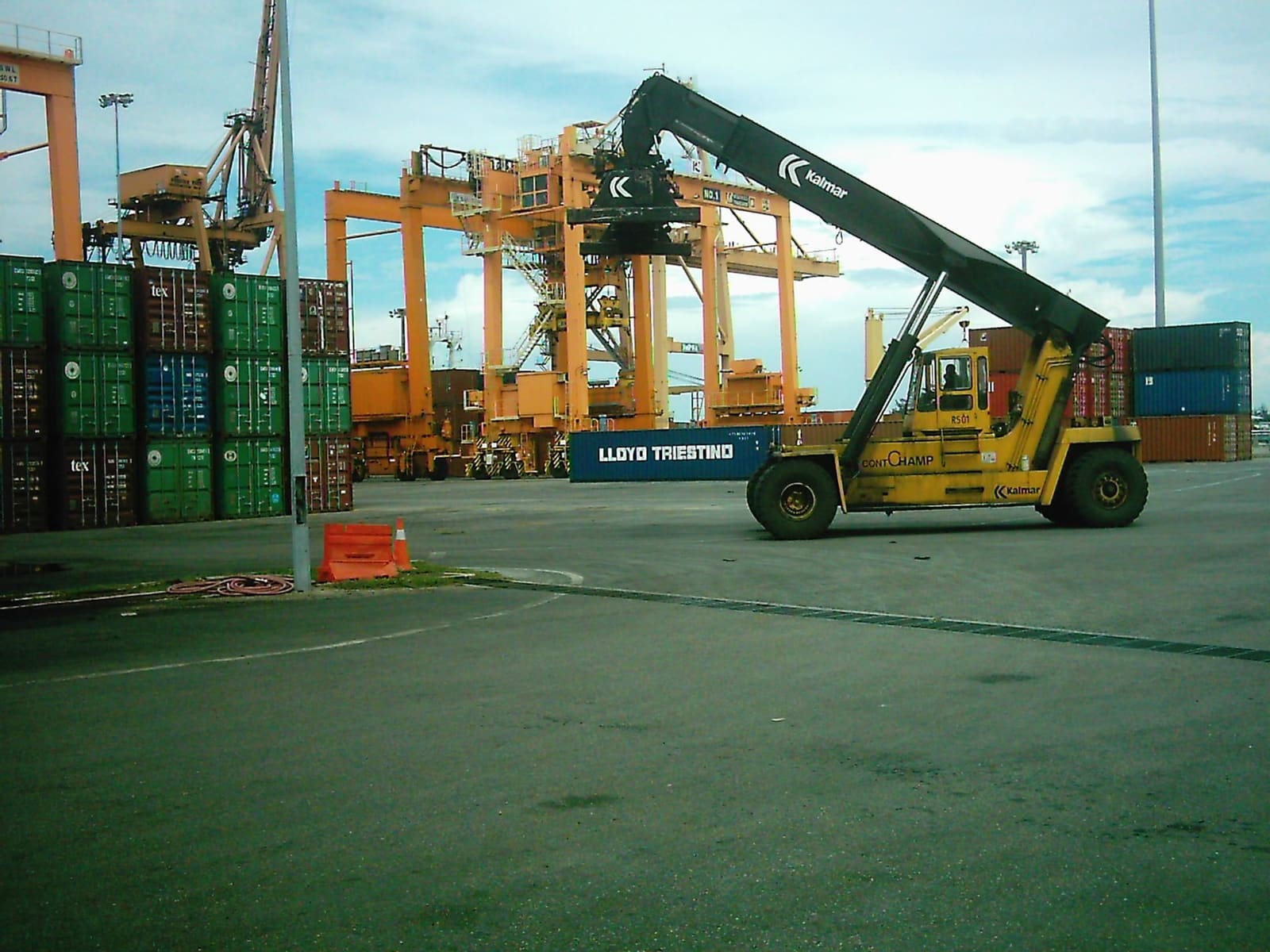
A Cooling Trend After a Hot Peak Season
Anyone booking ocean freight out of China this month has probably noticed the tone of the market has shifted. Industry data through August 2026 shows spot rates softening from the peak-season highs reached in July, with pricing on several major lanes coming down rather than continuing to climb. For a freight forwarder tracking these lanes daily on behalf of clients, the pattern is a familiar one: a sharp run-up ahead of peak shipping season, followed by a pullback once the heaviest wave of restocking has cleared the pipeline. What's different this year is the scale of the swing on the transpacific, and the way carriers are responding to it.
This isn't just a China story — it touches every importer relying on Chinese suppliers for autumn and winter goods, and it has knock-on effects for how contract negotiations, spot bookings, and even routing decisions are being made across the industry this quarter.
What the Numbers Are Showing on Transpacific Lanes
The clearest signal has come from China–US routes. Spot rates on some transpacific strings touched above $7,000 per forty-foot equivalent unit in early August, at the tail end of the peak-season rush, before easing back toward the mid-$5,000s as the month progressed. That's a meaningful retracement in a short window, and it tracks with two things happening at once: West Coast port capacity improving after the seasonal crunch, and booking demand cooling once importers had largely finished restocking for the autumn and holiday selling season.
On China–Europe lanes, and on other secondary routes, the market has told a similar if less dramatic story — container rates from China have softened compared with July's peak-season highs, with some routes seeing pullbacks in the rough range of $100 per twenty-foot container and $200 per forty-foot high-cube container. Individually those numbers look modest, but for shippers moving multiple containers a month, they add up.
Illustrative Rate Pattern, August 2026
The table below is a simplified, illustrative snapshot of the pattern the market has been describing this month — not a quote, and not specific to any single carrier or contract. Actual pricing on any given booking depends on origin, destination, equipment type, and carrier allocation at the time of booking.
| Lane / Segment | Early August Peak | Market Direction, Late August |
|---|---|---|
| China–US West Coast (spot) | Touched above $7,000/FEU | Easing toward the mid-$5,000s |
| China–US East/Gulf Coast | Elevated on tight capacity | Softening more slowly than the West Coast |
| General China export lanes (20GP) | July peak-season high | Down roughly $100 on some routes |
| General China export lanes (40HQ) | July peak-season high | Down roughly $200 on some routes |
Why Carriers Are Reaching for Surcharges Instead of Rate Hikes
One of the more interesting details in this cycle is how carriers are choosing to protect revenue. Rather than pushing through outright General Rate Increases on a softening market — a move that tends to fail when demand is already cooling — several lines have instead introduced or expanded ancillary surcharges, including a surcharge tied to Panama Canal transit fees on relevant strings. This is a subtler way of managing yield: base rates can drift down in response to the market while a surcharge layer holds part of the revenue in place. For shippers, the practical effect is the same as a rate increase — it still shows up on the invoice — so it's worth checking the full surcharge schedule on a quote, not just the headline ocean freight rate, when comparing offers from different carriers or when your freight forwarder presents rate options.
East and Gulf Coast Capacity Still Lags the West Coast
Not every part of the network is loosening at the same speed. West Coast gateways — led by high-volume hubs like the Port of Los Angeles and Port of Long Beach — have seen the fastest improvement in available capacity and vessel turnaround, which is a big part of why West Coast spot rates have pulled back the most. East Coast and Gulf Coast ports, by contrast, remain comparatively tighter — a reflection of longer-standing capacity constraints, rerouted vessel strings, and the fact that all-water services to these coasts typically involve longer transits and less schedule flexibility than transpacific-then-rail alternatives. Shippers targeting East Coast or Gulf Coast distribution centers should not assume the general "rates are falling" narrative applies evenly to their specific routing.
Should You Book Now, or Wait for Further Softening?
This is the question we're fielding most often from clients right now, and there isn't a single right answer — it depends on your risk tolerance and your supply chain calendar. Some shippers are deliberately delaying or rolling bookings into September in the hope that rates soften further, betting that the post-peak pullback still has room to run. That can work, but it comes with real downside: if demand or capacity shifts unexpectedly — congestion at a Chinese gateway port, a fresh alliance schedule change, or a jump in bookings ahead of a tariff deadline — rates and space availability can tighten again quickly, and cargo held back to chase a lower rate can end up shipping later and at a higher cost, or missing a selling window entirely.
Our general guidance as a logistics partner is to separate your volume into two buckets. For cargo where consistency and delivery timing matter more than shaving a small amount off the freight cost, lock in contract rates or book early on committed space. For genuinely flexible cargo where a few extra days of delay is tolerable, spot booking with some patience can make sense in a softening market like this one — but keep an eye on the surcharge schedule, not just the base rate, so the comparison is a fair one.
Contract Rates vs. Spot Rates: A Quick Refresher
It's worth pausing on the distinction, because the two markets are behaving differently right now and shippers sometimes conflate them. A contract rate is a rate agreed with a carrier (directly, or through a freight forwarder's own service contract) for a defined period, usually with a minimum volume commitment in exchange for price stability. A spot rate is whatever the market will bear for a single booking on a given sailing, and it is far more sensitive to short-term swings in demand and available space. In a cycle like the one we're in now — spot rates falling faster than contract rates on some lanes — shippers who locked in contract coverage back in the spring may find themselves paying somewhat more than the current spot market for a period, while shippers relying purely on spot bookings get the benefit of the pullback immediately but carry more exposure if the market reverses. Neither approach is wrong; the right mix usually depends on how predictable your shipping volume is and how much a missed sailing would cost your business.
Many of our clients run a blended strategy: a contract or allocation agreement covering their base, predictable monthly volume, with spot bookings used for overflow or unplanned orders. That combination smooths out a lot of the volatility this market has shown over the past two years, without requiring anyone to perfectly time the rate cycle.
A Market That Has Moved Quickly Before
It's also worth keeping some historical perspective. Ocean freight rates out of China have swung sharply in both directions repeatedly since 2020 — from historic highs during pandemic-era congestion, to multi-year lows once that backlog cleared, and through several shorter peak-season spikes since, including the run-up tied to Red Sea rerouting that began in late 2023. August 2026's cooling trend fits a now-familiar seasonal pattern rather than signaling a permanent shift in the cost of shipping from China. Shippers who have been through a full cycle or two tend to build that volatility into their planning rather than treating any single month's rate level — high or low — as the new normal.
What This Means for Your Shipments
- Compare all-in cost, not headline rate. With surcharges doing more of the work this cycle, ask any freight forwarder for the full landed freight cost before comparing quotes across carriers.
- Match your booking strategy to your cargo. Time-critical or contractually committed shipments are better served by locking in rates now; flexible cargo has more room to wait out further softening.
- Don't assume uniform pullback across US coasts. East and Gulf Coast capacity remains tighter than the West Coast — factor that into routing and inland transportation planning.
- Watch for the next inflection point. Rate cycles in this market have moved quickly in both directions over the past two years; a cooling market in August is not a guarantee of continued softening through the autumn.
- Keep your forwarder in the loop early. The earlier you flag upcoming volume, the more options you have — both for contract coverage and for capturing favorable spot windows as they appear.
At RR Brothers and Logistics, we track rate movement across our carrier network daily so our clients aren't reacting to headlines after the fact. Whether you need a locked-in contract rate for predictable volume or a flexible spot booking that takes advantage of a softening market, our Sea Freight (FCL & LCL) team can walk you through the current options for your specific China export lane.
Frequently Asked Questions
West Coast port capacity improved after the seasonal crunch, and booking demand cooled once most importers had finished restocking for the autumn and holiday selling season, easing spot rates off their July highs.
It depends on your cargo's flexibility — committed or time-critical shipments are better served by locking in rates now, while genuinely flexible cargo can afford to wait out further softening, though rates can also tighten again quickly if conditions shift.
Pushing through a General Rate Increase on a softening market tends to fail, so several carriers are instead introducing or expanding surcharges — including a Panama Canal-related charge — which lets them protect revenue even as headline base rates drift down.
No — West Coast gateways have seen the fastest capacity recovery and the largest rate pullback, while East Coast and Gulf Coast ports remain comparatively tighter, so shippers targeting those coasts shouldn't assume the same softening applies to their routing.