The 10-Minute Promise and What's Actually Behind It
Quick commerce — grocery and convenience orders promised in 10 to 30 minutes — has moved from a novelty in a handful of cities to a standing feature of urban transportation logistics across India, the Gulf, parts of Southeast Asia and several Chinese cities. The promise sounds simple from a customer's phone screen: tap an order, watch a rider's dot move across a map, receive a bag of groceries before the kettle boils. What sits behind that promise is a purpose-built physical and operational network that looks almost nothing like a standard e-commerce fulfilment chain. Quick commerce delivery isn't traditional last-mile delivery sped up — it's a different network topology built specifically to compress the distance and decision time between inventory and doorstep, and understanding that difference matters for anyone evaluating whether the model applies to their own category of goods.
Dark Stores and Micro-Fulfillment: The Physical Backbone
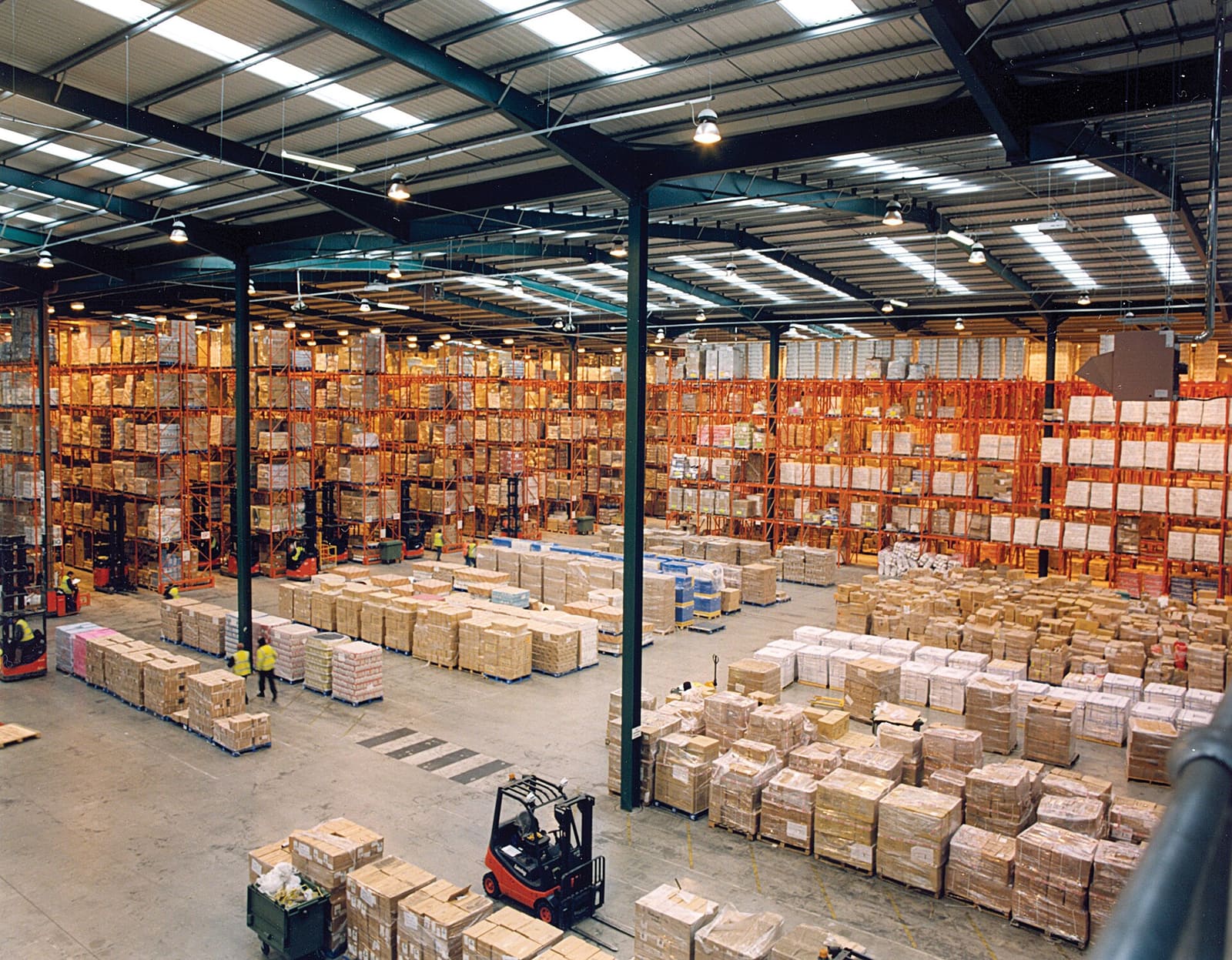
The core infrastructure innovation behind quick commerce is the dark store: a small-format warehouse, typically 1,500 to 3,000 square feet, tucked into a dense residential or mixed-use neighbourhood, stocked with a curated few thousand SKUs, and closed to walk-in customers — hence "dark." Unlike a regional distribution centre serving a metro area of several million people, a dark store is deliberately sized to serve only the addresses within a 2 to 4 kilometre radius, because that radius is what keeps rider travel time inside the 10-30 minute promise. A single city might need dozens of these micro-fulfillment points rather than one or two large hubs, which fundamentally changes the real estate, staffing and inventory-replenishment math compared with conventional e-commerce warehousing. Riders are typically staged at or near the dark store itself rather than dispatched from a central depot, cutting out the travel time a conventional courier would spend reaching a pickup point before a delivery route even begins.
SKU Selection: Why Quick Commerce Can't Stock Everything
Because each dark store carries only a fraction of the assortment a full-size supermarket or e-commerce warehouse holds, SKU selection is arguably the single hardest operating decision in quick commerce. Operators lean heavily on sales-velocity data to decide what earns a spot on a dark store's limited shelving: fast-moving grocery staples, snacks, beverages, basic household items and a rotating set of impulse categories dominate, while long-tail, low-velocity or bulky products are excluded almost by design, because they would occupy space that could otherwise turn over multiple times a day. This is a meaningfully different inventory logic from standard e-commerce fulfilment, where a distribution centre can profitably hold thousands of slow-moving SKUs because the fulfilment promise is measured in days rather than minutes. It also means quick commerce categories expand cautiously — pharmacy, beauty and small electronics have been added by several platforms only once density and delivery volume justified the extra shelving and handling complexity.
The Density Math That Makes 10-30 Minute Delivery Work
Quick commerce only works where population and order density are high enough to keep a rider's utilisation up between drops. A dark store covering a 2-3 kilometre radius in a dense metro neighbourhood might serve tens of thousands of households; the same radius in a lower-density suburb might cover a fraction of that demand, which breaks the unit economics before a single delivery happens. This is why quick commerce rollouts have concentrated overwhelmingly in India's largest metros, Gulf cities like Dubai and Riyadh, and dense urban cores elsewhere, and why expansion into smaller cities and towns has been slower and more selective than the growth headlines sometimes suggest. It's a sharper version of the density logic that shapes last-mile logistics solutions generally — quick commerce simply narrows the geography and compresses the time window far beyond what standard last-mile delivery attempts.
Unit Economics: Where Quick Commerce Operators Have Actually Struggled
- Delivery cost per order rarely covers itself on small baskets. A typical quick commerce order value is modest — often lower than a standard e-commerce or grocery basket — while the cost of a dedicated rider, a dark store's rent, and idle-time between orders is fixed regardless of basket size, which has pushed several operators toward minimum order values and delivery fees to close the gap.
- Rider utilisation is the hardest lever to pull. A rider paid to be available during a shift, not just per delivery, is expensive to keep idle during demand troughs between meal times or peak grocery-shopping hours, and staffing to match true demand volatility has proven harder than most operators initially expected.
- Dark store density requires real capital before it pays back. Reaching the coverage density needed for consistent 10-30 minute promises across a city means opening many small sites simultaneously rather than scaling one large facility, front-loading real estate and inventory costs well ahead of matching order volume.
- Consolidation has followed the early land-grab phase. Several markets that saw a dozen or more quick commerce entrants in their early years have since narrowed to a handful of well-capitalised platforms, as smaller operators found the combination of thin margins and high fixed costs unsustainable without either scale or a much larger parent company subsidising losses.
How Quick Commerce Differs from Standard E-commerce Fulfillment
It's worth being precise about what quick commerce is not: it is not simply e-commerce fulfilment with a faster courier. Standard e-commerce fulfilment, of the kind used by sellers on major marketplaces, is built around regional distribution centres, batched picking, and delivery windows measured in days, which allows a much larger SKU range, lower per-unit handling cost, and delivery networks that scale efficiently across an entire country rather than one dense neighbourhood at a time. Our guide to marketplace fulfilment for Amazon, Flipkart and Meesho sellers covers that more conventional model in depth. Brands building a direct-to-consumer channel face a related but distinct decision about which model — or which mix of both — fits their catalogue and customer expectations, a question we explore in our piece on scaling D2C brand logistics and fulfilment in India. Quick commerce is best understood as a narrow, high-intensity layer built on top of, rather than a replacement for, the broader e-commerce and urban transportation logistics network a market already runs.
How Quick Commerce Delivery Has Spread Beyond Its Origin Markets
Quick commerce delivery first scaled at pace in a small number of markets — India, several Gulf cities, and parts of urban China — where high population density, smartphone penetration and a large pool of gig-economy riders made the model viable early. From there it has spread more selectively than the initial hype cycle suggested. Some Western European and North American quick commerce delivery ventures scaled back aggressively or exited entirely once investor appetite for unprofitable growth cooled, while operators in South Asia and the Gulf, often backed by larger e-commerce or ride-hailing parents able to absorb losses during the density build-out phase, have continued expanding into additional metro neighbourhoods. The pattern suggests quick commerce delivery isn't universally transferable — it depends on a specific combination of urban density, labour cost structure and consumer willingness to pay delivery fees for speed that doesn't hold identically in every market a platform enters.
What This Means for Urban Transportation Logistics
Quick commerce's growth has real second-order effects on the cities it operates in — concentrated rider traffic at peak hours, dense two-wheeler and e-bike volumes on already congested streets, and new pressure on curb space for rider staging and dark store loading, issues that urban transport researchers including the International Transport Forum have flagged as cities plan for a growing share of urban trips being made for delivery rather than passenger travel. For transportation logistics planning more broadly, quick commerce is a useful case study in how far a network can be optimised for speed once density, SKU range and delivery radius are all deliberately constrained together — a set of trade-offs that doesn't transfer directly to freight, B2B distribution or standard parcel delivery, but does show how much operational design, not just vehicle speed, determines what a delivery promise can actually achieve. Retailers and brands weighing whether to add a quick commerce delivery channel alongside their existing e-commerce operation should treat it as a distinct network decision, not a feature toggle: it typically means a separate inventory pool, separate packaging standards suited to rapid handling, and a delivery radius planned block by block rather than by postal code, all of which carry real operating cost before the first order ships.
How RR Brothers and Logistics Can Help
While quick commerce's 10-30 minute promise sits at the far end of the delivery-speed spectrum from the international freight moves RR Brothers and Logistics arranges daily, the underlying discipline is the same one we apply across our network: matching the right facility, route and mode to the actual demand pattern rather than a one-size-fits-all plan. For e-commerce and retail clients building fulfilment strategy across China, India, Turkey, Kenya, Nigeria and Russia, we combine multimodal freight forwarding with warehousing and distribution support to get inventory positioned where it needs to be — whether that inventory is ultimately feeding a quick commerce dark store network, a marketplace fulfilment centre, or a traditional retail supply chain.
Frequently Asked Questions
Quick commerce is built around small dark stores placed within a 2-4 kilometre radius of customers, stocking a curated, fast-moving assortment for 10-30 minute delivery. Standard e-commerce fulfilment uses larger regional distribution centres, holds a much wider SKU range, and delivers over days rather than minutes.
A dark store has a fraction of the shelf space of a full-size warehouse or supermarket, so operators prioritise fast-moving grocery staples and everyday items that turn over quickly, adding categories like pharmacy or beauty only once order volume and density justify the extra space and handling.
It has been difficult. Low average order values, the fixed cost of keeping riders available between orders, and the upfront capital needed to open enough dark stores for consistent coverage have squeezed margins industry-wide, driving consolidation in several markets as smaller operators struggled to reach sustainable scale.
Dense urban neighbourhoods with high population and order density are essential, since a dark store's delivery radius must contain enough demand to keep riders utilised. That's why quick commerce has concentrated in major metros and dense city cores rather than expanding quickly into smaller towns or suburbs.