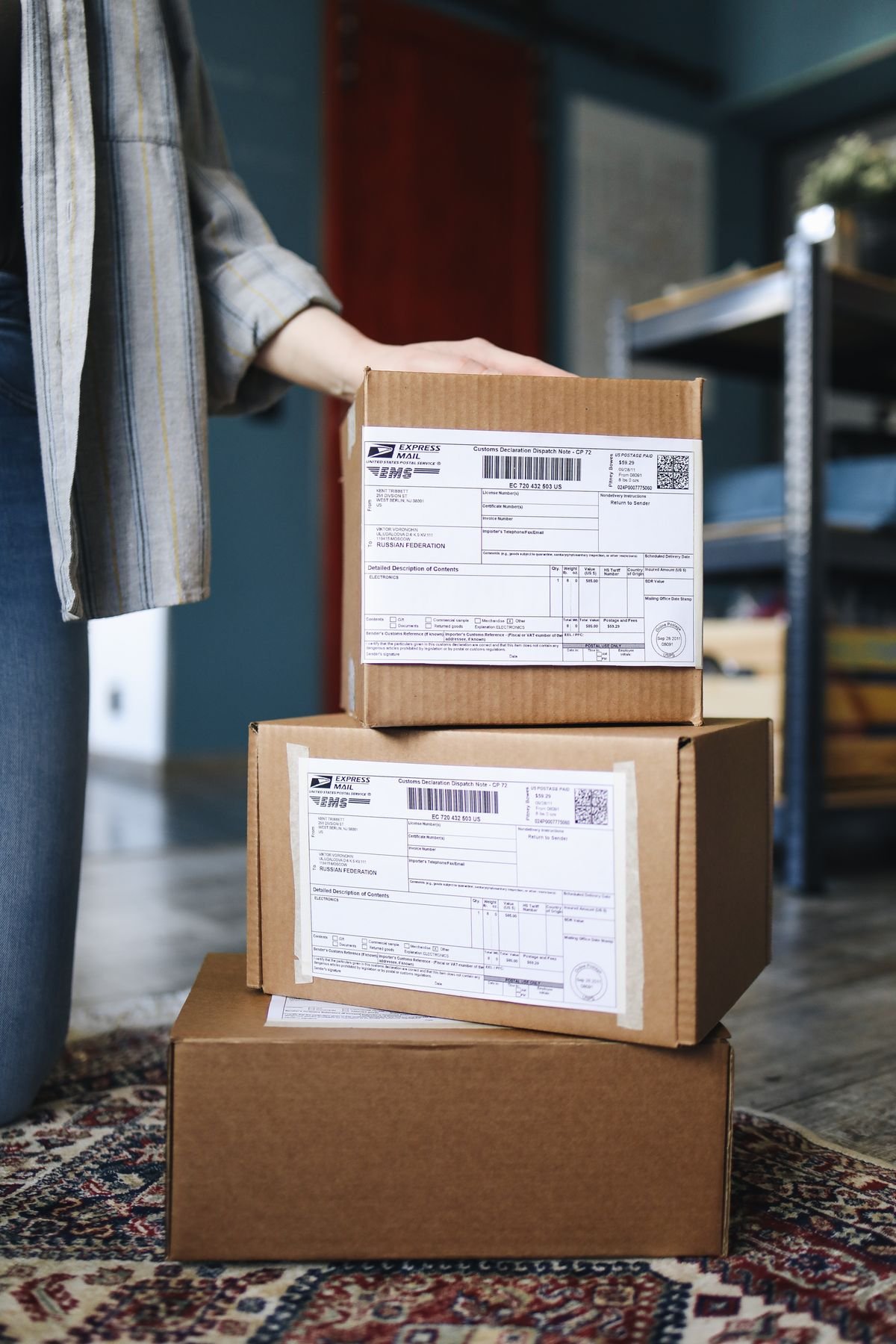
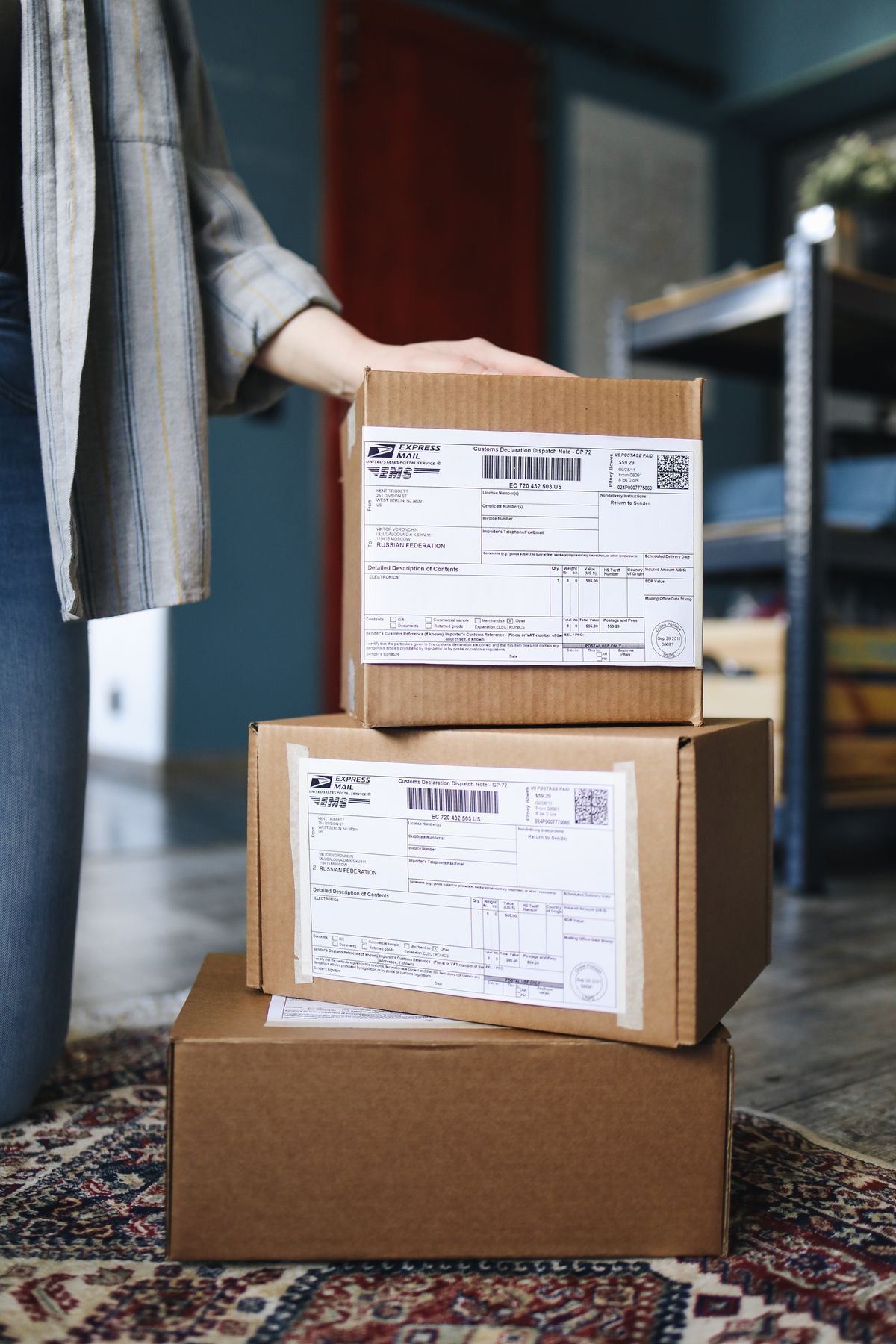
Bulk shipping vs individual parcel shipping is the first big structural choice an online business makes. In the bulk model, you ship stock in one consolidated shipment to your own warehouse or a partner's and deliver orders locally. In the parcel model, each customer order travels separately from the supplier or an overseas warehouse straight to the customer. The two models differ in cost per item, in how customs treats them, in how much cash and stock risk you carry and in how quickly a new product can be offered. This guide compares them, works through a break-even example with made-up numbers, sets out a decision table and covers hybrid approaches.
For the wider set of options, see international shipping solutions for e-commerce businesses.
The Two Models
| Bulk | Individual parcels | |
|---|---|---|
| Flow | Supplier, forwarder, India, your stock, local delivery | Supplier or overseas warehouse, courier or post, customer |
| Who clears customs | The importer or a licensed broker, one bill of entry for the shipment | The courier or postal operator, a separate declaration for each consignment |
| Stock | You hold it | You hold little or none |
| Cash | Paid up front for the whole batch and the duty | Paid as orders arrive |
| Registration | An IEC is needed for a business importing stock | Depends on how the parcels are declared and who the importer is, so confirm with your courier and broker |
How the Costs Differ
Cost per item is the main reason to choose bulk. IATA notes that air carriers charge on the higher of actual and volumetric weight and add accessorial fees such as terminal handling. Where a charge is flat per consignment, a small, light parcel bears a larger share of it per item than a consolidated shipment, which spreads it over many items. Against that, bulk shipping adds costs of its own: forwarding and clearance fees per shipment, storage, handling, the last-mile delivery within India and the cost of the money tied up in stock.
Customs duty and IGST are charged on the value of the goods whichever way they come, so they are not a reason to prefer one model. What differs is the mechanics. Under Section 47(2) of the Customs Act, 1962, duty on a self-assessed bill of entry is payable when it is presented, so a bulk shipment needs the cash for the whole batch on one day. On the courier route, India's courier regulations, as published on the CBIC courier site, have the courier file a courier bill of entry for each consignment, with CBE-XIII for a low value dutiable consignment, defined as an import other than documents, gifts and samples with an invoice value not exceeding one lakh rupees. Check the current text, which has been amended since the 2022 consolidation.
A Break-Even Example With Made-Up Numbers
Every figure here is made up. Parcels sent individually cost 700 per item for international carriage and clearance. The bulk model costs 60 per item for air freight, 80 for last-mile delivery in India, 30 for storage and handling and 20 for the cost of holding stock, a total of 190 per item plus a fixed 15,000 per shipment for forwarding and clearance fees.
| Items per shipment | Bulk cost per item | Parcel cost per item | Cheaper model |
|---|---|---|---|
| 10 | 190 + 1,500 = 1,690 | 700 | Parcels |
| 30 | 190 + 500 = 690 | 700 | About equal |
| 100 | 190 + 150 = 340 | 700 | Bulk |
| 300 | 190 + 50 = 240 | 700 | Bulk |
The break-even is where the fixed fee per shipment, divided by the items in it, equals the gap between the two variable costs: 15,000 divided by 510, or about 29 items. Above that, bulk wins on cost in this example, and the advantage grows with volume. The calculation leaves out the risk of unsold stock, which belongs on the bulk side, and the delay before a new product can be sold, which favours parcels while demand is unproven.
Speed and the Customer Promise
Parcels can start moving when the order is placed, so there is no wait for stock to arrive, but each one crosses the whole distance. Bulk needs the stock to be in India first, and then the last leg is short and under your control. For a product with steady demand, bulk gives faster delivery to the customer. For a new product, parcels let you test demand without holding stock.
Customs and Compliance Differences
The route shapes what can travel. The courier regulations do not apply to some goods, including animals, plants, perishables, publications with incorrect maps of India and precious stones, gold and silver in any form, and they cover goods carried by an authorised courier by air. Freight cargo is cleared through the normal process, as our guide to customs clearance in India step by step explains. Either way, the product must be lawful to import, labelled for India and described correctly when sold. See how Indian e-commerce brands can import products from China.
Risk and Returns
In the parcel model, each parcel carries its own risk of delay, loss or customs queries, and a returned parcel crosses the border again or is written off. In the bulk model, a single large shipment concentrates the risk, so insure it and check it on arrival, but returns are domestic and cheaper. A PIB release says that from 1 April 2026 goods that remain uncleared or unclaimed for more than 15 days at courier terminals, and are not prohibited, restricted or under an enforcement hold, can be returned to the origin through a simplified procedure, so unclaimed parcels have a route out but still cost money.
What to Check With Your Courier or Forwarder
- Which goods the route excludes, and whether your products are among them.
- The value limit for the type of consignment, and whether it has changed since the 2022 text.
- Who is named as consignee and importer, and what authorisation the courier holds. The courier's bill of entry form carries a declaration that it has obtained the authorisation of each consignee.
- What happens to unclaimed parcels, and what it costs.
- How returns are handled, and what tracking you receive.
A Decision Table
| Factor | Leans towards bulk | Leans towards parcels |
|---|---|---|
| Demand | Steady and proven | New or uncertain |
| Order volume | High and regular | Low and sporadic |
| Product value and size | Small, light, high-volume items | High-value, bespoke or very low-volume items |
| Cash | Available for stock and duty | Tight |
| Storage | Available | Not available |
| Returns | Frequent, so cheaper to handle locally | Rare |
| Customs | You hold an IEC and have a broker | You prefer the courier to file |
Hybrid Approaches
A business can use both models. Hold bulk stock of the products that sell steadily, and ship the long tail of slow or new products as parcels or in small consolidated lots. Review the split each quarter, using the break-even logic above with your own numbers. Our guide to freight consolidation for small e-commerce sellers shows how to share space and cost when your own volume is small.
Common Mistakes
- Using parcels long after volumes justify bulk.
- Moving to bulk before demand is proven and ending up with dead stock.
- Comparing freight per item and forgetting storage, handling and the cost of stock.
- Forgetting that duty cash for a bulk shipment is due when the entry is presented.
- Assuming that every product can go by courier.
- Not insuring a large shipment.
A Checklist
- The cost per item is calculated for both models with your own numbers.
- The break-even volume is known.
- Demand is classed as proven, uncertain or new for each product.
- Cash for stock and duty is available for any bulk shipment.
- The courier route is confirmed for any product you plan to send as parcels.
- A quarterly review of the split is in the calendar.
Compare Both Models With RR Brothers and Logistics
RR Brothers and Logistics can quote consolidated shipments and advise on parcel routes for your goods, with e-commerce logistics, sea freight, air freight and customs clearance. Send us your volumes and we will help you find your break-even.
Frequently Asked Questions
In bulk shipping you send stock in one consolidated shipment to your own warehouse and deliver locally. In parcel shipping each customer order travels separately from the supplier or an overseas warehouse to the customer.
Bulk is cheaper per item once volume spreads the fixed costs, but the break-even depends on your own freight, handling and last-mile costs. The made-up example breaks even at about 29 items per shipment.
Goods carried by an authorised courier by air are declared by the courier on a courier bill of entry for each consignment. A low value dutiable consignment is one with an invoice value up to one lakh rupees, excluding documents, gifts and samples. Check the current text.
A business importing stock in bulk needs an IEC. For parcels, ask your courier how consignments are declared and confirm your own position with your broker or adviser.
Cash tied up in stock, dead stock if demand falls short, and a concentrated loss if a shipment is damaged or delayed. Insure the shipment and plan the cash for duty.
Yes. Hold bulk stock of steady sellers and ship slow or new products as parcels or small consolidated lots, and review the split each quarter.
Sources
- IATA: Air cargo tariffs and rules (chargeable weight and accessorial fees)
- CBIC: Customs Act, 1962 (Section 47)
- CBIC: Courier Imports and Exports (Electronic Declaration and Processing) Regulations, 2010 (consolidated 2022 text)
- PIB: CBIC operationalises reforms for e-commerce exports and courier trade (31 March 2026)
This article is general information, not legal, tax or customs advice. Rules, rates and procedures change; confirm current requirements with the relevant authority or a licensed customs professional before you ship. Regulatory references were checked against the official sources listed above on 26 October 2026.
Image credits: header photo by Rohit Choudhari on Unsplash; photo by Claudio Schwarz on Unsplash. Used under the Unsplash License.
Request a Quote