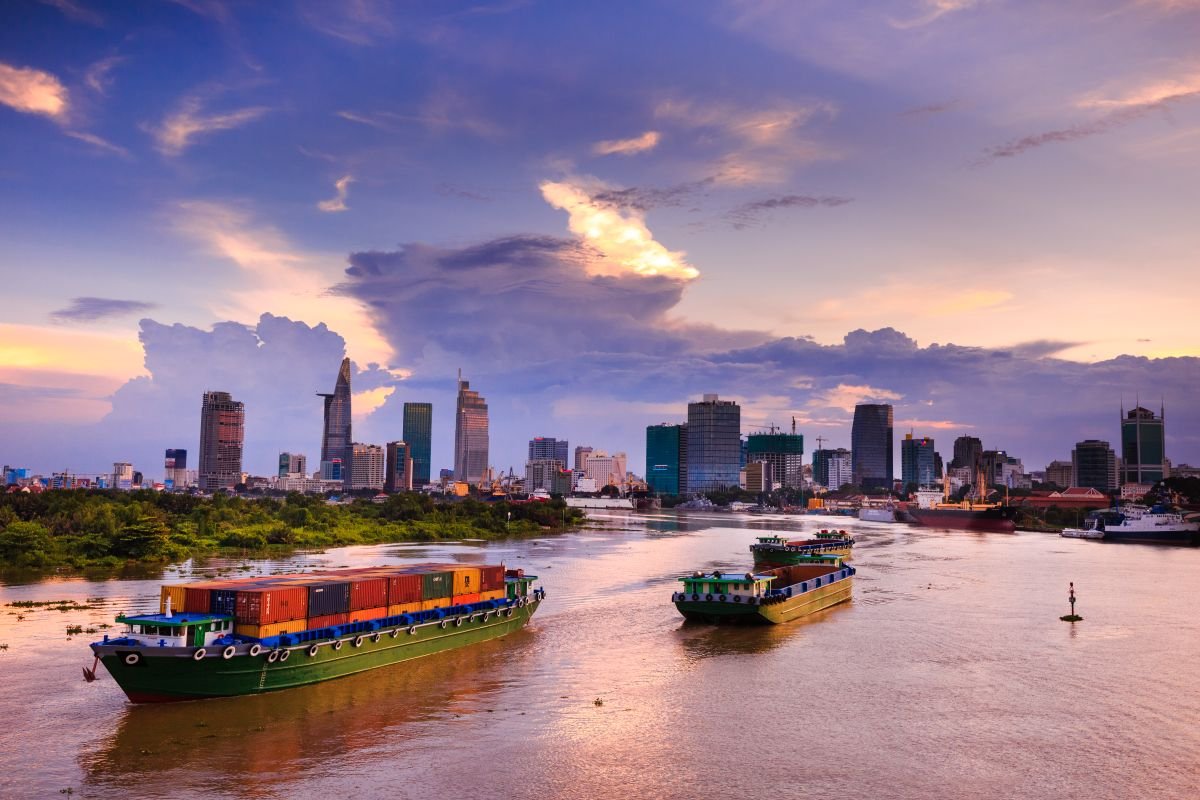
Cambodia to Russia shipping changed in February 2026, when FESCO launched a container service that starts at the river port of Phnom Penh, reaches Vladivostok through a transfer in Ho Chi Minh City and continues inland on container trains. Before that, the freight press reported, Cambodia to Russia container freight was mostly transhipped through other Asian ports on third-party carriers. This guide sets out what the reports say, what the numbers do and do not mean, what the EAEU Customs Code says about moving goods in transit by rail, and the questions to ask before you book. Use it as background, not as legal advice, because routes change.
Short answer: according to Interfax, containers go from Phnom Penh by inland waterways to Ho Chi Minh City, transfer to FESCO's Vietnam Direct Line and reach Vladivostok; the estimated sea-and-river transit averages 12 days, and the first shipment took 32 days to reach a consignee in Moscow.
What FESCO Launched in February 2026
Interfax reported on 19 February 2026 that FESCO had launched container shipping between Cambodia and Russia. Containers are shipped from the river port of Phnom Penh via inland waterways to the port of Ho Chi Minh City in Vietnam, transshipped onto vessels of the regular FESCO Vietnam Direct Line service, and delivered to the Commercial Port of Vladivostok.
| Item | What Interfax says |
|---|---|
| First leg | River port of Phnom Penh, via inland waterways, to Ho Chi Minh City |
| Second leg | Transshipment onto the regular FESCO Vietnam Direct Line service |
| Arrival | Commercial Port of Vladivostok (VMTP) |
| Estimated transit | "Phnom Penh, Cambodia, and Vladivostok averages 12 days" |
| First shipment | 32 days of total intermodal delivery from Cambodia to the final recipient in Moscow |
| Onward cities | Moscow, St. Petersburg, Novosibirsk, Yekaterinburg, Kazan and others in Russia and the CIS, by FESCO container trains |
| Direction | Both ways, so Russian cargo can go to Cambodia on the same chain |
| Cargo mix | Primarily light industry goods and agricultural products |
Interfax does not give a sailing frequency. Ask the carrier for the dated schedule, and note that Interfax says "inland waterways" while another report describes barging or feedering, so confirm the first leg with whoever quotes it.
Reading the 12 and 32 Day Figures
The two numbers measure different things, and the sources do not reconcile them. Twelve days is the estimated average between Phnom Penh and Vladivostok. Thirty-two days is the total intermodal time for one first shipment to a consignee in Moscow.
- The difference is 32 minus 12, or 20 days.
- Interfax does not break those 20 days down, so they cannot be assigned to rail, handling, customs or waiting.
- A first shipment is one data point, not an average, and it is not a commitment for your cargo.
When a forwarder quotes a total transit time for this lane, ask which legs it includes and whether the clock starts at Phnom Penh gate-in or at the vessel's sailing.
How Freight Moved Before
The Loadstar, on 20 February 2026, wrote that Cambodia to Russia container freight was mostly transhipped through Asian ports such as Singapore, Port Klang and Ho Chi Minh City, on third-party carriers. It also says Sihanoukville, Cambodia's main sea port, is mainly feeder-connected, and that FESCO's proposed routing would have containers barged or feedered from Phnom Penh to Ho Chi Minh City, where FESCO has a transhipment facility. The article puts the voyage at an estimated 12 days.
That gives you two routing families to compare: a through service on one operator's chain, and a transhipped booking on another carrier. They differ in who is responsible between legs, so ask which one your quote is.
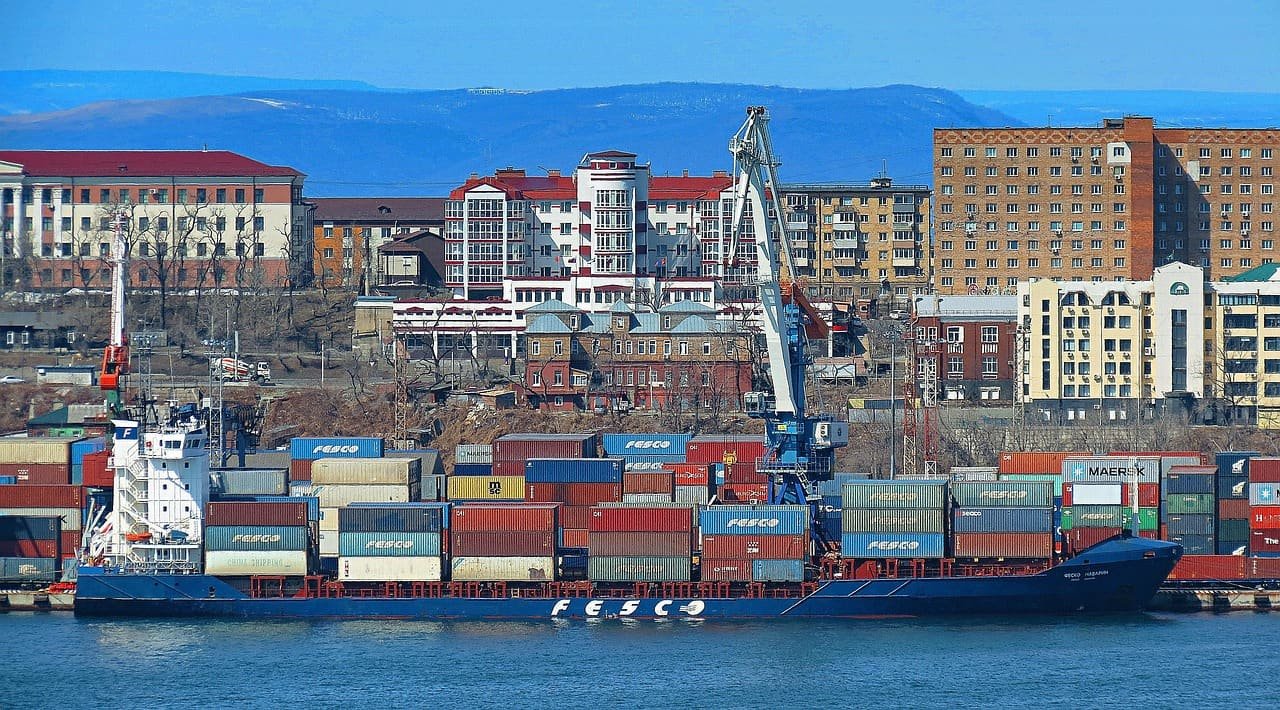
FESCO's line list shows the Vietnam line as FVDL, with the route heading Vladivostok, Ho Chi Minh, Haiphong, Nansha, Vladivostok. Its Vladivostok cargo page says it organizes accelerated container trains on its own assets, an average of 30 to 40 per week, from Vladivostok. For the port and the Chinese side of the same line, see Vladivostok Port: Russia's Far East Gateway for India Trade and China to Vietnam: Ho Chi Minh Cat Lai shipping.
Trade Context: What We Could and Could Not Verify
We did not retrieve an official 2025 Cambodia to Russia trade figure, and the figures that circulate come from single outlets without a stated primary source, so none is quoted here. The Loadstar says Cambodia's main imports are fuel and fertiliser, both of which Russia produces, while Interfax says the cargo mix on the new service is primarily light industry goods and agricultural products. A mix like that can include temperature-sensitive or moisture-sensitive cargo, so ask about container type, ventilation and the carrier's handling at the transfer in Ho Chi Minh City.
Moving Inland: Customs Transit Under the EAEU Code
Once goods enter the Union, they may travel on to an inland customs office under the customs procedure for transit. The unofficial English translation of the EAEU Customs Code sets out how that works. It reflects the 2017 treaty text without later amendments, so check the current wording with a Russian customs broker.
- Article 142: under the transit procedure, goods are moved from the customs authority of departure to the customs authority of destination without payment of customs duties and taxes, provided the conditions for placement were met.
- Article 143: the conditions include ensuring payment of import duties and taxes for foreign goods, making the goods identifiable, vehicle conformity where goods are sealed in cargo holds, and compliance with prohibitions and restrictions.
- Article 144: for goods carried by rail, the transit period is calculated on the basis of 2 thousand kilometres per month, at least 7 calendar days, and it may be extended within the maximum.
The article does not say which of these steps applied to the first shipment. The point for a shipper is that a through rail booking on this lane is also a customs movement, so the declarant, the payment security and the destination customs office should be named in the quotation.
A Worked Example With Made-Up Numbers
All figures here are invented. A consignee holds USD 60,000 of goods in transit and values the money tied up at 10% a year. The cost of waiting for one day is 60,000 x 0.10 / 365, which is about USD 16.44.
| Case | Days in transit | Waiting cost |
|---|---|---|
| Through service, first-shipment time | 32 | about USD 526 |
| Transhipped booking, assumed 13 days longer | 45 | about USD 740 |
| Difference | 13 | about USD 214 |
The 45-day case is an assumption for the example, not a figure from any source. The result is small beside a freight bill, but for high-value goods or short shelf-life products the extra days can matter more than the rate. See how to calculate the landed cost of imported goods for a fuller method.
Compliance Checks Still Apply
Nothing in the launch reports removes the need to screen the goods, the buyer, the consignee and the banks involved, and we have not covered Cambodian export rules here. Carriers, banks and insurers apply their own policies and the rules of other jurisdictions can reach the parties. Sanctions and compliance in logistics to Russia explains where screening sits in a booking. None of this tells anyone how to avoid a control.
Booking Checklist
- Screen the goods, buyer, consignee and intermediaries, and keep the record.
- Ask whether the quote uses the through service via Ho Chi Minh City or a transhipped booking on another carrier.
- Confirm the first leg in writing: inland waterway, barge or feeder, and who is responsible.
- Ask which legs the transit time covers and when the clock starts.
- Name the declarant, the payment security for transit and the destination customs office for rail onward carriage.
- Check the container type for the cargo, including ventilation or temperature needs.
- Agree free time and storage terms at each transfer point.
Work With RR Brothers and Logistics
Our head office is in Guangzhou, where RR Brothers and Logistics operates as an NVOCC. The sea freight page covers Chinese gateways and lanes to India, Europe, the US and Canada, and it does not mention Cambodia, Vietnam or Russia, which is why no schedule or price for this lane appears above. The customs clearance page covers HS-code classification, declarations and document checks. To find out whether we can help with a lane like this, send the cargo, origin and consignee location; our answer comes after sanctions and export-control screening.
Frequently Asked Questions
Interfax reported in February 2026 that containers go from Phnom Penh by inland waterways to Ho Chi Minh City, transfer to FESCO's Vietnam Direct Line and reach Vladivostok, then continue on FESCO container trains.
Interfax gives an estimated average of 12 days between Phnom Penh and Vladivostok and says the first shipment took 32 days in total to a consignee in Moscow. The 20 days in between are not broken down, and one shipment is not a commitment.
The Loadstar reported that container freight was mostly transhipped through Asian ports such as Singapore, Port Klang and Ho Chi Minh City on third-party carriers.
Interfax names Moscow, St. Petersburg, Novosibirsk, Yekaterinburg and Kazan, and other cities in Russia and the CIS, using FESCO container trains.
Article 144 of the unofficial translation we read calculates the transit period for goods carried by rail on the basis of 2 thousand kilometres per month, at least 7 calendar days. Check current wording with a Russian customs broker.
Our sea freight page lists Chinese gateways and does not list Cambodia or Russia. Send your cargo details and we will advise whether and how we can handle it.
Sources
- Interfax: FESCO launches container shipping between Cambodia and Russia (19 February 2026)
- The Loadstar: Fesco eyes expansion with service from Cambodia to Russia (20 February 2026)
- FESCO: Maritime container transportation, regular routes
- FESCO: Delivery of cargo via Commercial Port of Vladivostok
- Treaty on the Customs Code of the Eurasian Economic Union (unofficial English translation)
This article is general information, not legal, tax or customs advice. Rules, rates and procedures change; confirm current requirements with the relevant authority or a licensed customs professional before you ship. The points above were taken from the pages listed under Sources, which include news reports, operator pages and an unofficial translation, read on 29 October 2026. They were not checked against official legal texts or the carrier schedule, so confirm current details with the carrier and the relevant authority.
Image credits: header photo by Julia Taubitz on Unsplash; photo from zzkonst on Pixabay; photo by Wolfgang Weiser on Unsplash. Used under the Unsplash License and the Pixabay Content License.
Request a Quote