A Sea-Only Alternative to the Multimodal Corridors
Most conversations about new India-Russia trade routes eventually turn to multimodal concepts — INSTC's sea-road-rail chain through Iran, or rail links across Central Asia. The Chennai-Vladivostok maritime corridor, often referred to as part of the broader Eastern Maritime Corridor concept between India and Russia's Far East, takes a different approach entirely: a single-mode sea route connecting India's east coast directly to Vladivostok, avoiding land border crossings and transshipment hubs altogether. For a freight forwarder, that simplicity is genuinely appealing, even though the sea distance involved is considerably longer than a Suez or INSTC alignment. We manage this corridor as part of our broader Russia freight practice, alongside our long-standing work through Chennai Port on the India side.
Why Vladivostok and Why Chennai
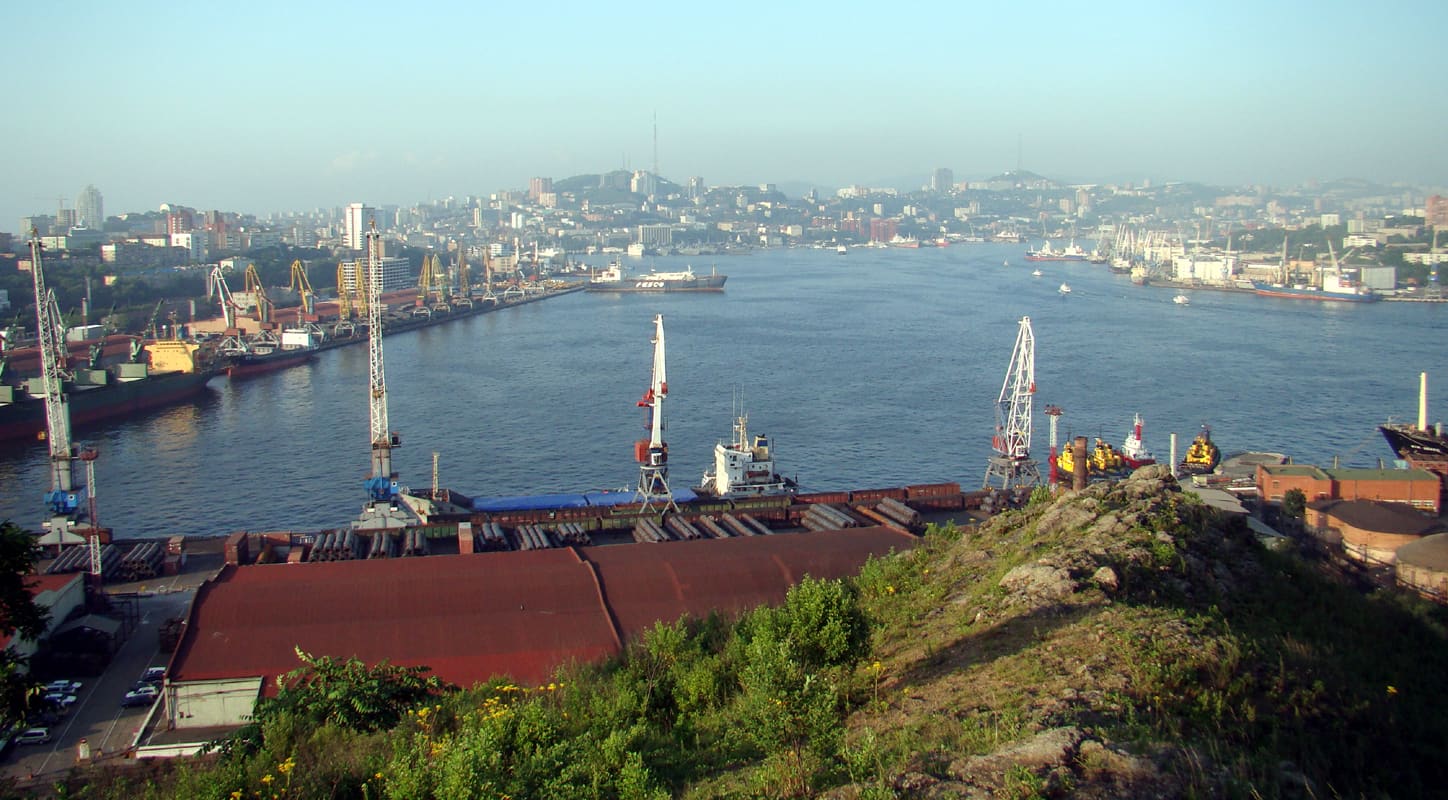
Vladivostok sits on Russia's Pacific coast, functioning as the country's primary Far East gateway and a natural landing point for cargo arriving from the Indian Ocean and the wider Asia-Pacific region. Chennai, meanwhile, is one of India's most established container ports on the east coast, already handling regular sailings to Southeast Asia and beyond, which makes it a logical Indian-side terminus for a direct sea corridor to Russia's east. The pairing avoids the western routings that dominate most India-Russia freight — through the Suez Canal and into the Baltic or Black Sea — and instead treats Russia's enormous eastern seaboard as a gateway in its own right, connected onward by the Trans-Siberian Railway to Moscow, St. Petersburg and Russia's European heartland.
Realistic Transit Time and Cost Expectations
A direct sea voyage from Chennai to Vladivostok is a long one — it crosses the Indian Ocean, the Malacca Strait region, the South China Sea and the Sea of Japan before making its final approach. Shippers should expect a multi-week transit that, depending on vessel availability and whether cargo moves on a direct service or requires transshipment at a regional hub, will typically run longer in raw sailing days than a comparable Suez-routed voyage to a Russian Baltic port, even though it avoids that route's canal transit and Mediterranean/Black Sea legs. Cost is similarly route-dependent: with fewer dedicated direct sailings currently available than on more established east-west lanes, freight rates on this corridor tend to reflect lower vessel frequency rather than distance alone. Shippers evaluating this corridor should request current, sailing-specific quotes rather than relying on rates quoted for the western India-Russia routes.
Cargo Best Suited to This Corridor
The Eastern Maritime Corridor tends to suit cargo bound specifically for Russia's Far East and Siberian regions, where onward distribution from Vladivostok is genuinely shorter than trucking or railing goods all the way from a Baltic or Black Sea port. It is also a reasonable option for bulk and industrial cargo where sailing frequency matters less than unit cost, and for shippers looking to diversify their routing away from a single corridor for resilience reasons. It is generally not the fastest option for cargo destined for Moscow or St. Petersburg, where a western sea route or the INSTC concept described in our INSTC guide may be more time-competitive once the cargo's true final destination is factored in.
Vladivostok Port Snapshot
| Factor | Detail |
|---|---|
| Region served | Russia's Far East and Siberia, with rail onward to European Russia |
| Indian origin port | Chennai (with other east coast ports as secondary options) |
| Best suited cargo | Bulk, industrial, and Far East/Siberia-bound goods |
| Onward connectivity | Trans-Siberian Railway toward Moscow and St. Petersburg |
How It Compares to INSTC
Where INSTC's appeal lies in a shorter raw distance achieved through multiple transshipments across India, Iran and the Caspian Sea, the Chennai-Vladivostok corridor trades distance for simplicity: one sea leg, one carrier relationship, no land border crossing before reaching Russian territory. Neither route is universally "better" — the right choice depends on where the cargo is ultimately headed within Russia, how time-sensitive it is, and how much operational complexity a shipper is prepared to accept in exchange for a shorter paper distance. The Asian Development Bank's INSTC explainer is a useful reference for understanding that corridor's structure in more depth, while the International Maritime Organization sets the broader international shipping standards that apply to any deep-sea route, including this one. For sector-level context on how India-Russia trade volumes are evolving, the Ministry of Commerce is a useful primary source.
A Practical Note for Shippers
Because this corridor currently has fewer dedicated direct sailings than the western India-Russia lanes, booking lead time matters more here than it might on a well-serviced route. Shippers with flexibility on sailing dates, or the ability to consolidate cargo into fuller loads, will generally get more competitive terms than those trying to book urgent, small-volume shipments on short notice.
RR Brothers and Logistics has built out routing expertise on both the western and eastern India-Russia sea lanes, giving clients an honest comparison between the Chennai-Vladivostok corridor, conventional Baltic and Black Sea sea freight, and the INSTC concept, rather than defaulting to whichever route we happen to know best. Our team can walk through the real trade-offs for your specific cargo and destination within Russia.
Frequently Asked Questions
Expect a multi-week sea voyage, generally longer in raw sailing days than a Suez-routed voyage to a Russian Baltic port, since the corridor crosses the Indian Ocean, the Malacca Strait region, the South China Sea and the Sea of Japan. Exact timing depends on vessel availability and whether the sailing is direct or requires transshipment.
Bulk and industrial cargo, and shipments genuinely destined for Russia's Far East and Siberian regions, are the best fit — onward distribution from Vladivostok to these regions is typically shorter than routing through a Baltic or Black Sea port.
Costs on both routes are driven more by sailing/service frequency and cargo type than by distance alone. The Chennai-Vladivostok corridor is a single-mode sea route with fewer transshipment costs, while INSTC's multimodal nature can add handling costs at each transfer point — request current, route-specific quotes for an accurate comparison.
Yes, via onward rail connections including the Trans-Siberian Railway, though for cargo genuinely destined for Moscow or St. Petersburg, a western sea route or the INSTC corridor may offer a more time-competitive overall journey depending on current conditions.