A Corridor Bigger Than Any Single Port
China and India are, between them, the two most populous manufacturing and consumer markets on earth, and the freight moving between them reflects that scale. Ask five different importers where their cargo "comes in" and you will likely get five different answers — Nhava Sheva, Mundra, Chennai, Kolkata, an inland container depot outside Delhi. That is the first thing to understand about shipping China to India, all ports: there is no single gateway. India's coastline runs along two very different seas, the Arabian Sea to the west and the Bay of Bengal to the east, and its interior is stitched to both by rail-linked inland container depots. As an NVOCC and freight forwarder that has spent a decade routing cargo across this lane, we have found that most shipping problems are really port-selection problems in disguise — the wrong gateway adds cost and days long before the vessel ever sails.
West Coast Gateways: Gujarat and Maharashtra
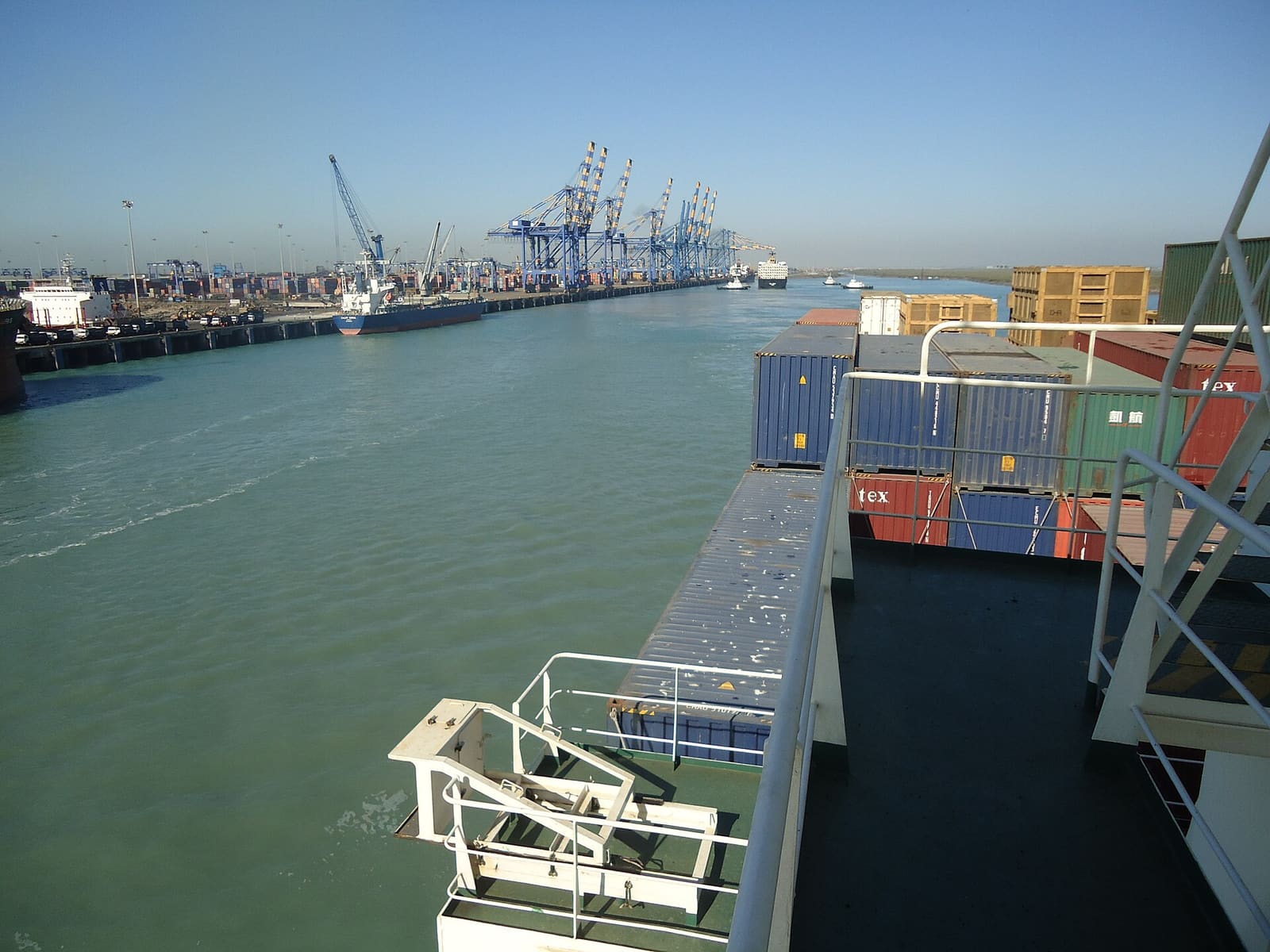
The west coast handles the largest share of China-origin container volume into India. Jawaharlal Nehru Port (Nhava Sheva, near Mumbai) is the country's busiest container port and the default choice for cargo destined for Maharashtra, Madhya Pradesh, and much of the north. Mundra and Kandla (Deendayal Port), both in Gujarat, serve the state's chemical, textile, and agro-commodity trade and increasingly compete with Nhava Sheva on price and congestion. Pipavav and Hazira round out the Gujarat coastline, each carved out a niche — Pipavav on rail-linked northern India cargo moving toward Punjab, Haryana, and Rajasthan, Hazira on Surat's textile, diamond-processing, and petrochemical industries. Cargo owners in this belt often have more port choice than they realise, and switching from a congested terminal to a quieter neighbouring one a few hours' drive away can shave real days off an inland delivery. We cover each of these gateways in a dedicated guide, linked below.
East Coast Gateways: Bay of Bengal
The east coast faces the Malacca Strait and, for cargo loading in southern Chinese ports, can offer a shorter sailing distance than the west coast. Chennai anchors South India and feeds Tamil Nadu's automotive and electronics clusters; Kolkata and its sister facility at Haldia serve West Bengal, Bihar, and the Northeast, and connect onward toward Nepal and Bhutan; Visakhapatnam and Krishnapatnam in Andhra Pradesh handle a mix of bulk and containerised cargo for the Telangana and Rayalaseema hinterlands, including pharmaceuticals, seafood, and steel-linked imports; Tuticorin, further south, is Tamil Nadu's second gateway and a useful overflow option when Chennai is congested. Cochin, on the Kerala coast, sits close to the main east-west shipping lane and increasingly receives direct mainline calls that bypass the Colombo transshipment step altogether. Bangalore and inland Karnataka, which have no seaport of their own, typically route through Chennai or Mundra with the final leg completed by road or rail.
Inland Gateways: Delhi NCR and Ahmedabad
A meaningful share of China-India trade never touches a seaport directly at the buyer's end. Delhi NCR imports clear through inland container depots such as ICD Tughlakabad and ICD Dadri, fed by rail from Nhava Sheva, Mundra, or Pipavav. Ahmedabad, Gujarat's commercial and textile capital, works the same way through ICDs closer to Mundra and Kandla. The concept is the same everywhere: the ocean leg ends at a coastal terminal, customs and the final delivery happen far inland, and a good freight forwarder manages both halves as one continuous door-to-door movement rather than two separate jobs.
Realistic Transit Times, China to India, All Ports
Transit time depends heavily on which Chinese load port you use and which Indian discharge port you choose, and on whether the routing is a direct mainline call or requires transshipment at a hub like Colombo, Singapore, or Port Klang. As a rule of thumb, sea freight from China to India typically runs somewhere in the 14–26 day range door to port, with east coast ports on the shorter end for southern Chinese origins and west coast or transshipment-dependent ports running longer. Inland destinations add a further 2–7 days for the rail or road leg after the vessel discharges. Treat any quote promising a fixed number of days with some skepticism — vessel schedules, port congestion, and monsoon-season weather all introduce variability that a responsible forwarder will flag rather than paper over.
| Indian Region | Typical Gateway(s) | Approx. Sea Transit from China |
|---|---|---|
| Maharashtra / West | Nhava Sheva (JNPT) | 18–24 days |
| Gujarat | Mundra, Kandla, Pipavav, Hazira | 19–26 days |
| Tamil Nadu / South | Chennai, Tuticorin | 14–20 days |
| Andhra Pradesh | Visakhapatnam, Krishnapatnam | 15–21 days |
| West Bengal / East | Kolkata, Haldia | 18–25 days |
| Delhi NCR / Ahmedabad (inland) | ICD Tughlakabad, ICD Dadri, ICD Sabarmati | Sea leg + 2–7 days inland |
FCL vs LCL Across the Lane
For a full container load, the calculation is fairly simple: if you can fill roughly 60–70% or more of a 20-foot or 40-foot box, FCL is almost always cheaper per unit and easier to track, since your cargo does not wait for a consolidator to fill the rest of the container. LCL (less-than-container-load) suits smaller, more frequent shipments — sampling runs, restocking orders, multi-supplier consolidations — but it adds handling at both the origin CFS and the destination CFS, along with a wider transit window, since your cargo typically joins a consolidation box only once enough volume from other shippers has been collected. On ports without frequent direct mainline calls, LCL consignments can also see longer dwell times waiting for a consolidator's next sailing, so factor that into your planning if your Indian gateway relies heavily on transshipment.
Customs Clearance and Documentation in India
Every shipment into India, regardless of port, moves through the same basic customs framework administered by the Central Board of Indirect Taxes and Customs (CBIC). The carrier or its agent files an Import General Manifest (IGM) with customs on arrival; the importer or their customs broker then files a Bill of Entry, which is the core clearance document declaring the goods, their HS classification, and their assessable value. Supporting paperwork typically includes the commercial invoice, packing list, and bill of lading (or sea waybill), along with the importer's IEC (Importer Exporter Code), GST registration details, and any product-specific certificates or licenses the goods require. Duty is calculated on the assessed value and applicable HS code, with Integrated GST (IGST) charged in addition to basic customs duty on most consumer and industrial goods. Getting the HS code and declared value right the first time avoids the two most common causes of delay: a query from the assessing officer, or a physical examination that was otherwise avoidable.
When Air Freight Fits Better Than Sea
Not every China-India shipment should travel by sea. For urgent samples, spare parts, or high-value electronics where a two-to-three-week sea transit is simply too slow, air freight between Chinese gateways such as Guangzhou, Shenzhen, or Shanghai and Indian airports like Delhi, Mumbai, or Bangalore typically moves in a matter of days rather than weeks. The trade-off is cost per kilogram, which runs well above ocean freight, so air makes the most sense for lighter, time-critical, or high-value cargo rather than bulky low-value goods. Many of our clients run a blended strategy: the bulk of a purchase order moves by FCL or LCL sea freight on a planned schedule, while a smaller air shipment covers whatever cannot wait — a common and sensible way to balance cost against deadline pressure.
Two Practical Tips Before You Book
- Match the port to the destination, not just the price. The cheapest all-in freight quote to a distant port can end up costing more once you add inland trucking, extra transit days, and the risk of missed connections — compare landed cost to the final delivery address, not just port-to-port freight.
- Confirm your IEC and GST details are current before the vessel sails. A mismatched or lapsed IEC is one of the most common reasons a Bill of Entry gets held up at Indian customs, and it is entirely avoidable with a five-minute check well before arrival.
A Guide for Every Gateway
This overview is deliberately broad; each Indian gateway has its own quirks worth a closer look. We have written dedicated, practical guides for shipping China to India, all ports, that matter to our clients: Kandla and Pipavav in Gujarat, Cochin on the Kerala coast, Visakhapatnam and Krishnapatnam in Andhra Pradesh, Haldia in West Bengal, Hazira near Surat, and the inland gateways serving Delhi NCR and Ahmedabad. We also maintain long-standing guides to our most established India routes — Mumbai's Nhava Sheva, Chennai, Mundra, Tuticorin, Kolkata, and inland Bangalore/Karnataka — plus a broader port-selection guide for anyone still deciding where their cargo should land. Whichever gateway fits your supply chain, RR Brothers and Logistics coordinates the booking, the ocean leg, customs clearance, and the final inland delivery as one managed shipment from our Guangzhou base.
Frequently Asked Questions
It depends on your final destination — Nhava Sheva (JNPT) for Maharashtra and the north, Mundra or Kandla for Gujarat, Chennai or Tuticorin for Tamil Nadu, Visakhapatnam or Krishnapatnam for Andhra Pradesh, and Kolkata or Haldia for the east and northeast. Matching the port to your delivery address, not just the freight price, keeps combined ocean-plus-inland costs down.
Most gateways see 14–26 days door-to-port, with east coast ports like Chennai and Tuticorin on the shorter end for southern Chinese origins, and west coast or transshipment-dependent ports running longer. Inland destinations such as Delhi NCR or Ahmedabad add a further 2–7 days for the rail or road leg.
Every shipment needs a Bill of Entry filed against the carrier's Import General Manifest, supported by the commercial invoice, packing list, and bill of lading, plus a current IEC and GST registration for the importer. Getting the HS code and declared value right the first time avoids the two most common causes of delay: a customs query or a physical examination.
FCL is almost always cheaper per unit if you can fill roughly 60–70% or more of a container, and it avoids waiting on a consolidator to fill the rest of the box. LCL suits smaller, more frequent orders, but expect added handling at both ends and a wider transit window, especially at ports that rely on transshipment rather than frequent direct calls.