A Small Island With an Outsized Role in Regional Shipping
Sri Lanka's position just off the southern tip of India, sitting almost directly on the east-west shipping lane that connects East Asia to Europe, the Middle East and East Africa, has made it disproportionately important to global container shipping relative to the size of its own economy. For China-origin cargo, Sri Lanka plays two genuinely distinct roles at once: it is a real, if modest, direct import market in its own right, and it is one of the busiest transshipment hubs in the Indian Ocean, handling far more containers destined for other countries than for Sri Lanka itself. Working out which role applies to a given booking — a direct Sri Lankan import, or cargo simply transiting Colombo on its way somewhere else — is the first thing a freight forwarder needs to get right, because the documentation, cost structure and realistic timeline differ meaningfully between the two.
Colombo Port: Built for Transshipment
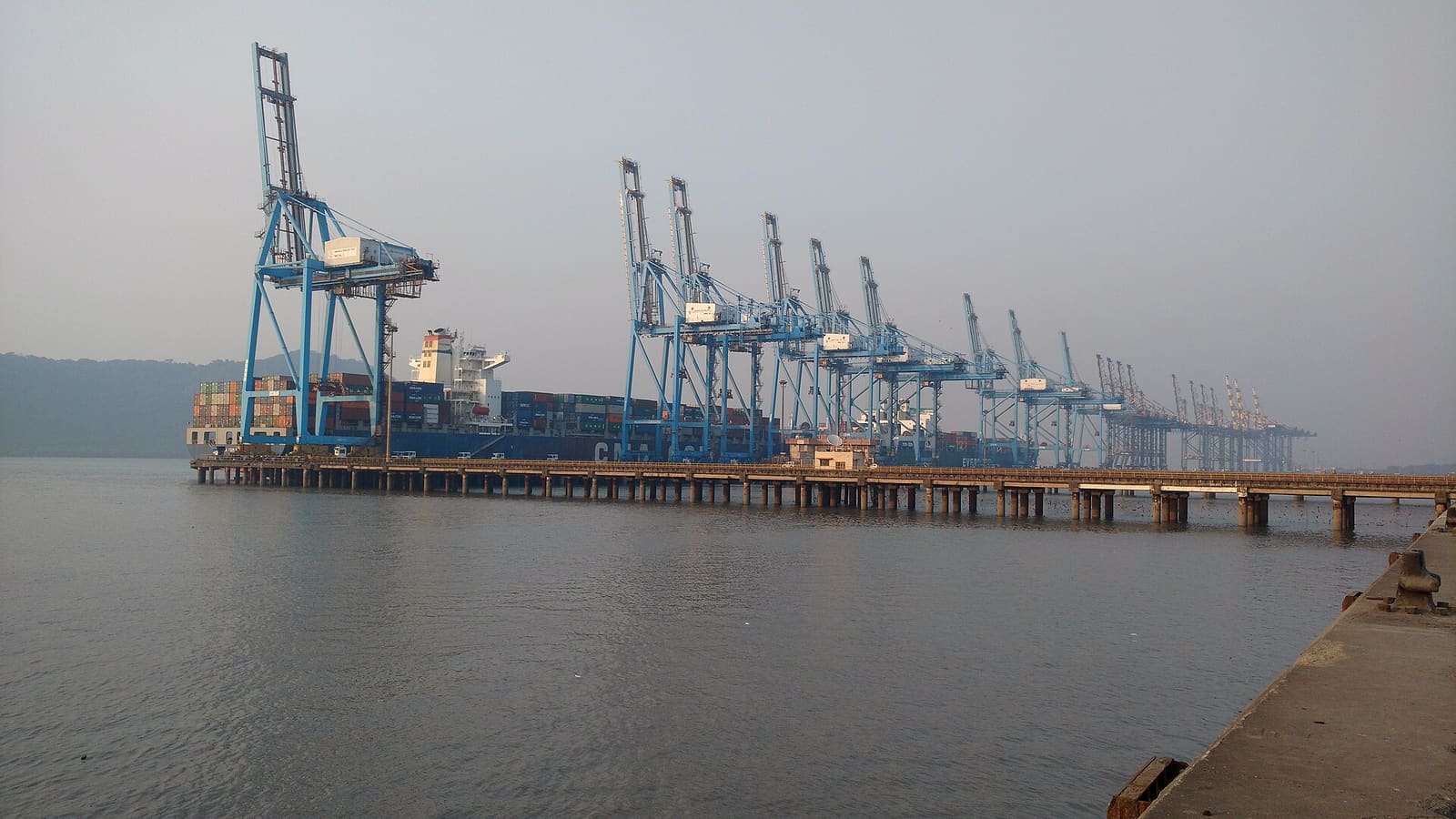
Colombo Port, made up of several terminals including the older South Asia Gateway Terminal and the deep-water Colombo International Container Terminal, has grown into the largest container port in South Asia by throughput, a position built substantially on transshipment volume rather than Sri Lanka's own domestic trade. Its location directly on the main Asia-Europe and Asia-Middle East shipping lanes, combined with deep-water berths capable of taking the largest container vessels currently in service, means a large share of China Sri Lanka shipping bookings are not really about Sri Lanka as a destination at all — they are about moving cargo efficiently between the big mainline vessels calling Colombo and the smaller feeder vessels that serve ports around the Bay of Bengal, the Arabian Sea and the wider Indian Ocean rim.
Why So Much China Cargo Touches Colombo Before India
A meaningful share of container cargo moving from China toward India's east and south coast ports is transshipped through Colombo rather than sailing direct, simply because Colombo's frequency of mainline vessel calls and efficient terminal turnaround often make a transshipment routing faster, and sometimes cheaper, than waiting for a scheduled direct service to a smaller Indian gateway. This is particularly true for cargo consolidated as LCL, where hub ports like Colombo help aggregate volume from multiple smaller shipments before it moves onward. Our complete guide to shipping from China to India's ports covers this dynamic in more depth, since transshipment routing decisions affect almost every India-bound booking a shipper makes, whether or not the cargo ever technically clears customs in Sri Lanka. For shippers targeting several Indian gateways from a single Chinese origin, understanding the Colombo transshipment option can also open up more flexible consolidation strategies than committing everything to one direct string.
Direct China-Sri Lanka Trade: What Actually Moves
Beyond its transshipment role, Sri Lanka is itself a real, if comparatively small, import market for Chinese goods. Machinery, construction materials, electronics, motor vehicle parts, textiles and general consumer goods all move regularly from Chinese ports into Colombo for domestic Sri Lankan consumption. Sri Lanka's apparel and textile manufacturing sector, historically one of the country's largest export industries, also depends on a steady supply of imported Chinese fabric, trims, buttons and garment-manufacturing machinery as production inputs, which creates a consistent, if not enormous, base of direct China-Sri Lanka container volume that is entirely separate from the port's much larger transshipment business.
Port Investment Behind Colombo's Growth
Colombo's rise as a hub port has been supported by substantial terminal investment over the past decade, including the Colombo International Container Terminal, a deep-water facility developed as a joint venture involving Chinese port operator interests alongside the Sri Lanka Ports Authority. That investment has added the deep-water capacity needed to berth today's larger container vessels, which in turn reinforces Colombo's attractiveness as a transshipment call for carriers running Asia-Europe and Asia-Middle East strings. For shippers, the practical upshot is more frequent mainline sailing options and generally reliable berth availability compared with some other regional ports that have struggled to keep pace with vessel size growth, though Colombo can still see periodic congestion during peak shipping seasons like any high-volume hub port.
Sea Freight Routing and Realistic Transit Times
Direct sea freight services connect major Chinese ports such as Shanghai, Ningbo and Shenzhen to Colombo, while other cargo moves via a transshipment leg through Singapore or another regional hub before reaching Colombo, generally adding a week or more to the overall journey. Cargo that continues on from Colombo toward South Indian ports typically moves by short-sea feeder service, a relatively quick onward leg compared with the main China-to-Colombo transit.
| Routing | Mode | Approx. Transit Time |
|---|---|---|
| China (Shanghai/Ningbo/Shenzhen) to Colombo, direct | Sea (FCL/LCL) | 12–17 days |
| China to Colombo, via Singapore or regional hub | Sea (FCL/LCL) | 18–24 days |
| Colombo onward to South Indian ports | Sea (feeder) | 2–5 days |
Sri Lankan Customs and Import Documentation
Sri Lanka Customs requires the standard core documentation for clearance — commercial invoice, packing list, bill of lading or airway bill, and a certificate of origin wherever preferential tariff treatment is being claimed under one of Sri Lanka's bilateral or regional trade arrangements. Confirming whether a specific product qualifies for preferential duty treatment before the goods ship, rather than after they arrive in Colombo, is generally worth the extra step, since retroactively claiming a preferential rate at the point of clearance is far harder than having the right paperwork ready from the outset. Cargo declarations are increasingly processed through Sri Lanka Customs' electronic systems, though physical inspection remains routine for a number of product categories, particularly on first-time importer accounts.
FCL, LCL and the Practicalities of Booking This Lane
FCL remains the natural choice for established importers moving regular volumes of construction materials, machinery or bulk consumer goods into Colombo. LCL consolidation is unusually well supported on this lane precisely because of the port's transshipment infrastructure — the same efficient feeder and consolidation network that moves transshipment cargo onward toward India and other regional destinations also underpins economical LCL groupage services for smaller Sri Lankan importers, often at better rates and with more frequent sailings than a comparable-distance lane without a major hub port nearby. Air freight into Bandaranaike International Airport near Colombo is a smaller share of total volume but a realistic option for time-sensitive electronics, pharmaceutical inputs, or apparel-sector sample shipments.
First-time importers into Sri Lanka should also budget realistic time for terminal handling and inland transport once cargo clears the port, since road connections from Colombo into the rest of the island, while adequate, are not always as fast as the sea leg itself. Working with a forwarder who can coordinate the full door-to-door movement — booking, customs clearance, and last-mile delivery — tends to remove most of the friction that catches new importers off guard on this lane, particularly around documentation timing and demurrage exposure if clearance is delayed.
Two Tips for Shippers on the China-Sri Lanka Lane
- Confirm whether your cargo is transshipping or terminating in Colombo. The paperwork, the party responsible for onward customs clearance, and the realistic total transit time all differ depending on which applies.
- Ask your forwarder about consolidation options. Colombo's hub status often makes LCL more cost-effective and more frequent here than on comparable-distance lanes that lack a major transshipment port nearby.
RR Brothers and Logistics routes cargo through Colombo regularly, both as a direct Sri Lankan import lane and as a transshipment point feeding onward Indian Ocean destinations, drawing on the same regional network we use across our India-ASEAN trade routes and our work moving cargo through Chattogram and the wider Bay of Bengal region. As a freight forwarder and NVOCC based in Guangzhou, we help clients work out whether a direct Colombo call or a transshipment routing makes more sense for their specific cargo, budget and delivery timeline.
Frequently Asked Questions
Colombo sits directly on the main Asia-Europe and Asia-Middle East shipping lanes and has deep-water berths that can handle the largest container vessels, making it an efficient point for transferring cargo between mainline ships and smaller feeder vessels serving the Bay of Bengal and Indian Ocean rim.
Cargo arriving in Colombo on large mainline vessels from China is often transferred to smaller feeder ships that serve South Indian ports and other Indian Ocean destinations, a routing that is frequently faster or cheaper than waiting for a direct service.
A direct sailing from a major Chinese port to Colombo typically takes around 12 to 17 days. Cargo routed via Singapore or another regional hub before reaching Colombo generally takes 18 to 24 days in total.
Preferential treatment depends on the specific trade arrangement and product category involved. Importers should confirm eligibility and the correct certificate of origin requirements with Sri Lanka Customs or their freight forwarder before shipping, since claiming a preferential rate after arrival is far harder than arranging the paperwork in advance.