A Diverse Bloc, and a Diverse Set of Routes
ASEAN is not one market but ten — Singapore, Malaysia, Thailand, Vietnam, Indonesia, the Philippines, Myanmar, Cambodia, Laos and Brunei — each with its own ports, customs procedures and import rules, tied together by the ASEAN-India Free Trade Agreement (AIFTA), whose Trade in Goods Agreement has been in force since 2010. For an Indian exporter, that means the India-ASEAN trade route is really a family of routes, and choosing the right one depends heavily on which specific market you're shipping into. As a freight forwarder handling this lane out of both our China and India operations, we see the same pattern repeatedly: shippers who treat ASEAN as a single destination tend to underestimate how different clearance, documentation and transit expectations are between, say, Vietnam and Indonesia.
The Region's Key Gateway Ports
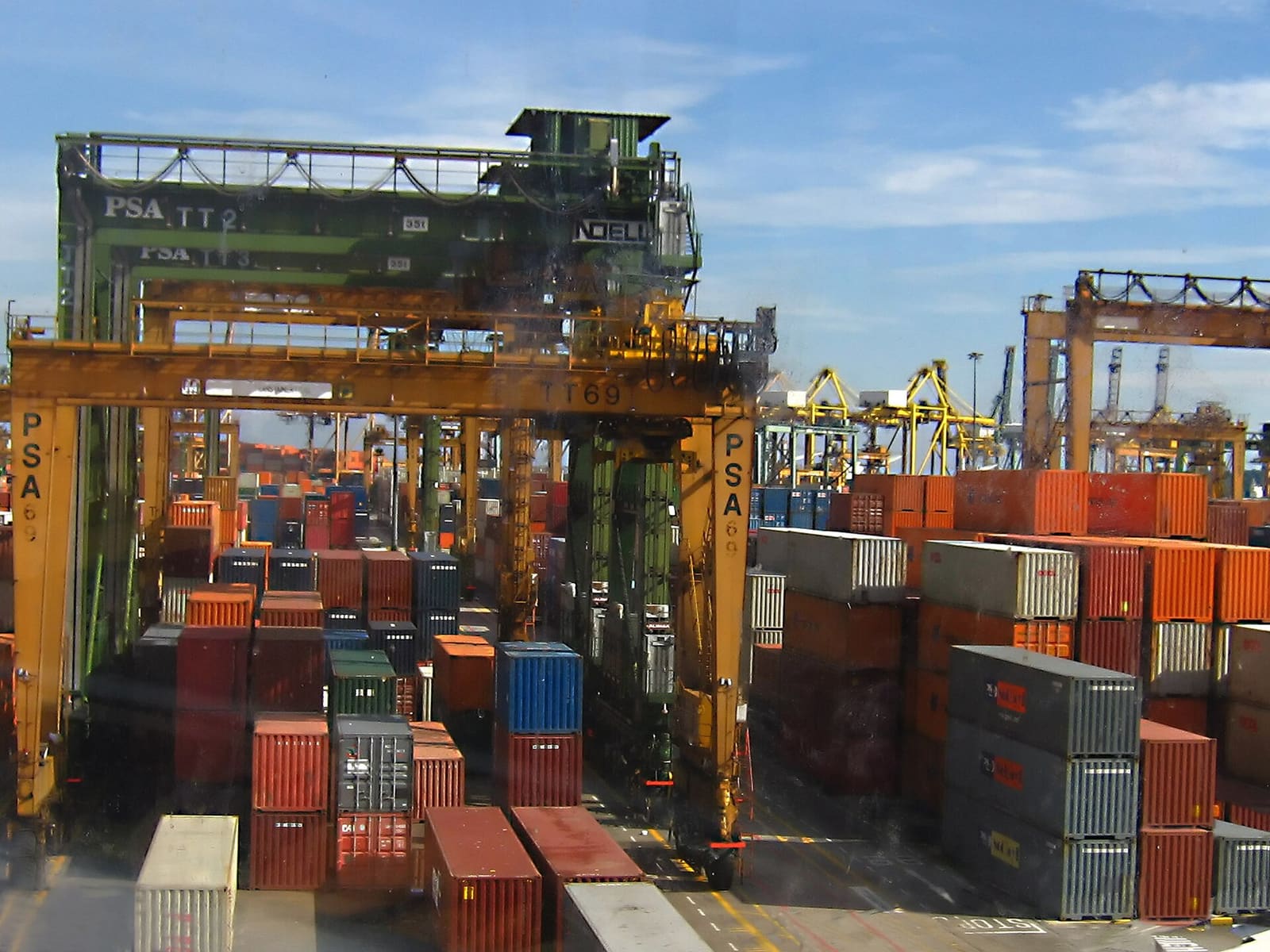
Singapore remains the region's dominant transshipment hub and a major destination in its own right, handled through facilities overseen by the Maritime and Port Authority of Singapore. Port Klang and Tanjung Pelepas serve Malaysia; Laem Chabang is Thailand's principal container gateway; Tanjung Priok serves greater Jakarta and Indonesia's largest consumer market; and Ho Chi Minh City's Cat Lai terminal remains the main entry point for Vietnam's booming manufacturing and consumer economy, alongside the newer deep-water facilities at Cai Mep. On the Indian side, Chennai, Visakhapatnam (Vizag) and Kolkata handle the bulk of eastbound ASEAN cargo given their geography, while Nhava Sheva and Mundra also carry meaningful volume for shippers consolidating with other export lanes.
What AIFTA Means in Practice
The ASEAN-India Trade in Goods Agreement reduces or eliminates tariffs on a large share of traded goods between India and ASEAN members, phased differently depending on the product category and the specific ASEAN country. Talks to review and modernise the agreement have been under discussion in recent years, reflecting how much bilateral trade has grown since 2010 and a shared interest in addressing rules-of-origin and tariff-line issues that businesses have flagged over time. In practice, exporters should treat AIFTA the same way they would any preferential agreement: confirm the applicable tariff schedule and rules of origin for the specific destination country and product before quoting a landed cost, since the benefit varies materially by market rather than applying uniformly across the whole bloc. The ASEAN Secretariat publishes the current text and status of the agreement directly, which is the most reliable source to check before finalising a quote.
Realistic Transit Times
| Destination | Gateway Port | Approx. Transit from Chennai |
|---|---|---|
| Singapore | PSA Terminals | 7–10 days |
| Malaysia | Port Klang | 7–11 days |
| Thailand | Laem Chabang | 10–14 days |
| Vietnam | Cat Lai / Cai Mep | 10–15 days |
| Indonesia | Tanjung Priok | 12–16 days |
Choosing the Right Mode and Consignment Size
FCL is the standard choice for regular volumes into any single ASEAN market, but LCL consolidation is well developed on this lane given the number of Indian exporters shipping smaller lots of textiles, engineering components, pharmaceuticals and processed foods into the region. Air freight through Chennai, Bangalore or Mumbai remains relevant for higher-value, time-sensitive cargo such as electronics components or pharmaceutical intermediates, particularly into Singapore's well-connected air cargo infrastructure. For shippers who also handle China-origin cargo alongside their India business, it's worth comparing this route against the parallel China-UAE lane and our detailed guide to China-Southeast Asia logistics across ASEAN, since several ASEAN gateway ports — Singapore in particular — serve as consolidation and transshipment points for cargo originating in both India and China.
Documentation and Practical Considerations
Standard export documentation applies — commercial invoice, packing list, bill of lading and, where preferential tariffs are being claimed, a Certificate of Origin under AIFTA. Beyond that, individual ASEAN markets layer on their own requirements: Indonesia's import licensing regime for certain product categories, Vietnam's registration requirements for specific goods, and Thailand's food and cosmetic product registrations are all examples where a generic "ASEAN" compliance checklist falls short. Working with a forwarder who understands the specific destination market's customs authority, rather than treating the region as uniform, avoids the most common source of clearance delay on this lane.
Two Tips for Shippers on the India-ASEAN Lane
- Pick your consolidation point deliberately. If you're shipping smaller volumes into multiple ASEAN markets, routing through Singapore for onward transshipment can be more cost-effective than booking separate direct sailings to each destination.
- Verify product-specific import rules per country, not per bloc. AIFTA sets the tariff framework, but registration and labelling rules are set nationally — what clears easily in Malaysia may need extra paperwork in Indonesia.
RR Brothers and Logistics ships into ASEAN markets as a regular part of our India and China operations, coordinating FCL, LCL and air freight bookings alongside customs documentation support for each destination country. Whether you're expanding an existing ASEAN relationship or shipping into the region for the first time, our team can help you compare consolidation options against direct sailings and confirm preferential tariff eligibility before you quote your buyer.
Frequently Asked Questions
Singapore is the region's dominant transshipment hub, while Port Klang (Malaysia), Laem Chabang (Thailand), Cat Lai (Vietnam) and Tanjung Priok (Indonesia) are the primary direct-destination gateways depending on the specific ASEAN market.
AIFTA reduces or eliminates tariffs on a large share of traded goods, lowering the buyer's landed cost for qualifying products. It doesn't reduce freight rates directly, but it does affect which routing and consolidation strategy makes the most commercial sense.
From south and east coast Indian ports, sea freight to Singapore or Malaysia typically takes 7–11 days, while Thailand, Vietnam and Indonesia usually run 10–16 days depending on the specific port and sailing schedule.
No. While AIFTA sets a common tariff framework, each ASEAN member sets its own product registration, labelling and licensing rules — a compliance checklist built for one market will often need adjustment for another.