The Building Customers Never See
When a grocery order or a last-minute household item arrives at a customer's door within 10 to 30 minutes of being ordered, the infrastructure behind that promise is almost never visible to the person receiving it. That infrastructure is the dark store: a repurposed retail unit, supermarket or small warehouse, stocked with products for online fulfillment only, with no public shoppers walking its aisles. Within the broader category of quick commerce, which we covered from a wider angle in our piece on quick commerce and urban transportation logistics, the dark store is the specific physical format that makes ultra-fast delivery mathematically possible. This piece looks specifically at how these facilities are designed and operated, rather than the delivery model around them.
Why "Dark"
The name describes exactly what it sounds like: a store that's dark to the public. Where a conventional supermarket invests heavily in merchandising, lighting, signage and an inviting layout designed to encourage browsing and impulse purchases, a dark store strips all of that away, because there are no customers walking through to sell to. As one architecture and retail design firm covering the format has put it, dark stores essentially look like supermarkets without customers — the layout exists purely to optimize for stock density and staff picking efficiency, not shopper experience. Exteriors tend to be plain and utilitarian, since there's no retail frontage to maintain; car parks are frequently replaced with bicycle and scooter parking for the riders who collect completed orders, and many sites add dedicated staff changing areas given the physical nature of the picking work.
Facility Size and SKU Density
Estimates of typical dark store footprint vary across sources and markets, reflecting real differences between quick-commerce-focused boxes and larger grocery-style operations, but a commonly cited range for quick commerce specifically runs from roughly 2,000 to 10,000 square feet, carrying somewhere between 1,000 and 4,000 SKUs. That's a deliberately narrow range compared with a full supermarket's tens of thousands of SKUs — a dark store has to be selective, stocking the fast-moving staples and impulse items that drive the bulk of quick-commerce order volume rather than attempting to replicate a full grocery assortment. Some operators add double-level shelving, intermediate walkways or small mezzanines to use available floor space more intensively, since high ceilings aren't a priority when there's no browsing customer to accommodate and every square foot is being optimized for storage and pick-path efficiency instead.
Picking Layout: Designing for Speed, Not Browsing
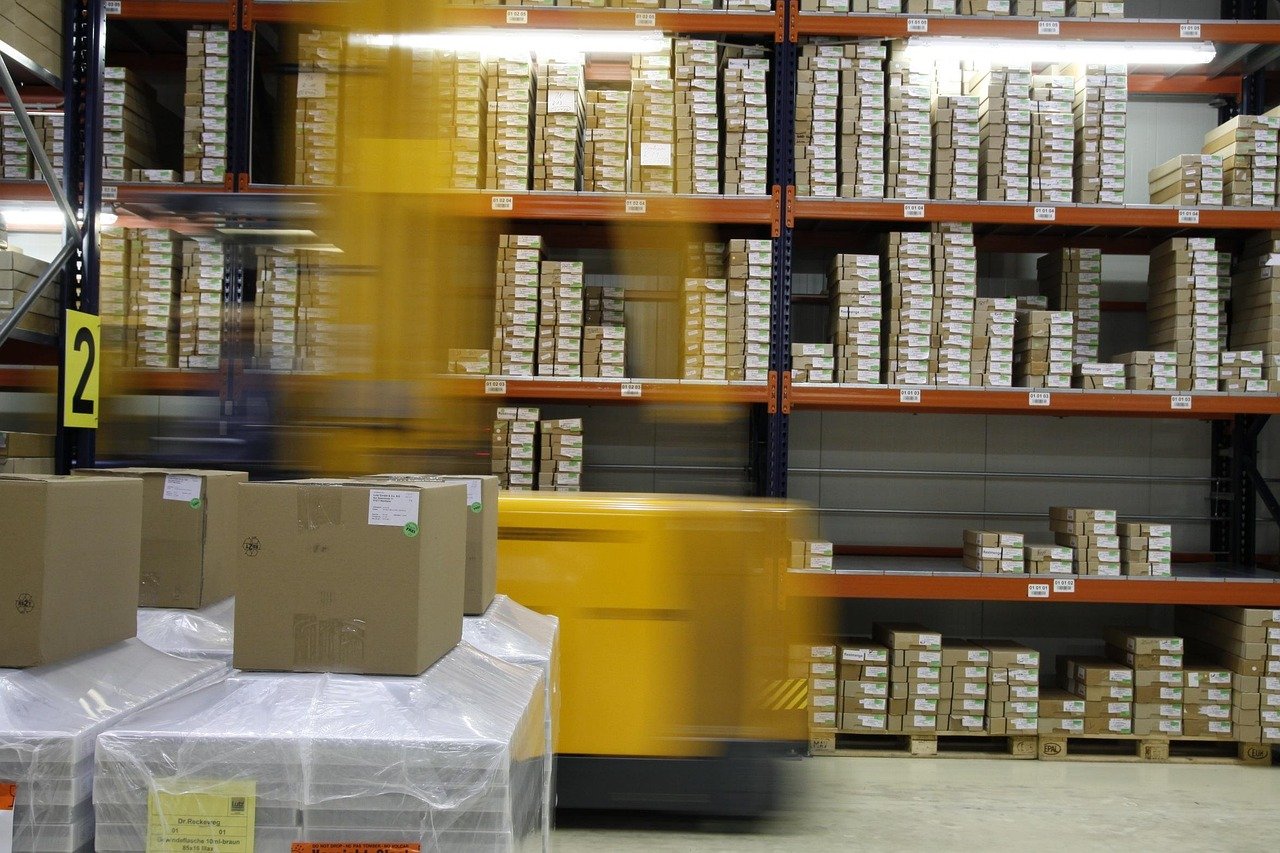
The single highest-leverage layout decision in a dark store is where the fastest-moving items sit relative to the packing station, since that placement determines how much walking distance a picker covers on nearly every order. Operators typically slot high-velocity staples — bottled water, snacks, basic produce, common household items — closest to the pack-out point, with slower-moving or bulkier SKUs placed further away. Picking itself is generally manual or semi-automated, guided by a handheld device that sequences the pick list to minimize backtracking through the store, rather than the heavier robotics found in fully automated micro-fulfillment centers.
Batching — assigning a picker two to four orders per run rather than one at a time — is a common technique for improving throughput per labor-hour, since much of the time cost of a single-order pick is the walking rather than the item retrieval itself. The trade-off is that aggressive batching during a demand spike can create its own backlog if the picking team isn't sized to handle the added complexity, so operators have to continually balance batch size against current order volume rather than fixing it at one setting.
Site Selection: Economics of a Repurposed Retail Unit
- Proximity over scale: Because delivery promises are measured in minutes, a dark store has to sit within the dense residential area it serves rather than on a cheaper urban outskirt — proximity usually outweighs raw square-footage cost in the site-selection decision.
- Marginal, affordable buildings: Vacant retail units, shuttered restaurants and underused strip-mall space are common conversions, since dark stores don't need a public-facing storefront or premium retail visibility the way a conventional shop does.
- Short lease risk: The flip side of using cheap, repurposed space is that leases on marginal buildings can be short or less secure, which operators have to weigh against the capital cost of a longer-term commitment.
- Local planning conditions: Consolidated deliveries to the dark store itself need to avoid disrupting residential areas during sensitive hours, and local authorities may restrict operating hours or require measures such as electric delivery vehicles and controlled lighting to support planning approval in dense neighborhoods.
Dark Stores vs. Micro-Fulfillment Centers
| Factor | Dark Store | Micro-Fulfillment Center |
|---|---|---|
| Picking method | Manual, handheld-guided | Robotics or conveyor-assisted |
| Typical setup cost | Lower, faster to open | Higher capital investment |
| Typical building | Converted retail unit | Purpose-built or integrated into existing store |
| Relocation flexibility | Easier to relocate | Harder, fixed equipment |
| Labor dependency | Higher per-order labor | Lower per-order labor once scaled |
Our companion piece on micro-fulfillment centers and the future of grocery delivery covers the automated side of this comparison in more depth — the two formats are often discussed together, but they represent genuinely different capital and operating strategies rather than two versions of the same idea.
The Real Economics: Order Density and Basket Size
A dark store's financial viability rests on a narrower set of variables than a conventional retail location: order density per day, average basket size, and rider productivity matter far more than the store's own rent in determining whether a site is profitable. Industry estimates vary, but figures commonly cited for consumer quick-commerce dark stores suggest operators generally need several hundred to well over a thousand orders per store per day, with average baskets in the tens of dollars, before store-level economics turn positive — thresholds that differ meaningfully for larger grocery-focused dark stores, where delivery basket sizes run considerably higher. What's consistent across formats is that rent and packaging costs, while real, tend to matter less to overall profitability than the combination of order volume and basket size that a location can sustain. This is part of why dark store networks have expanded so aggressively in dense, high-income urban markets and have been slower to take root in lower-density areas where that order-density threshold is harder to clear.
Inventory Management Inside a Dark Store
Because SKU count is deliberately limited compared with a full supermarket, inventory accuracy inside a dark store carries disproportionate weight — a stockout on a fast-moving staple is far more visible to the customer experience than it would be in a 30,000-SKU hypermarket with substitute options nearby. Operators typically run tighter replenishment cycles than conventional retail, often restocking fast-moving categories daily or even multiple times a day, since the small footprint simply can't hold the buffer inventory a larger store would carry. That puts real pressure on the inbound supply chain feeding each dark store: a delayed restock shipment has an outsized effect on a facility with only a few days of safety stock built in, compared with a conventional distribution center carrying weeks of buffer. For retailers running multi-city dark store networks, this is often the actual operational bottleneck — not the in-store picking process itself, but the reliability of the consolidated inbound deliveries that keep each site stocked against a demand pattern that can shift quickly with local trends, weather, or seasonal spikes.
Where Dark Stores Fit Within Transportation Logistics
Dark stores sit at an unusual intersection within transportation logistics: they are retail real estate reused as micro-distribution infrastructure, built specifically to compress the final mile down to a matter of minutes rather than hours. For brands and retailers evaluating whether a quick-commerce play makes sense for their category, the dark store model represents a meaningfully different kind of logistics investment than a conventional e-commerce fulfillment center — smaller footprint, higher location-cost sensitivity, and a much tighter coupling between facility placement and last-mile delivery capability. Architecture and retail design specialists who work directly on these conversions, such as the UK-based firm Chapman Taylor, have noted that planning and transport considerations — including consolidated delivery scheduling and electric vehicle requirements — are increasingly built into dark store site selection from the outset, not treated as an afterthought once a lease is signed.
For retailers weighing whether dark stores fit their growth plans, it's also worth considering how the format interacts with the rest of their distribution network — a dark store doesn't replace a regional distribution center, it sits downstream of one, typically receiving consolidated inbound shipments on a scheduled basis rather than managing its own long-haul inbound freight. Our piece on on-demand warehousing and flexible storage looks at how that broader distribution layer is itself becoming more flexible, which complements the dark store conversation rather than competing with it.
How RR Brothers and Logistics Can Help
For brands expanding into quick-commerce markets that source products from China, the dark store conversation starts well before the store itself opens — it begins with getting inventory from the factory floor to the regional distribution point reliably and on schedule. RR Brothers and Logistics supports e-commerce and SME clients with sea, air and multimodal freight from China, customs clearance, and warehousing solutions that feed into exactly this kind of downstream, fast-turnover retail infrastructure. Whether a client is stocking a single dark store pilot or scaling a network across multiple cities, getting the inbound supply chain right is what makes the 10-to-30-minute delivery promise possible in the first place.
Frequently Asked Questions
A dark store is a retail-format building — often a converted supermarket, strip-mall unit or small warehouse — that stocks products for online order fulfillment only, with no public shoppers walking the aisles. Staff pick items from shelves arranged for picking speed rather than browsing, pack them, and hand them to a rider for delivery, typically within a short radius of the store.
Estimates vary across sources and markets, but dark stores for quick commerce typically run somewhere in the range of 2,000 to 10,000 square feet, carrying roughly 1,000 to 4,000 SKUs. Larger grocery-style dark stores can run considerably bigger. The exact footprint depends on the product range a retailer wants to offer and the order volume the site needs to support.
A dark store is generally a manual or lightly automated operation using handheld devices and staff walking the floor to pick orders, built inside a repurposed retail unit. A micro-fulfillment center is a smaller, more heavily automated facility using robotics or conveyor systems to pick items, typically requiring a larger upfront capital investment but less ongoing labor per order.
Quick commerce delivery promises of 10 to 30 minutes only work if the fulfillment point sits close to the customer, since delivery time is mostly a function of distance and local traffic. That constraint pushes operators toward small, affordable, often marginal buildings embedded directly within the residential neighborhoods they serve, rather than large facilities on the urban outskirts.