Testing Terminal Decisions Before They Hit the Real Yard
A container terminal is one of the most tightly choreographed environments in transportation logistics — vessels arrive on schedules that shift by the hour, cranes have to be reassigned between ships without creating a bottleneck, and the yard has to absorb boxes fast enough that trucks and rail don't queue at the gate. Traditionally, planners tested changes to that choreography by trying them in the live operation and adjusting on the fly, an approach that works but carries real cost when a berth plan or crane allocation turns out wrong. Port and terminal digital twins exist to move that trial-and-error step out of the live yard and into software, letting operators simulate a scheduling decision, see how it plays out across a shift or a week, and catch congestion or conflict before a single crane actually moves.
What a Port Digital Twin Actually Models
At the terminal level, a digital twin is a continuously updated virtual replica of the physical facility — berth positions, quay cranes, yard blocks, internal trucks or automated guided vehicles, and gate lanes — fed by live data from terminal operating systems, vessel tracking feeds and equipment sensors. Unlike a static planning spreadsheet, the model updates as conditions change, so a planner testing a scenario is working against something close to the terminal's actual current state rather than a snapshot from the morning briefing. This is a meaningfully different tool from the network-level digital twins we've covered in our companion article on digital twins for supply chain and transportation logistics, which model an entire network of suppliers and transport lanes at a broader level. A terminal digital twin instead zooms into the physical operations inside one facility, modeling berth scheduling, crane allocation and yard congestion at a level of detail a network-wide model simply isn't built for.
Berth Scheduling: The First Place Simulation Pays Off
Berth allocation — deciding which vessel ties up at which quay position and when — is one of the clearest use cases for terminal-level simulation, because a single misallocation can cascade into delayed departures for every vessel scheduled afterward. Research presented at the Winter Simulation Conference has examined exactly this kind of problem for roll-on/roll-off terminals, focusing on minimizing vessel turnaround time through online scheduling and predicting departure times to support coordinated berth and shore-power planning. Running a proposed berth plan through a digital twin before committing to it lets planners see where two vessels might compete for the same crane resources or where a late-arriving ship would force a costly re-shuffle, catching the conflict in simulation rather than discovering it mid-shift when options for correcting it are far more limited.
Crane Allocation and Yard Congestion Modeling
Beyond berth scheduling, digital twins are increasingly used to test how reassigning quay cranes between vessels, or changing yard stacking strategy, affects overall throughput. At Singapore's Pasir Panjang Terminal, digital twin models tied to real-time sensor data have been used to simulate port systems and test planning decisions before implementing them operationally. Separate academic work on bulk terminal operations has combined agent-based simulation with optimization techniques to jointly plan railway unloading, stockyard storage allocation and vessel loading, validated against real operating data and shown to reduce overall port stay duration. The common thread across these applications is using the model to answer a "what if" question — what if we moved this crane, what if this yard block filled up, what if this vessel arrived four hours late — cheaply and repeatedly, rather than finding out the answer by running the actual terminal and absorbing whatever the consequence turns out to be.
| Planning Approach | Traditional Planning | Digital Twin Simulation |
|---|---|---|
| Testing a new berth plan | Trialed in the live operation | Simulated first, adjusted before go-live |
| Data freshness | Periodic reports and manual updates | Continuous feed from TOS, sensors and vessel tracking |
| Cost of a wrong decision | Absorbed as real congestion or delay | Caught and corrected in simulation |
| Scope of modeling | Experience-based planner judgment | Quantified scenario comparison across the whole terminal |
How This Differs From Port Automation
It's worth being precise about what a digital twin is not. Our earlier article on port automation and smart terminals covers the physical side of terminal modernization — autonomous cranes, driverless yard vehicles and automated gate systems that actually perform the work. A digital twin is the planning and simulation layer that sits above that physical equipment, deciding how it should be deployed rather than replacing it. A terminal doesn't need fully automated cranes to benefit from a digital twin; even a conventionally staffed terminal can use simulation to plan berth windows and crane assignments more precisely, with the twin informing decisions that human operators then carry out. Automation and digital twins tend to arrive together at the most advanced terminals, but they solve genuinely different problems — one executes the physical movement, the other decides what that movement should be.
Where the Approach Is Most Advanced Today
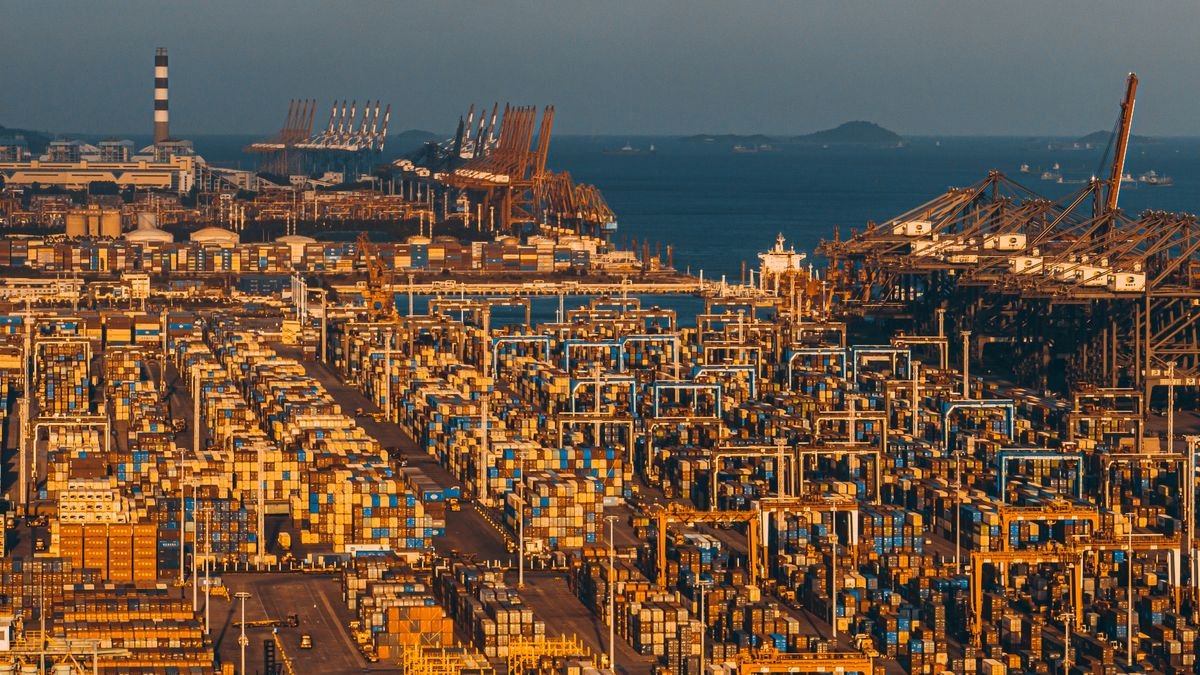
The Port of Rotterdam Authority has built a GIS- and IoT-powered digital twin intended for real-time monitoring and simulation of port operations, supporting decisions across berth scheduling, cargo handling and vessel movement coordination as part of its broader Smart Port program. In Asia, some of the world's highest-throughput terminals are applying similar modeling approaches to manage the sheer operational complexity of handling huge call volumes — a useful point of comparison with the scale we describe in our profile of Ningbo-Zhoushan, one of the world's busiest ports, where coordinating thousands of vessel calls against finite berth and crane capacity is exactly the kind of scheduling problem digital twin simulation is built to help manage. These aren't universal deployments yet — most of the world's terminals still plan with a mix of experience and simpler software tools — but the direction of investment at the largest gateways is clear.
What a Terminal Needs Before a Digital Twin Works
None of this works without reliable underlying data, and that's the part of digital twin adoption that gets the least attention outside technical circles. A twin is only as accurate as the sensor feeds, terminal operating system records and vessel tracking data flowing into it — a model built on stale yard inventory or delayed crane status reports will confidently simulate a scenario that no longer matches reality. That's why the terminals furthest along with digital twin deployment tend to be the ones that already invested heavily in IoT sensors, RTLS (real-time location system) tracking for yard equipment, and tightly integrated terminal operating systems well before layering simulation capability on top. For terminals earlier in their digitalization journey, the practical starting point usually isn't the twin itself but the data infrastructure underneath it — getting equipment positions, container moves and vessel schedules into a single, continuously updated system that a simulation layer can eventually be built on.
Extending the Model to the Landside Gate
The most useful terminal digital twins don't stop at the waterside operations — they extend to landside gate and yard interactions as well, since congestion at the truck gate can back up just as badly as a poorly sequenced berth plan. Simulating how a change to appointment slot density, yard block assignment or gate lane staffing affects truck queue times lets terminal planners catch landside bottlenecks using the same modeling approach applied to vessel operations. This matters directly for inland transportation logistics connections, since a container that clears the vessel on schedule but then sits behind a two-hour gate queue delivers no real benefit to the trucking leg waiting to collect it. Terminals that model the full gate-to-berth cycle, rather than just the maritime side, tend to produce schedule reliability that actually holds up once cargo leaves the quay and enters the surrounding road and rail network.
What It Means for Shippers and Forwarders
For a shipper, a terminal's internal planning technology is invisible day to day, but its effects show up in very visible ways: how consistently vessels berth on schedule, how quickly containers become available for pickup after discharge, and how often congestion forces a terminal to turn away truck appointments. Ports that have invested in digital twin capability are generally catching scheduling conflicts earlier, which tends to translate into steadier transit times and fewer surprise delays for the transportation logistics chains running through them. It's one more factor, alongside physical capacity and automation, that distinguishes the most reliable gateways in a global network from the ones more prone to unpredictable bottlenecks.
How RR Brothers and Logistics Can Help
RR Brothers and Logistics routes cargo through a global network of ports, and part of how we choose routings and set realistic transit expectations for clients is by tracking which gateways are investing in the planning and operational technology — including digital twin simulation — that keeps berth schedules and crane allocation running predictably. Whether you're moving a single FCL shipment or coordinating project cargo through a high-volume transshipment hub, our team factors terminal reliability into the transportation logistics plan we build for you, working across sea, rail and road freight to keep your cargo moving even when a single gateway faces unexpected congestion.
For more on how terminal digital twin technology is being deployed, the Port of Rotterdam Authority publishes detail on its own Smart Port digital twin initiative, one of the most mature public examples of the technology in commercial use today.
Frequently Asked Questions
A port digital twin is a live, data-fed virtual model of a terminal's physical layout and operations — berths, cranes, yard blocks and gates — that terminal planners use to simulate scenarios like vessel scheduling or crane allocation before committing to them in the real operation.
A supply chain digital twin typically models an entire network of suppliers, warehouses and transport lanes at a broader level, while a port or terminal digital twin focuses specifically on the physical operations inside one facility, such as berth scheduling, crane allocation and yard congestion, at a much finer level of detail.
Common uses include testing berth allocation plans against vessel arrival schedules, simulating how reassigning cranes between vessels affects turnaround time, and modeling how proposed yard layout or gate process changes would affect congestion, all before implementing the change in the live terminal.
Indirectly, yes — terminals that use simulation to catch scheduling conflicts and congestion risks before they happen tend to deliver more predictable vessel turnaround and container availability, which translates into more reliable transit times for the cargo moving through that port.