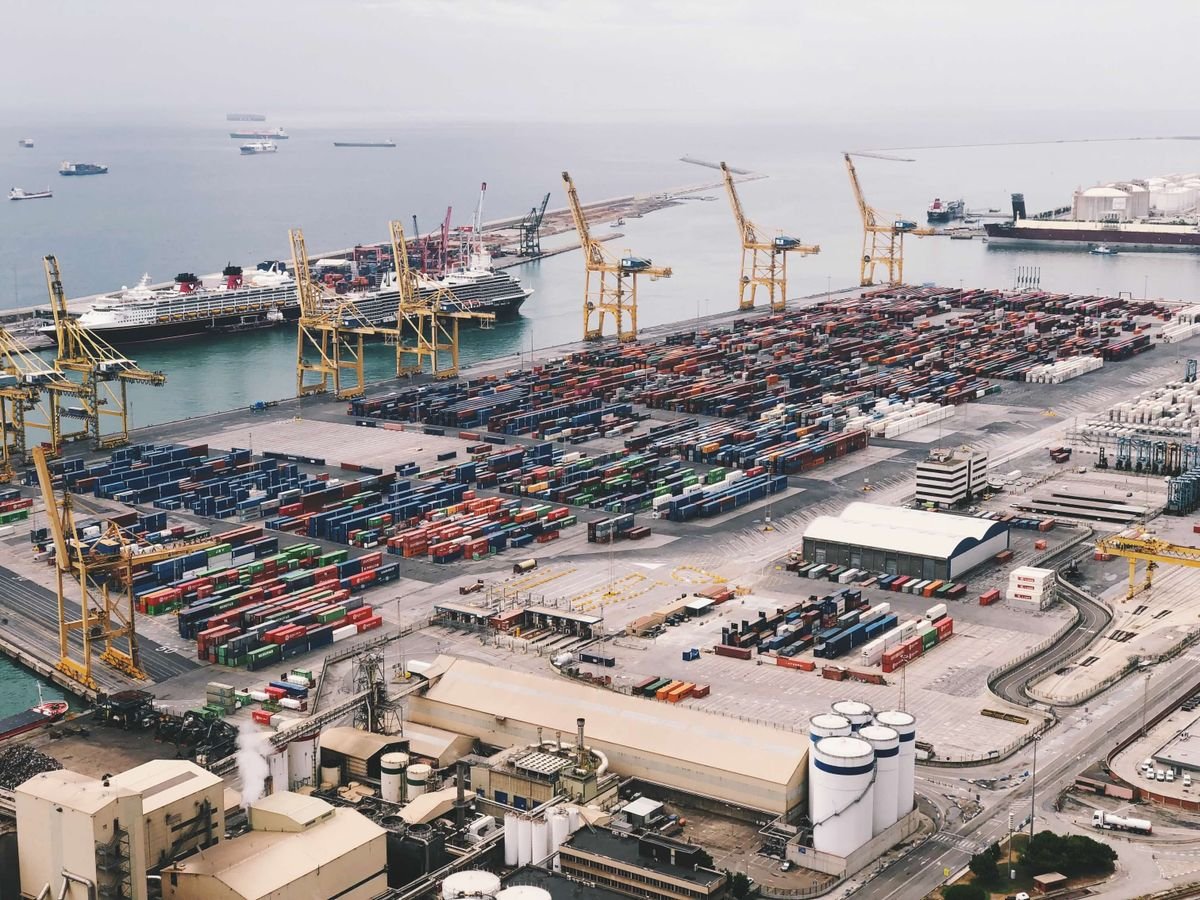
To plan international shipments during peak seasons, start from the date goods must be on your shelves and work backwards through every step, adding time for the closures, surcharges and capacity limits that peaks bring. A peak is not one event. Chinese suppliers can close for national holidays, carriers can announce peak season surcharges and adjust sailings, air cargo can be busier on some routes after a holiday, and your own demand may rise at festival times. This guide explains which peaks affect a China-to-India lane, what the 2026 holiday and carrier notices say, how to build a backward calendar, how customs filing and booking choices protect delivery, and what to put on a checklist. The examples use made-up numbers unless a source is named.
For the Chinese New Year closure in detail, see Chinese New Year shipping shutdown: how to plan around it. For general delays, see peak season shipping delays from China.
Know Which Peaks Affect Your Lane
| Peak | What changes | Where to check |
|---|---|---|
| Chinese national holidays | Suppliers can close, and Maersk says production and cargo flows then normalize | The notice of the General Office of the State Council |
| Carrier peak season surcharges | A charge is added per container for a period | The carrier's rate announcements |
| Post-holiday catch-up | Maersk says a post-holiday rise in air cargo volumes could make some routes busier | Carrier market updates |
| Special events | Air cargo operations in a host city can be adjusted | Carrier and airline advisories |
| Your own demand peaks | You need stock earlier than usual | Your sales forecast |
The General Office of the State Council issued its holiday notice for 2026 on 4 November 2025, as reproduced on the Beijing Haidian government site. It sets the Spring Festival break at nine days, from 15 to 23 February 2026, with 14 and 28 February as working days, and the National Day break at seven days, from 1 to 7 October 2026, with 20 September and 10 October as working days. Look for the notice for 2027 when it is issued, and fix your production and shipping dates around it.
What Carrier Notices Show
Carrier notices show how quickly peak terms move. Maersk's notice of 23 June 2026 revised the peak season surcharge to USD 500 for 20-foot, 40-foot and 45-foot high-cube containers from China and other Far East origins to Jawaharlal Nehru, Mundra, Pipavav and Pakistan, effective 1 July 2026. Its notice of 31 August 2026 revised the rate to USD 2,000 for 40-foot and 45-foot high-cube containers on the same lanes, effective 15 September 2026 (18 September for South Korea). The August table lists no 20-foot rate, so ask what applies to 20-foot containers. Both notices say the surcharge applies to non-spot bookings only, that it is collected on a freight-paid basis and that, for trades not regulated by the US Federal Maritime Commission, the rate is retrieved based on the scheduled departure date of the first water leg at the time of booking confirmation.
For a made-up order of six 40-foot containers, the difference between the two levels is 6 times 1,500, which is USD 9,000 on this one charge. Two lessons follow. Ask which date determines the rate on your booking, and ask when the next revision is due. Our guide to ocean freight surcharges explains how the other charges work.
Maersk's Asia Pacific market update of 7 October 2026 adds operational detail. It said customers may see adjustments to sailing schedules on some East-West trades around Golden Week, and that reduced sailing frequency in selected weeks may mean wider gaps between departures and fewer departure options. The notice does not name the China-India lane, so check the sailings on your own route. It adds that customers with time-sensitive cargo may benefit from reviewing sailing schedules, planning bookings early and keeping flexibility across departure dates or services. For air cargo, it said volumes typically decline during holiday periods and then recover, that a post-holiday increase could make some routes busy, and that the APEC Economic Leaders' Meeting in Shenzhen on 18 and 19 November might lead to some operational adjustments for air cargo in South China, with Guangzhou, Xiamen and Hong Kong remaining available as routing options, although the extent of any impact was not yet clear.
Work Backwards From the Shelf Date
The table below is a made-up backward calendar for a product that must be on the shelf on day 0. Replace each duration with your own.
| Step (counting back) | Days (made up) | Running total before day 0 |
|---|---|---|
| Receiving and put-away at your warehouse | 1 | 1 |
| Inland delivery from port or depot | 4 | 5 |
| Customs release and gate-out | 4 | 9 |
| Ocean voyage | 22 | 31 |
| Terminal cut-off before sailing | 4 | 35 |
| Cargo ready, inspected and handed to the forwarder | 3 | 38 |
| Margin for one missed weekly sailing | 7 | 45 |
Without the margin the cargo must be ready 38 days before the shelf date, and with it 45 days. Now add production. If the order needs 20 days to make, the supplier has to start 45 plus 20, which is 65 days before the shelf date. If the supplier then closes for nine days inside the production window, as in the nine-day Spring Festival break of 2026, the same run needs 20 plus 9, which is 29 days, so the start moves to 45 plus 29, which is 74 days before the shelf date. The order has to be placed before that.
The customs row uses a figure that you can test. The National Time Release Study 2025 found, for bills of entry filed in the first week of January 2025, an average release time of 79 hours 4 minutes at seaports and an average of 27 hours 26 minutes from out-of-charge to gate-out. Together they come to 106 hours 30 minutes, or about 4.4 days, so the four days allowed in the table is thin before any query arises. The study itself says that a first-week-of-January sample may not fully capture seasonal variations, so a peak-season week can differ.

Protect Delivery at Customs
Customs is the step you can prepare in advance. The same study defines advance filing as filing the bill of entry before the goods arrive at the port. In that sample, 91% of seaport bills of entry were filed in advance, with an average release time of 71 hours 23 minutes against 158 hours 59 minutes for bills filed late. A bill with a single query averaged nearly 170 hours and one with multiple queries over 256 hours, so check the documents line by line before you file. Our guide to how to avoid documentation errors during import customs clearance shows how.
Choose Capacity Options Early
- Book early and keep dates flexible. Maersk's October update points to wider gaps between departures in selected weeks on some trades. If options are fewer, a missed cut-off could delay you longer.
- Split the order. Send priority items first by a faster option and the balance by the normal route.
- Use another gateway or mode. For air cargo around the APEC meeting in Shenzhen, Maersk said Guangzhou, Xiamen and Hong Kong remain available as routing options, and our guide to air freight vs sea freight gives the tests for switching.
- Share forecasts. For air cargo, Maersk's October update says that sharing shipment forecasts early and reviewing routing options with logistics partners can help secure suitable space.
- Watch the receiving end. Check monsoon season shipping delays in India if your inland route is affected.
A Peak Season Checklist
- The shelf date is confirmed and the backward calendar is written.
- The supplier's holiday closure dates are known and confirmed in writing.
- Space is booked, and you know which date determines your surcharge.
- Documents are checked and the bill of entry can be filed before arrival.
- Trucking or rail slots are ready for the expected out-of-charge date.
- A tracking milestone list is agreed, as in our guide to shipment tracking.
- A fallback is ready for the priority items, as in our guide to a resilient international supply chain.
After the Peak
Record what happened while it is fresh: the date each booking was confirmed, which surcharge applied, how late each shipment was against the plan and what caused the delay. Update the backward calendar with the real durations and keep the record together with the supplier's closure dates, so that next year's plan starts from evidence. Carrier notices are dated and they change, so check the current notice for each booking instead of relying on last year's figures.
Plan Peak Shipments With RR Brothers and Logistics
RR Brothers and Logistics arranges sea freight and air freight from China to India and handles customs clearance. Tell us your shelf date and cargo and we will discuss a dated plan with you.
Frequently Asked Questions
According to the State Council notice dated 4 November 2025, Spring Festival is 15 to 23 February 2026 and National Day is 1 to 7 October 2026, with adjusted working days. Check the notice for 2027 when it is issued.
A June 2026 notice revised the surcharge to USD 500 for each of the three container types from 1 July 2026 from Far East origins to Jawaharlal Nehru, Mundra, Pipavav and Pakistan. An August 2026 notice set USD 2,000 for 40-foot and 45-foot high-cube containers from 15 September 2026 (18 September for South Korea). Both apply to non-spot bookings.
In the notices, for non-spot bookings on trades not regulated by the US Federal Maritime Commission, the rate is based on the scheduled departure date of the first water leg at booking confirmation. Confirm the rule on your own booking.
Before the goods arrive. In its sample of bills filed 1 to 7 January 2025, the National Time Release Study 2025 recorded 71 hours 23 minutes at seaports for bills filed in advance and 158 hours 59 minutes for bills filed late.
Its October 2026 update suggests reviewing sailing schedules, planning bookings early and keeping flexibility across departure dates or services, and, for air cargo, sharing shipment forecasts early.
Start from the shelf date and subtract each step: receiving, inland delivery, customs release, the voyage, the terminal cut-off and cargo-ready time, add a margin for a missed sailing, then add production time and any supplier closure.
Sources
- General Office of the State Council: Notice on arrangements for some public holidays in 2026 (4 November 2025), as reproduced by the Beijing Haidian government
- Maersk: Peak Season Surcharge, Far East Asia to Pipavav, Jawaharlal Nehru, Mundra and Pakistan (23 June 2026)
- Maersk: Peak Season Surcharge revision, Far East Asia to Pipavav, Jawaharlal Nehru, Mundra and Pakistan (31 August 2026)
- Maersk: Asia Pacific market update, October 2026 (7 October 2026)
- CBIC: National Time Release Study 2025 (released 20 June 2025)
This article is general information, not legal, tax or customs advice. Rules, rates and procedures change; confirm current requirements with the relevant authority or a licensed customs professional before you ship. Regulatory references were checked against the official sources listed above on 26 October 2026.
Image credits: header photo by Timelab on Unsplash; photo by Jakub Żerdzicki on Unsplash. Used under the Unsplash License.
Request a Quote