Why Small Businesses Assume Logistics Solutions Aren't for Them
Logistics solutions are often marketed with large enterprise clients in mind — full-container programs, dedicated warehousing, multi-country contracts — which leaves a lot of small business owners assuming the category simply isn't built for them. That assumption costs money. A small business shipping a few pallets a month or fulfilling international orders in small parcel volumes has just as real a need for coordinated freight, customs clearance and reliable last-mile delivery as a much larger importer; it simply needs that coordination delivered at a scale and price point that matches its volume. The good news is that a properly structured logistics solutions provider builds exactly that kind of scaled offering, rather than expecting every client to arrive at container-load volumes.
The Most Affordable Logistics Solutions for a Small Business
Small business shipping doesn't need to mean paying full-container rates for partial-container volume. A handful of models exist specifically to make freight and logistics affordable at lower volumes:
- LCL (less-than-container-load) consolidation. Sharing container space with other shippers' cargo means paying only for the volume actually used, rather than a full container's rate.
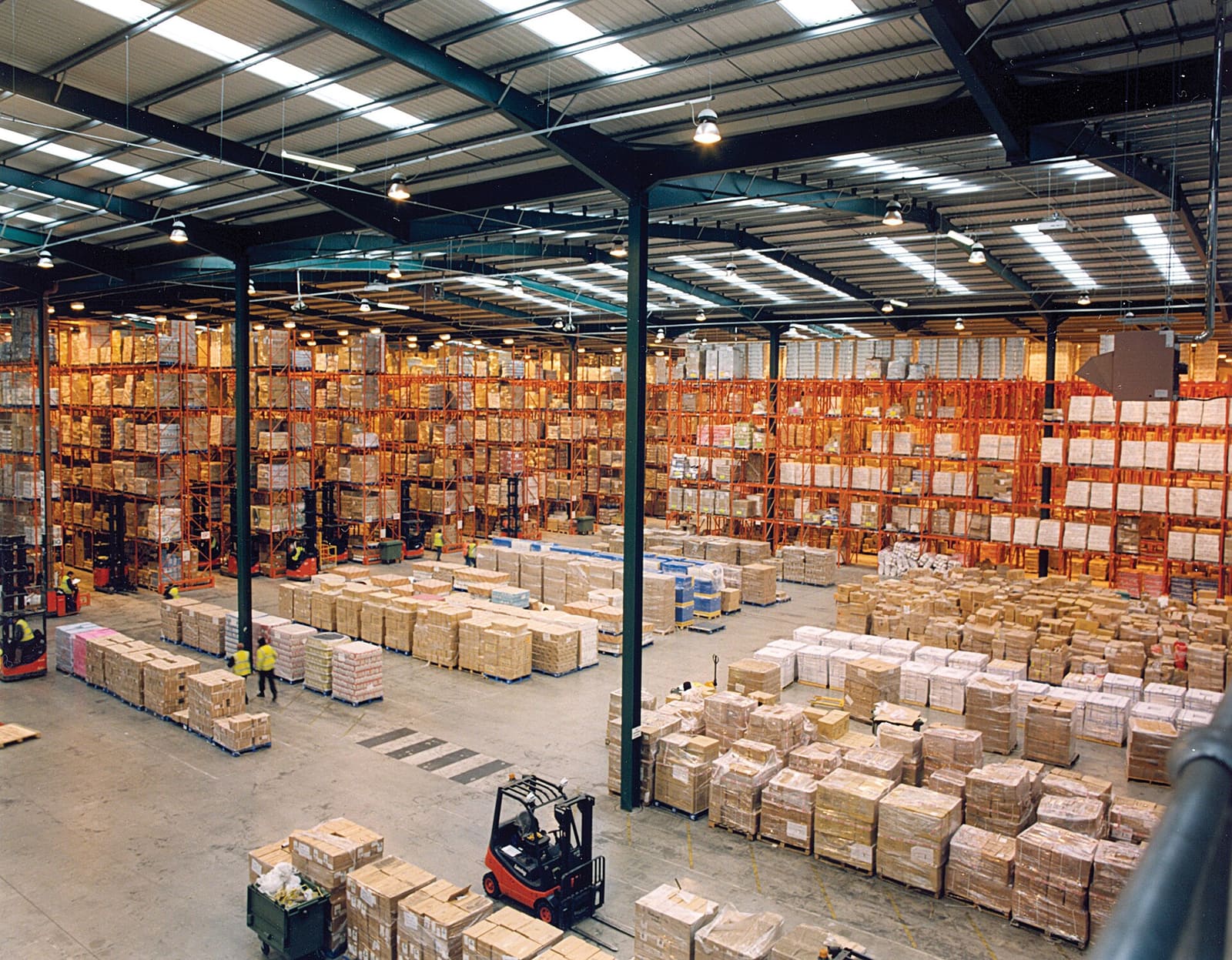
- Shared or multi-client warehousing. Using space in a warehouse operator's shared facility avoids the fixed cost of leasing dedicated storage before volume justifies it.
- Transactional pricing instead of contracts. Paying per shipment against a published rate card, rather than committing to a volume-based contract, keeps costs proportional to actual activity.
- Bundled customs and documentation support. Many forwarders fold customs brokerage into a small-shipment freight quote rather than billing it as a separate, disproportionately expensive line item.
Together, these models let a small business access the same underlying network — carriers, customs relationships, warehousing — that a larger importer uses, just sized to its actual shipment volume rather than a minimum commitment it hasn't yet grown into.
How Small Businesses Can Access Enterprise-Level Freight Rates
Freight forwarders and NVOCCs pool volume from many smaller shippers to negotiate rates with carriers that no single small business could secure on its own. This is the core mechanic behind LCL consolidation, and it's also how bundled logistics solutions extend enterprise-level rates and network access down to businesses shipping a fraction of an enterprise client's volume. The practical takeaway for a small business owner is that the per-unit cost advantage of scale doesn't require the business itself to reach that scale — it requires working with a forwarder who has already reached it on behalf of its combined client base. Our guide on how freight forwarders simplify trade for SMEs covers this mechanism in more depth, including how consolidated bookings translate into real savings for smaller, more frequent shippers.
Small Business Shipping: DIY vs Working With a Logistics Partner
| Factor | DIY / Self-Managed | Logistics Solutions Partner |
|---|---|---|
| Freight rates | Retail rates, little negotiating leverage | Pooled volume rates via consolidation |
| Customs knowledge | Learned through trial and error | Handled by an experienced broker |
| Time investment | Significant owner or staff time per shipment | Minimal — one point of contact |
| Scalability | Breaks down as volume grows | Scales with the business, gradually |
When to Hire a Dedicated Logistics Partner
Many small businesses start by managing shipments themselves — booking directly with a carrier, handling their own paperwork — and that's often the right call at very low volumes. The transition point tends to arrive when the owner or a staff member is spending more time managing shipments than growing the business, when shipment frequency increases past roughly one a month, or when the business starts selling into a new country where it has no customs or delivery experience. It's also worth bringing in a partner the first time a shipment goes wrong in a costly way — a missed delivery window, a customs penalty, damaged goods with no insurance in place — since those incidents usually reveal gaps that a dedicated logistics solutions provider would have caught in advance.
Practical First Steps for a Small Business Shipper
Start with one function rather than outsourcing everything at once — freight forwarding for a single trade lane is usually the easiest and lowest-risk place to begin. Ask a prospective partner directly how they price small or LCL shipments, since some forwarders quietly price small volumes far less favourably than their headline rates suggest. Once that first lane is running smoothly, it becomes much easier to judge whether expanding into a broader logistics solutions relationship — covered in our overview of what logistics solutions actually include — makes sense for the business. Seasonal small businesses in particular should also look closely at flexible, non-contractual pricing models, since our guide to cost-effective logistics solutions for seasonal businesses explains why paying for unused capacity outside peak periods rarely makes sense at small-business scale.
Growing Into a Fuller Logistics Relationship
As volume and confidence build, many small businesses find themselves gradually handing over more — warehousing, then customs clearance, then distribution — following the same path larger businesses take when they first consider outsourcing to a third-party logistics provider. The advantage smaller businesses have is that this growth can happen incrementally, testing each function before committing further, rather than needing to design a full logistics program from day one.
RR Brothers and Logistics works with small and growing businesses across China, India, Turkey, Kenya and Nigeria every day, structuring LCL consolidation, flexible warehousing and bundled customs support around actual shipment volume rather than a minimum enterprise commitment. Organizations like UNCTAD and the World Customs Organization also publish useful trade facilitation resources aimed specifically at helping smaller traders access the same rules and standards larger importers rely on.
Frequently Asked Questions
LCL consolidation, shared warehousing, and transactional (per-shipment) pricing rather than volume-based contracts are the most accessible options, since they let a small business pay for only the capacity it actually uses.
By working with a freight forwarder or NVOCC that pools volume from many smaller shippers to negotiate carrier rates no individual small business could secure alone — the same mechanism behind LCL consolidation.
Common triggers include shipment frequency passing roughly once a month, staff time spent managing freight cutting into core business tasks, expansion into an unfamiliar market, or a costly mistake that reveals gaps in a self-managed approach.
Yes, and it's the recommended approach. Starting with freight forwarding on a single lane, then adding customs clearance or warehousing as volume and trust grow, lets a small business scale its logistics relationship incrementally rather than all at once.