The Gap Between a Courier on Foot and a Delivery Van
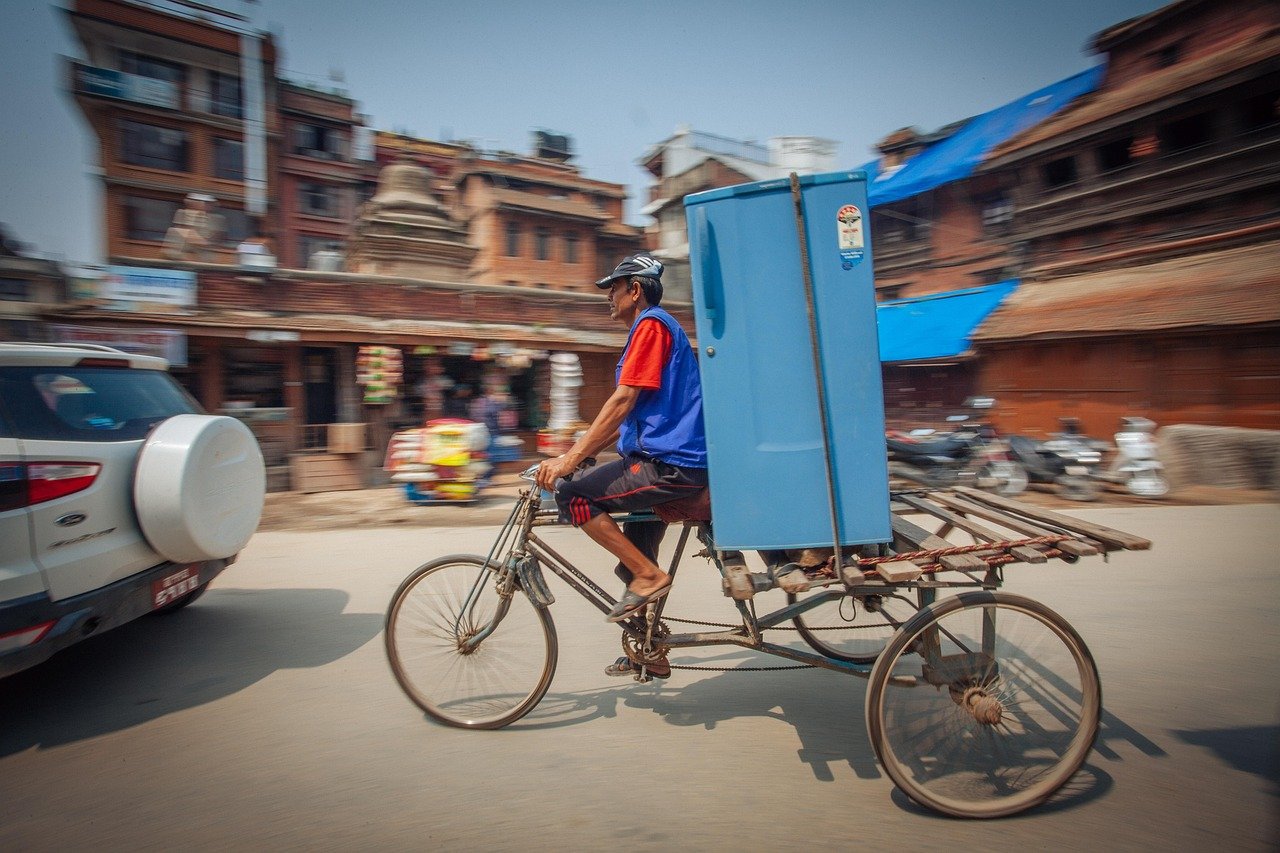
Every last-mile delivery network has a capacity problem hiding in plain sight: a walking or cycling courier covers very little ground per hour, while a delivery van is often overkill — and increasingly unwelcome — for a single food order or a small parcel dropped three streets away. Micromobility vehicles exist to fill exactly that gap. E-scooters, electric mopeds and other compact electric vehicles have become a standard part of urban transportation logistics precisely because they move faster than walking or standard cycling, carry more than a backpack, and still fit through traffic and parking conditions that leave a van stuck at the curb.
What Actually Counts as Micromobility in a Delivery Fleet
The term covers a fairly specific slice of vehicles: electric scooters, electric mopeds and similar small, battery-powered vehicles designed for one rider plus a modest cargo box, typically capable of covering several kilometers at speeds well above walking or pedal-cycling pace. That puts micromobility in a distinct position relative to the other modes commonly used in last-mile delivery — faster and longer-range than a cargo bike, but far smaller, cheaper to operate, and easier to park than a delivery van. Our companion article on cargo bikes and low-emission zones in urban delivery covers that adjacent category directly, and the two are frequently confused, even though they suit noticeably different jobs within the same delivery network.
Why the Last Mile Costs So Much to Begin With
Industry analysis consistently identifies the last mile as the single most expensive segment of the delivery chain, commonly cited at more than half of total logistics cost for a typical parcel or food order — a share that has only grown as e-commerce order volumes expanded and customer expectations around delivery speed tightened. That cost comes from the segment's inherent inefficiency relative to line-haul transport: dozens of individual stops, unpredictable traffic and parking conditions, and relatively low route density compared with moving a full truckload between two fixed points. Micromobility addresses the problem from the vehicle-cost side rather than the routing side — a fleet of e-scooters or mopeds is markedly cheaper to purchase, fuel and maintain than an equivalent van fleet, and in congested city centers it is often faster as well, since it can bypass traffic and avoid the time lost circling for parking.
The Market Is Growing Quickly, Even If Forecasts Vary
Market-research estimates differ in their specifics, but they agree on direction. One widely cited estimate puts the global micromobility market at roughly $48.5 billion in 2026, projected to grow at close to 12.7% annually through 2035 and reach around $142 billion by then, with Asia-Pacific accounting for roughly 48% of the global market and e-bikes the single largest vehicle category. A separate regional estimate puts the European micromobility market at about $36.26 billion in 2025, projected to reach approximately $125.59 billion by 2035. Within that broader category, delivery and logistics fleets specifically are forecast to be among the fastest-growing segments for electric scooters and mopeds, driven by continued growth in e-commerce, food delivery and quick-commerce platforms. On the adoption side, the North American Bikeshare and Scootershare Association reported 225 million shared micromobility trips across North America in 2024, up 31% year over year — a passenger-market figure, but one that reflects how quickly the broader vehicle category has scaled regardless of use case.
How the Vehicle Options Actually Compare
| Mode | Typical Payload | Typical Range | Best Fit |
|---|---|---|---|
| Walking / e-bike courier | 1–2 small items | Under 2 km | Dense, very short quick-commerce orders |
| Cargo bike | Moderate, boxed loads | 2–6 km | Low-emission zones, multi-stop urban rounds |
| E-scooter / moped (micromobility) | Small to moderate, single orders | 5–15 km | Food delivery, mid-range parcel runs |
| Delivery van | Large, multi-order loads | City-wide and beyond | Bulky items, long routes, high stop counts |
How Quick-Commerce Operators Actually Deploy These Vehicles
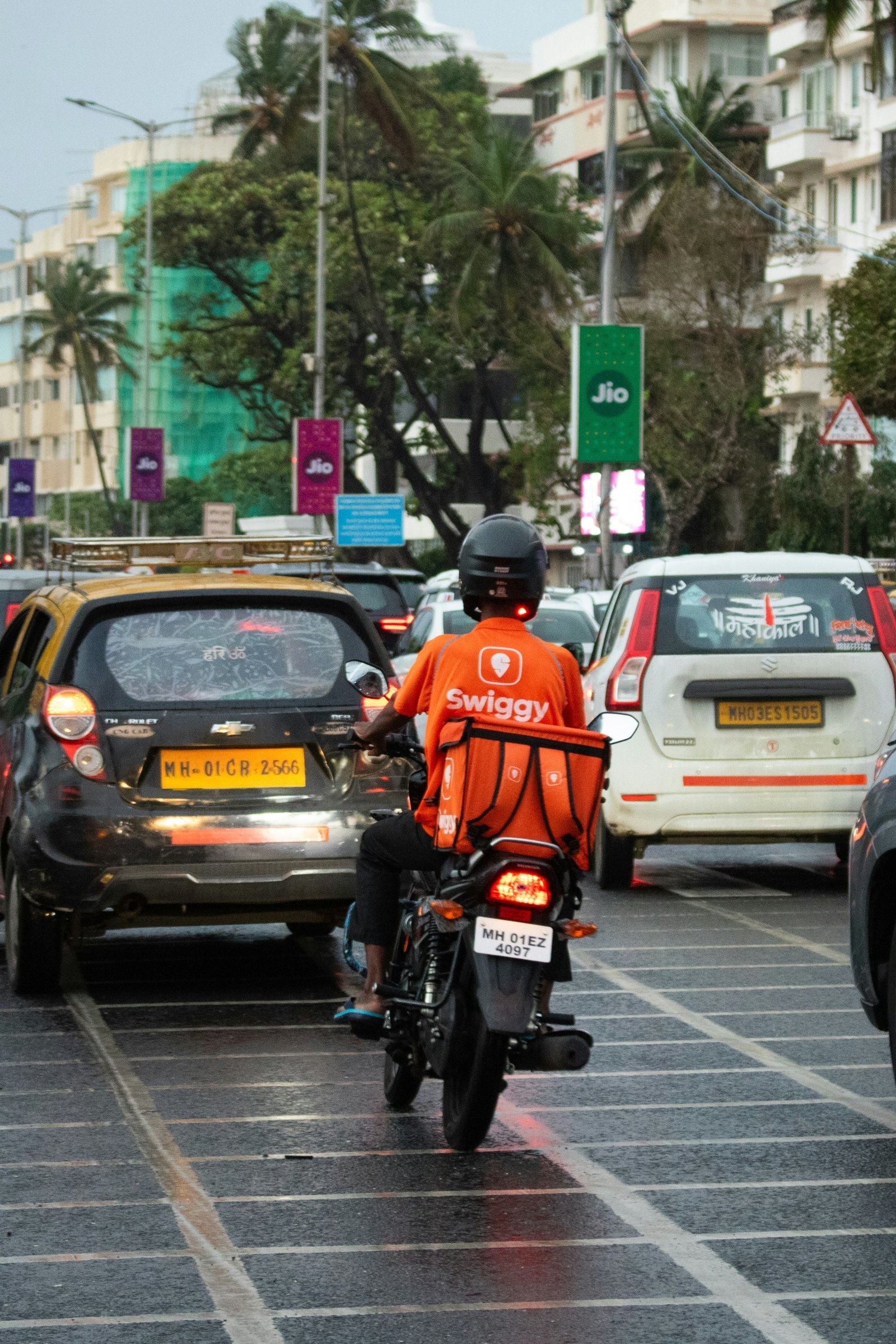
In practice, few operators pick one vehicle type and standardize on it. Our related article on quick commerce and its effect on urban transportation logistics describes how operators promising delivery windows of 10 to 30 minutes typically run a mixed fleet, matching vehicle type to order size and delivery radius rather than forcing every order through the same mode. A single bag of groceries a few blocks away might go out with a walking or e-bike courier; a larger grocery order or a food delivery a few kilometers out is a natural fit for a moped or e-scooter; and a bulk order, or one bound for a less central delivery radius, still goes by van. Amazon's own expansion illustrates the scale this can reach: the company reported growing its low-emission delivery network to more than 60 micromobility hubs across more than 45 European cities as of November 2025, using these hubs specifically to shift last-mile trips away from vans in dense urban cores without giving up delivery speed.
The Regulatory Patchwork Still Slows Things Down
Expansion has not been frictionless. Industry analysis repeatedly flags a lack of protected infrastructure — dedicated lanes, secure parking, charging access — as a genuine constraint on how far micromobility delivery fleets can scale in many cities, alongside safety concerns tied to mixing scooters and mopeds with car and pedestrian traffic. Regulatory frameworks also vary significantly between cities and change often, which creates planning uncertainty that can discourage the kind of capital investment a fleet expansion requires. Operators who coordinate closely with city transport authorities, similar to the engagement our related piece on congestion pricing and its effect on urban freight describes for commercial vehicle access rules, tend to navigate these shifts more smoothly than those treating regulation as a fixed backdrop rather than a variable to plan around.
Operational Realities: Range, Charging and Rider Safety
Running a micromobility delivery fleet involves a different set of operational questions than running a van fleet, and operators who get these wrong tend to see the cost advantage erode quickly. Battery range and charging infrastructure are the first constraint: a moped or e-scooter typically needs charging more frequently than a van needs refueling, which means fleet operators either need battery-swap stations positioned near delivery hubs or enough vehicles in rotation to keep riders moving while others charge. Rider safety is the second major consideration, and arguably the more consequential one — two-wheeled vehicles mixing with car and truck traffic carry meaningfully higher injury risk per trip than a courier inside a van, which has pushed many operators toward mandatory helmets, reflective gear and structured route guidance that keeps riders off the most dangerous road segments where practical. Vehicle maintenance is a smaller but still real cost: a fleet running continuously through a full shift puts more cumulative wear on brakes, tires and batteries than the same vehicle used for personal trips, and operators who underinvest in maintenance schedules tend to see it show up later as unplanned downtime during peak delivery hours. None of this is a reason to avoid the category — it is simply the operational cost of running a transportation logistics fleet built around smaller, faster vehicles instead of fewer, larger ones, and most of it is manageable with the kind of route and shift planning that mature micromobility operators have already worked out.
Micromobility Delivery Already Dominates Several of RR Brothers' Markets
For a company moving freight between China, India, Turkey, Kenya and Nigeria, this is not an abstract trend — in several of those markets, two-wheeler delivery is already the default rather than an emerging alternative. China's urban food and parcel delivery economy runs overwhelmingly on electric mopeds and scooters, with riders navigating dense city cores far faster than a van ever could. In Kenya, motorcycle taxis and couriers, locally known as boda-bodas, have long served exactly the role micromobility delivery now formalizes elsewhere: fast, flexible, low-cost transport suited to roads and traffic patterns that are hard on larger vehicles. Nigeria's okada riders fill a similar niche in cities such as Lagos, where traffic congestion makes a two-wheeler the fastest way to move a small load across town at most times of day. Shippers bringing e-commerce or SME cargo into these markets should expect last-mile fulfillment to already lean heavily on exactly this category of vehicle, rather than treating it as a future upgrade to plan for.
How RR Brothers and Logistics Can Help
For e-commerce and SME clients using RR Brothers and Logistics to move goods into a market, what happens on the final kilometer matters just as much as the ocean, air or rail leg that got the shipment there. Our e-commerce logistics and warehousing services are built to connect inbound freight to local fulfillment and distribution partners who understand how to deploy the right last-mile mix — walking couriers, micromobility, cargo bikes or vans — for a given city and order profile, so transportation logistics performance doesn't fall apart in the final few kilometers after the hard part of the journey is already done. Data on shared micromobility adoption trends is tracked by industry groups such as the North American Bikeshare and Scootershare Association, which publishes figures on how quickly these vehicle categories continue to scale.
Frequently Asked Questions
In a delivery context, micromobility covers e-scooters, electric mopeds and other compact electric vehicles that carry a courier and a modest cargo load, sitting between a walking or cycling courier and a full delivery van in both speed and capacity.
Cargo bikes typically suit short, high-frequency urban trips with moderate loads, often in low-emission or pedestrian-restricted zones. Micromobility vehicles such as e-scooters and mopeds generally move faster over longer distances with a smaller payload, making them a better fit for food and parcel delivery across a wider radius.
Industry estimates put the last mile at more than half of total logistics cost, largely because it involves the most stops, the most variable traffic conditions and the least route density per delivery compared with line-haul transport.
No. Most quick-commerce operators mix vehicle types, assigning walking or e-bike couriers to very short orders, mopeds and e-scooters to mid-range deliveries, and vans to bulkier orders or longer routes, matching the vehicle to order size and delivery radius rather than using a single fleet type.