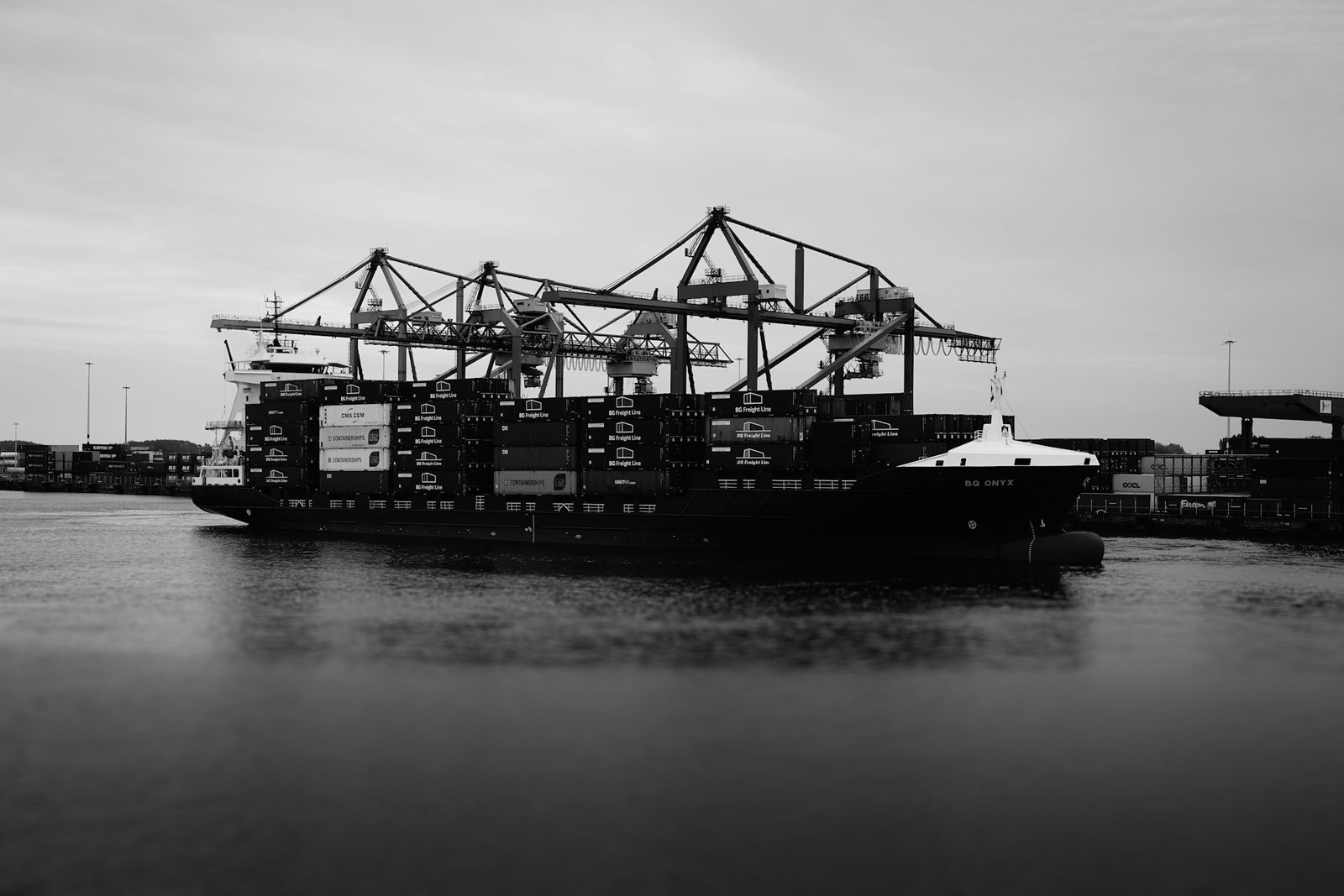
Risk management in international shipping starts with a plain question: if this shipment is damaged, late, held by Customs or paid for and never sent, who loses what, and by when must you act? It is easy to assume that the carrier's liability follows the value of the goods. The texts we read say otherwise. Carrier liability under the Montreal Convention and India's 2025 sea Act is limited by weight or package, claims have short deadlines and several of the largest exposures sit with the importer or shipper, not the carrier. This guide sets out, from official texts, where those limits and deadlines sit, works through a limit-versus-value example with made-up numbers and ends with a simple risk register you can start this week. It describes law and sources and is not legal advice.
For related reading, see supply chain risk management for China trade and geopolitical risk and supply chain resilience.
Four Groups of Risk
| Group | Examples | Who can act on it |
|---|---|---|
| Cargo | Damage, loss, delay, theft, wrong packing | Shipper, carrier, you through packing and insurance |
| Contract and liability | Limits of liability, time bars, unclear responsibility | You, through the terms you accept |
| Compliance | Customs declarations, weights, dangerous goods, permits | The importer and shipper first, then the forwarder |
| Counterparty and payment | Fake suppliers, advance payments, failure to ship | You, through checks and payment method |
Liability Limits and Deadlines
The table sets out what the texts we read say. It is not a complete statement of any law. The air rows come from the Montreal Convention (Articles 22, 31 and 35) and the IATA memo linked below. The multimodal row comes from the text of the Multimodal Transportation of Goods Act, 1993 on Indian Kanoon, which is a copy and not the official original.
| Situation | Limit or duty | Deadline | Source |
|---|---|---|---|
| Sea carriage from an Indian port | Carrier liability not exceeding 666.67 SDR per package or unit or 2 SDR per kilogram of gross weight, whichever is higher, unless nature and value were declared before shipment and inserted in the bill of lading | Written notice at or before removal, or within three days if the loss is not apparent; suit within one year after delivery | Carriage of Goods by Sea Act, 2025 |
| Air carriage, where the Montreal Convention applies | Cargo liability limited to a sum per kilogram unless a special declaration of interest in delivery was made and a supplementary sum paid; revised figure 26 SDR per kilogram in the IATA memo | Complaint within 14 days of receipt for damage and 21 days for delay; action within two years | Montreal Convention, Articles 22, 31, 35; IATA memo |
| Multimodal carriage | India's 1993 Act covers carriage from India to a place outside India, the export direction | Check the document | Multimodal Transportation of Goods Act |
An important limit on the first row: Section 3 of the Carriage of Goods by Sea Act, 2025 applies the rules to carriage by sea from any port in India to any other port, whether in or outside India. By its own terms it does not cover a voyage from a Chinese port to an Indian port, so for an import your rights depend mainly on the contract, the bill of lading and the law they select. The Ministry's commencement notification puts the Act in force from 10 September 2025.
A Limit-Versus-Value Example With Made-Up Numbers
Special Drawing Rights (SDR) are an International Monetary Fund unit. The IATA memorandum values one SDR at USD 1.32 on 12 June 2024, which will have changed, so treat the dollar results as an illustration only.
Suppose 100 kg of goods valued at USD 20,000 are lost on a flight to which the Convention applies and no special declaration was made. The limit is 100 x 26 = 2,600 SDR, or 2,600 x 1.32 = USD 3,432. That is 17.2% of the value (3,432 divided by 20,000). The rest, USD 16,568, falls on you unless it is insured or declared.
Now suppose 20 packages weighing 2,400 kg in total and worth USD 36,000, and a package-or-kilogram limit like the one in the 2025 Act. The package figure is 20 x 666.67 = 13,333.4 SDR and the kilogram figure is 2 x 2,400 = 4,800 SDR, so the higher figure, 13,333.4 SDR, applies. At USD 1.32 that is about USD 17,600, or 48.9% of the value. Packing the same goods in fewer, heavier packages would change the package figure, which shows that the limit depends on how the cargo is counted and not on what it is worth. Read your own bill of lading to see which rule applies.
The lesson in both cases is the same: a limit of this kind is not insurance. See cargo insurance for China-origin shipments.

Duties That Sit With the Importer or Shipper
- Customs declarations. Under Section 46(4A) of the Customs Act, 1962, the importer who presents the bill of entry must ensure its accuracy and completeness. Section 111(m) makes goods that do not correspond in value or any other particular with the entry liable to confiscation, Section 112 provides penalties for a person who does or omits an act that would render goods liable to confiscation under Section 111 and Section 114AA provides a penalty of up to five times the value of the goods for knowingly or intentionally using a false or incorrect document. The text is CBIC's consolidation of 30 March 2022, so confirm current wording with your broker.
- Container weight. The IMO says the shipper is responsible for stating the verified gross mass in the shipping document and submitting it in advance to the master and the terminal, under SOLAS guidance in force from 1 July 2016.
- Dangerous goods. IATA says the shipper is responsible for completing the Shipper's Declaration for Dangerous Goods and that goods cannot be accepted if it is not filled out correctly. For sea carriage, see the IMO's page on the IMDG Code.
- Inland insurance. ICC's report on national regulatory barriers records that India allows foreign transport insurance for CIF and CIP only up to the point of entry, not for the subsequent transport into the country. Confirm who covers the inland leg.
Counterparty and Payment Risk
The Embassy of India in Beijing's advisory for Indian SMEs lists the problems Indian companies have reported with Chinese counterparties and recommends not paying an advance to a company whose credentials are unknown, using an escrow or bank guarantee route if an advance is needed. The Reserve Bank's Master Direction expects remittances against normal imports to be completed within six months from the date of shipment, so a delayed shipment can create a payment and compliance problem as well as a supply problem. Our guide to reducing risks when buying products from overseas suppliers goes through the checks.
A Simple Risk Register
- List the ten shipments or lanes that matter most by value.
- For each, write the main risk in one line, such as "air cargo of high value with no declared value" or "advance payment to a new supplier".
- Score likelihood and impact from 1 (low) to 3 (high) and multiply. A score of 6 or 9 needs action first.
- Name one control and one owner for each, such as declaring a higher value, adding cover for the inland leg or paying through a bank guarantee.
- Write down the deadline that applies after arrival, such as the 14 days for air damage or the three days for sea damage that is not apparent, and diarise it.
- Review after each incident and each quarter.
Plan Shipments With RR Brothers and Logistics
RR Brothers and Logistics arranges sea freight, air freight and multimodal transport from China, offers financial and value-added services such as insurance and packing, and handles customs clearance in India. Tell us your lanes and cargo values and we will discuss the documents and cover that fit them.
Frequently Asked Questions
Because carrier liability is limited by weight or package, claim deadlines are short and several of the largest exposures, such as customs declarations and payment, sit with the importer rather than the carrier.
Not necessarily. The Montreal Convention limits cargo liability to a sum per kilogram unless a special declaration is made, and the 2025 Indian sea Act limits liability per package or per kilogram unless value is declared in the bill of lading.
Under Article 31 of the Montreal Convention, a complaint about damaged air cargo must be made within 14 days of receipt and about delay within 21 days. For sea cargo from India, the 2025 Act's rules require notice within three days if the loss is not apparent.
Section 3 applies to carriage from any port in India. By its own terms it does not cover a voyage from China to India, so the contract, the bill of lading and the law they select matter.
The shipper. The IMO says the shipper must state the verified gross mass, and IATA says the shipper must complete the Shipper's Declaration for Dangerous Goods for air carriage.
List your most valuable lanes, write the main risk for each, score likelihood and impact from 1 to 3, name a control and an owner, record the claim deadlines and review each quarter.
Sources
- Government of India: Carriage of Goods by Sea Act, 2025 (Gazette, 8 August 2025)
- Ministry of Ports, Shipping and Waterways: Carriage of Goods by Sea Act, 2025 with commencement notification
- Convention for the Unification of Certain Rules for International Carriage by Air (Montreal Convention 1999), full text
- IATA memorandum on the revision of Montreal Convention liability limits (memo of 5 October 2024; revised limits effective 28 December 2024)
- Indian Kanoon: The Multimodal Transportation of Goods Act, 1993
- CBIC: Customs Act, 1962 (Sections 46, 111, 112 and 114AA)
- IMO: Verification of the gross mass of a packed container (SOLAS)
- IATA: What you need to know about the transport of dangerous goods by air
- IMO: The International Maritime Dangerous Goods (IMDG) Code
- ICC: National regulatory barriers to the Incoterms 2020 rules (January 2025)
- Embassy of India, Beijing: Updated advisory for Indian SMEs doing business with Chinese companies
- Reserve Bank of India: Master Direction, Import of Goods and Services (updated 12 January 2026)
This article is general information, not legal, tax or customs advice. Rules, rates and procedures change; confirm current requirements with the relevant authority or a licensed customs professional before you ship. Regulatory references were checked against the official sources listed above on 28 October 2026.
Image credits: header photo by Haris Illahi on Unsplash; photo by Lee Milo on Unsplash. Used under the Unsplash License.
Request a Quote