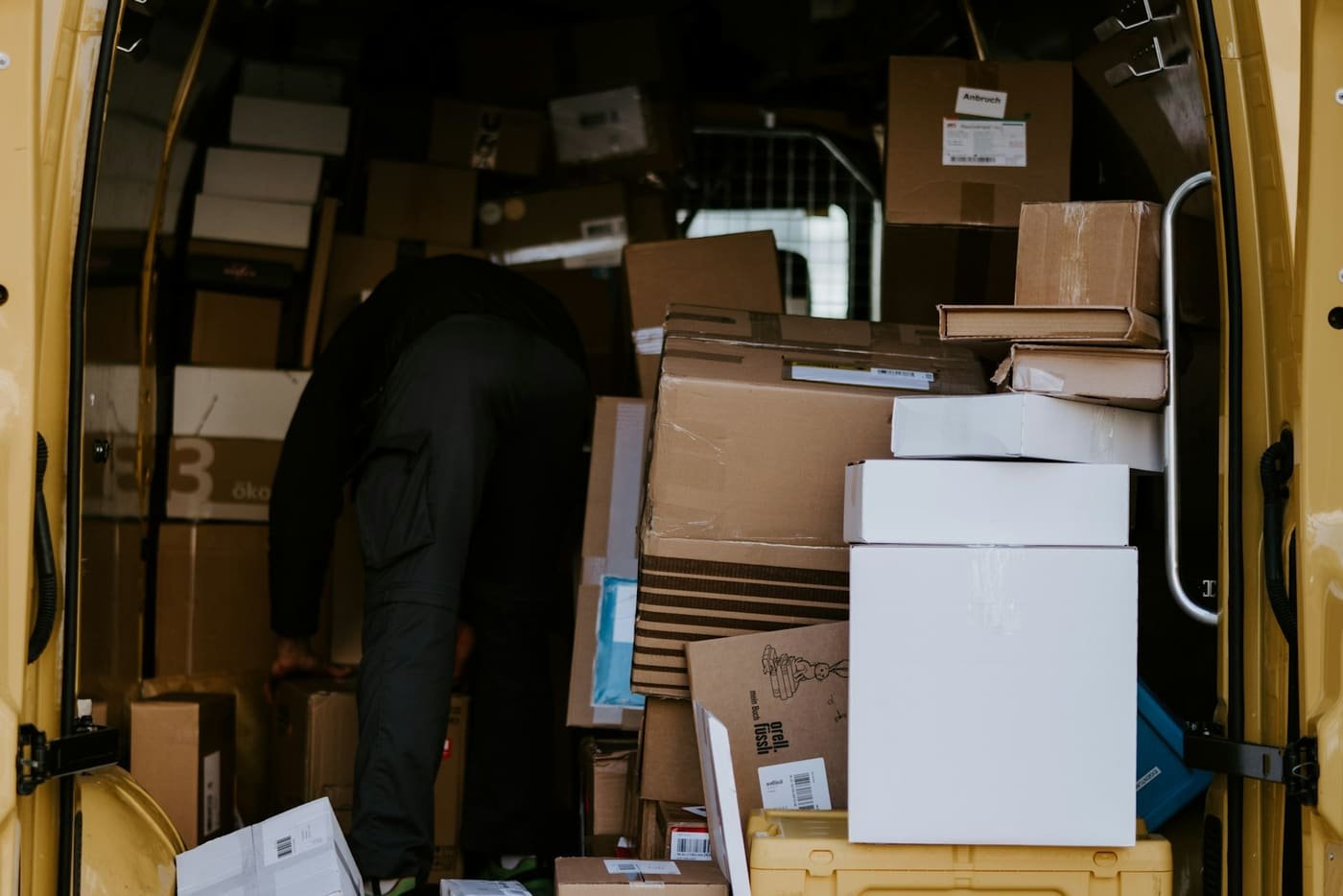
Door-to-door logistics is a service scope in which one provider arranges the movement of goods from the seller's door to the buyer's door, including pick-up, loading, the main journey, the handling at each end, the customs steps and the final delivery. The phrase describes what a provider offers and is not defined in the sources cited here, so what it includes depends on the quotation. For an importer in India buying from China the question that matters is which stages the price covers and which it leaves to you. This guide sets out the stages, a checklist of what a quote can include or omit, how the trade terms DAP and DDP relate to door-to-door service, what happens at the Indian end, and how to compare two quotes on a like-for-like basis with a made-up example.
For more on the delivery end, see door-to-door delivery explained and our longer guide to door-to-door shipping from China to India.
The Stages a Door-to-Door Service Can Cover
| Stage | What happens | Who acts |
|---|---|---|
| Pick-up | Goods are collected from the supplier's factory or warehouse | A truck arranged by the provider |
| Origin handling and export formalities | Goods are packed into a container or consolidated, and export clearance is completed in China | The supplier or the provider's origin agent |
| Main carriage | The container goes by sea, or the cargo by air | The shipping line or airline |
| Destination port handling | The container is discharged and handled at the Indian port | Terminal and port operators |
| Import clearance | The bill of entry is filed and the customs process is completed | Your customs broker, for the importer |
| Duty and taxes | Customs duty and other taxes are paid | The importer, or the seller where the sale contract is DDP and the seller arranges it |
| Inland delivery | The cargo goes by road or rail to your address | A haulier or rail operator |
| Final delivery | The cargo is unloaded at your premises | The haulier and your receiving team |
A quote that covers only some of the stages is closer to a partial service than to door-to-door, so check which stages are priced. Even a quote that spans all of them can leave out the costs of duty and any waiting charges.
What a Quote Can Include or Leave Out
Read every line of a quotation against the items below, and ask for a written answer on each.
- Pick-up charges in China, and the pick-up address and date.
- Export clearance in China and origin terminal charges.
- Ocean or air freight and the surcharges on it. Our guide to ocean freight surcharges lists them.
- Destination terminal and handling charges at the Indian port.
- Customs clearance service fees in India.
- Customs duty and taxes, which a transport price does not necessarily include. Our guide to import duties and taxes in India explains them.
- Insurance, and where it starts and ends.
- Inland delivery, including unloading at the door.
- Waiting charges if the container or the truck waits, as in our guide to demurrage and detention charges.
Door-to-Door Service and the Trade Terms
A door-to-door price from a forwarder describes service. The sale contract between you and the supplier uses a trade term that decides who must do what and who carries the risk. An ICC Academy article on DAP and DDP says that under DAP the buyer must manage and pay for all import clearance formalities, and that under DDP the seller is ultimately responsible for the import clearance process. It warns that foreign sellers may have difficulty carrying out import clearance in the destination country, and that where import rules require a local importer, DDP cannot be used and DAP would be the appropriate rule.
In India the importer has duties of its own. Para 2.05 of the Foreign Trade Policy 2023 says an Importer-Exporter Code is mandatory for undertaking any import activity and that no import of goods shall be made without one unless specifically exempted. Section 46(4A) of the Customs Act, 1962 requires the importer who presents a bill of entry to ensure the accuracy and completeness of the information given, the authenticity and validity of supporting documents, and compliance with any restriction or prohibition relating to the goods. Ask any provider who will be named as the importer on the bill of entry, who pays the duty and who bears the risk during clearance. See our guide to EXW vs FOB vs CIF for the other terms.
The Indian End: Clearance and Delivery
The clearance step is measured, and the study found shorter average release times for bills filed in advance. The National Time Release Study 2025 of the Central Board of Indirect Taxes and Customs found an average release time of 79 hours 4 minutes at seaports for bills of entry filed in the first week of January 2025. It also found that:
- At seaports, bills of entry filed before arrival averaged 71 hours 23 minutes against 158 hours 59 minutes for bills filed late.
- Under the Direct Port Delivery scheme, which lets facilitated consignments be given out-of-charge directly from the terminal, containers at four seaports averaged 65 hours 33 minutes against 84 hours 3 minutes for those routed through container freight stations. The study notes that free storage at container freight stations may influence dwell time.
- From out-of-charge to leaving the port, the overall average at seaports was 27 hours 26 minutes.
Ask a door-to-door provider whether it files in advance, whether your cargo qualifies for direct port delivery and how it books the truck against the expected clearance date. For goods moving between states by road, a PIB backgrounder says an e-way bill is mandatory for consignments worth over Rs 50,000, so ask who raises it. See our guide to the e-way bill and freight documentation.
For inland insurance, ICC's report on national regulatory barriers says India allows foreign transport insurance for CIF and CIP only up to the point of entry, so confirm who covers the road or rail leg inside India.
A Like-for-Like Comparison With Made-Up Numbers
Two quotes arrive for the same container. Quote A says door-to-door. Quote B says port-to-port.
| Line (made-up currency units) | Quote A, door-to-door | Quote B, port-to-port |
|---|---|---|
| Pick-up from the supplier's door | included | not included |
| Origin handling and export clearance in China | included | 600 |
| Ocean freight | included | 2,600 |
| Destination port charges | included | 500 |
| Customs clearance service | included | not included |
| Inland delivery | included | not included |
| Total as quoted | 5,200 | 3,700 |
Neither quote includes duty or insurance. To compare them, add to Quote B the items it leaves out: pick-up in China at 350, customs clearance service at 400 and inland delivery at 900. These come to 1,650, so Quote B becomes 3,700 plus 1,650, which is 5,350, and Quote A is cheaper by 150. A fair comparison also looks at what is not priced: waiting charges, the handling of queries and who answers if the goods are damaged.
When Door-to-Door Fits and When It Does Not
Door-to-door suits a business that has no logistics team, that is importing for the first time or whose supplier sits inland and needs a pick-up arranged. It also suits a business that wants one party to chase when something goes wrong. It fits less well when you want to choose each carrier yourself, when you already run your own trucking at the Indian end, or when one stage, such as a heavy lift or a dangerous goods move, needs a specialist that you prefer to appoint. In those cases a port-to-port or a partial service can leave you with more control, and the price depends on the quotes you compare.
Documents You Will Be Asked For
Expect to supply the commercial invoice, the packing list, your Importer-Exporter Code, the tariff classification of the goods and the details of the supplier and the consignee. Our guide to what documents are required to import goods into India lists them. A provider can only file correctly on the information you give, so check every line before you send it.
Questions to Ask a Provider
- Which stages are included, and which are excluded?
- Who is named as the importer, and who files and pays at Customs?
- Is the bill of entry filed before the cargo arrives?
- Who pays if the container or truck waits, and after how many free days?
- What does the insurance cover, from where to where?
- Who unloads the goods at my premises, and what notice is needed?
- How will I see the status of the shipment at each stage?
Door-to-Door Service With RR Brothers and Logistics
RR Brothers and Logistics arranges sea freight and air freight from China, road freight to inland India and customs clearance. Send us the pick-up address and your delivery address and we will discuss the stages and exclusions with you.
Frequently Asked Questions
It can include pick-up in China, export formalities, the main sea or air journey, handling at the Indian port, customs clearance, inland delivery and unloading. What a price covers depends on the quotation.
Not necessarily. A transport price does not necessarily include duty and taxes, so ask whether the quote includes them and who pays them.
An ICC Academy article says that under DAP the buyer manages and pays for import clearance and bears the risk during it, while under DDP the seller is ultimately responsible for import clearance. DDP may not be usable where a local importer is required.
The importer needs one. Para 2.05 of the Foreign Trade Policy 2023 says an Importer-Exporter Code is mandatory for undertaking any import activity unless specifically exempted.
An average of 65 hours 33 minutes for containers under direct port delivery at four seaports against 84 hours 3 minutes through container freight stations. The study notes that free storage at container freight stations may influence dwell time.
Add the stages that the port-to-port quote leaves out, such as pick-up, customs clearance and inland delivery, then compare the totals and look at what neither quote prices, such as waiting charges.
Sources
- ICC Academy: DAP and DDP, Incoterms 2020 explained
- DGFT: Foreign Trade Policy 2023, Chapter 2 (para 2.05)
- CBIC: Customs Act, 1962 (Section 46)
- CBIC: National Time Release Study 2025 (released 20 June 2025)
- ICC: National regulatory barriers to the Incoterms 2020 rules (January 2025)
- PIB: Logistics, India's growth engine (backgrounder, 16 August 2025)
This article is general information, not legal, tax or customs advice. Rules, rates and procedures change; confirm current requirements with the relevant authority or a licensed customs professional before you ship. Regulatory references were checked against the official sources listed above on 26 October 2026.
Image credits: header photo by Claudio Schwarz on Unsplash; photo by Jakub Żerdzicki on Unsplash. Used under the Unsplash License.
Request a Quote