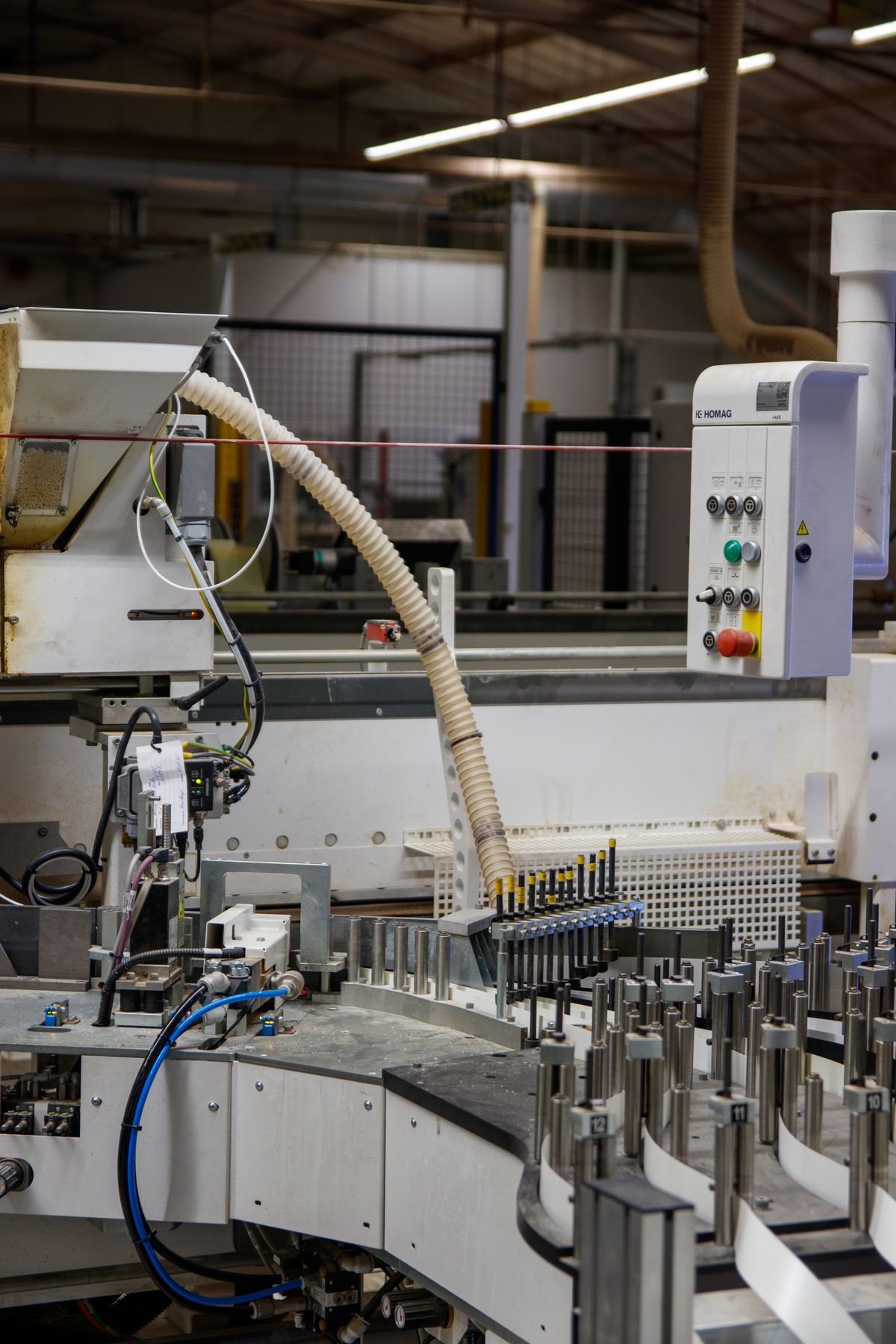
This case study illustrates a representative shipment scenario based on the type of work RR Brothers and Logistics regularly handles on this corridor, compiled from common client requirements rather than describing a single named client.
A Chinese manufacturer of processing equipment needed to move a set of industrial machinery units to a buyer in Moscow, and the shipment required two things at once: a transportation logistics plan capable of handling oversized, heavy equipment, and a compliance process rigorous enough to confirm the goods, the buyer and the transaction all cleared restricted-party and export-control screening before anything moved. This case study focuses specifically on how those two requirements — practical rail logistics and sanctions-compliance screening — were handled together on the China to Russia rail freight corridor, described here as a process rather than as commentary on the policy environment itself.
The Challenge
Industrial machinery presents two distinct sets of problems for transportation logistics, and this shipment carried both. Physically, the equipment consisted of several large processing units that exceeded standard container dimensions in height and width, meaning they needed open-top or flat-rack rail equipment rather than a standard dry container, along with careful weight distribution and securing to withstand the vibration and handling stresses of a multi-thousand-kilometer rail journey. Rail transport is generally more forgiving of this kind of oversized cargo than ocean freight in terms of routing flexibility across the Eurasian landmass, but it still requires equipment selection and loading engineering specific to the cargo's actual dimensions and center of gravity — a standard container booking simply wasn't an option.
The second and more consequential challenge was regulatory. Shipments of industrial and dual-use-adjacent equipment moving toward Russia require careful screening against export control classifications and restricted-party lists before they can be booked at all, regardless of the cargo's intended civilian end use. This isn't a single check but a layered process: confirming the equipment's export control classification number under the exporting jurisdiction's rules, screening the buyer, the consignee, and any intermediate parties against restricted-party and denied-entity lists such as the UN Security Council's consolidated sanctions list, and verifying the stated end use and end user are consistent with the transaction as documented. Getting this process wrong — or skipping it because a shipment "looks" like ordinary industrial equipment — creates real legal exposure for both the exporter and the forwarder, independent of how routine the physical cargo might otherwise be.
The manufacturer needed a transportation logistics partner who could run this screening process systematically before committing to a rail booking, rather than treating compliance as paperwork to backfill once the shipment was already moving.
There was also a practical documentation layer beneath the compliance question. Industrial machinery typically requires a detailed technical description, country of origin documentation, and an accurate declared value supported by the commercial invoice — all of which need to be consistent with how the equipment is classified for both Chinese export control purposes and Russian customs import purposes. Because rail shipments on this China to Russia rail freight corridor cross at least one land border with its own customs process, any mismatch between the export declaration and the import declaration can hold a railcar at the border rather than the cargo simply being an ocean container waiting at a terminal — a different kind of delay with its own operational consequences for a rail-scheduled shipment.
Our Approach
RR Brothers structured this shipment around a compliance-first sequence: nothing was booked until screening was complete, and the physical rail logistics plan was built only once the transaction had cleared that review.
- Export control classification review — the equipment's technical specifications were reviewed to confirm its classification and whether any license or additional documentation applied before shipment.
- Restricted-party and end-user screening — the buyer, consignee, and any freight or financial intermediaries named in the transaction were screened against current restricted-party and denied-entity lists as a standing pre-booking step, not a one-time check.
- End-use verification — the stated end use of the equipment was checked for consistency with the buyer's business and the nature of the equipment itself, flagging anything that warranted closer review before proceeding.
- Rail equipment and routing selection — once screening cleared, open-top or flat-rack railcars were booked with a loading plan engineered around the equipment's actual dimensions and weight distribution.
- Documentation aligned to Russian customs requirements — commercial and technical documentation was prepared to match the declaration requirements applied at the Russian border crossing and subsequent customs clearance.
This sequencing matters in transportation logistics for any corridor carrying elevated compliance requirements: screening has to happen before a booking commitment is made, not in parallel with it, because a screening result that surfaces a problem after a railcar is already loaded is far more costly to unwind than one caught at the quotation stage.
Implementation
The shipment moved through four phases, with compliance work front-loaded ahead of any physical logistics commitment.
Phase 1 — Pre-booking compliance screening. Before any rail capacity was reserved, our team ran the equipment's classification and the transaction's parties through a full screening process, checking the buyer, consignee and any named intermediaries against current restricted-party lists and confirming the stated end use matched the buyer's documented business activity. This phase took longer than the equivalent step on a routine shipment, reflecting the seriousness with which screening has to be handled on this corridor, and the shipment did not proceed to booking until it was complete.
Phase 2 — Equipment selection and origin loading. With screening cleared, the manufacturer's processing units were assessed for dimensions and weight, and open-top and flat-rack railcars were booked accordingly. Loading at the origin rail yard near Guangzhou involved specific securing and bracing work to account for the equipment's center of gravity across a journey that would include multiple handling points.
Phase 3 — Rail transit. The shipment moved via the China-Europe rail network, crossing into Russia and continuing to a rail terminal serving the Moscow area, with total transit running approximately 22 to 28 days depending on border crossing conditions and any intermediate handling required for the oversized units. Rail transit times on this route are generally more consistent than ocean freight alternatives via distant ports, since the routing avoids the additional handling and vessel-queue variability that can affect sea freight options into the region.
Phase 4 — Border customs and final delivery. Documentation prepared in advance — matching the equipment's classification, value and technical specifications to Russian customs declaration requirements — supported clearance at the border crossing, with final delivery arranged to the buyer's facility in the Moscow area.
| Phase | Duration | Key Activity |
|---|---|---|
| Compliance screening | 5-10 days | Classification review, restricted-party and end-use checks |
| Equipment booking & loading | 3-5 days | Open-top/flat-rack railcar selection, securing and bracing |
| Rail transit | 22-28 days | China-Europe rail network to Moscow-area terminal |
| Border customs & delivery | 2-4 days | Declaration matched to pre-prepared documentation |
Results
Running compliance screening as a mandatory pre-booking gate, rather than a parallel or after-the-fact step, meant the shipment only moved once every party in the transaction had cleared review — removing the risk of committing rail capacity and loading equipment before a screening question was fully resolved. On the physical side, matching railcar type to the equipment's actual dimensions and weight from the outset avoided the kind of last-minute equipment substitution that can add days to an already long rail transit. The manufacturer received a transit time in the expected 22-to-28-day range and, because documentation had been prepared against Russian customs requirements in advance, border clearance did not become an additional bottleneck on top of the transit itself. For a shipment in a category where the reputational and legal cost of a compliance failure far outweighs any time saved by skipping steps, the more meaningful result here was procedural: a repeatable screening process that can be applied consistently to future shipments on this China to Russia rail freight corridor, not just this one.
That repeatability is worth underlining, because it's the part of the outcome that compounds. A one-time screening exercise protects a single shipment; a documented, standing process protects every shipment that follows it, and gives the manufacturer's own compliance team a clear record to point to if a transaction is ever questioned after the fact. In an industrial machinery transportation logistics program where equipment can vary significantly from order to order, having a consistent intake process — classification, screening, end-use verification, then equipment and routing planning — matters more than optimizing any single shipment's transit time.
Lessons for Similar Shippers
- Treat compliance screening as a gate, not a parallel task. Confirm export control classification and restricted-party status before committing to any booking — resolving a flagged issue after cargo is loaded is far costlier than catching it during quotation.
- Screen every named party in the transaction, not just the buyer. Consignees, intermediaries and any financial parties involved should all be checked against current restricted-party lists as part of the same process.
- Match rail equipment to actual cargo dimensions and weight. Oversized or heavy machinery needs open-top or flat-rack equipment selected and engineered around the specific load, not a generic booking.
- Prepare customs documentation against destination-specific requirements in advance. Russian customs declaration requirements differ from other markets; aligning documentation before the shipment reaches the border avoids delays at that stage.
- Build screening into a repeatable process, not a one-off review. A documented, consistent screening procedure applied to every shipment is more defensible and more efficient than an ad hoc check performed differently each time.
How RR Brothers and Logistics Can Help
RR Brothers and Logistics supports industrial equipment shippers on the China to Russia rail freight corridor with rail freight forwarding built around correctly specified equipment for oversized and heavy cargo, combined with a structured pre-shipment compliance screening process. For background on how the broader rail network connects the region, see our analysis of the Trans-Siberian Railway for India-Russia cargo, and for more on the compliance side of shipping to this market, read our guide to sanctions and compliance in 2026. Whether you're moving a single piece of processing equipment or a recurring flow of industrial machinery, our team can help structure a transportation logistics plan that treats screening and physical logistics as equally essential parts of the same process.