
20ft vs 40ft shipping containers looks like a question about size, but it is really a question about space, weight and price per unit. A 40ft container holds about twice the volume of a 20ft one, yet it does not carry twice the weight, and that single fact decides which one suits dense cargo and which suits light, bulky cargo. This guide sets the carrier figures side by side, shows where they disagree, works through a cost-per-unit example with made-up prices and gives you a quick way to choose.
For the wider decision, see how to choose the right shipping container. To decide between a whole container and a shared one, see FCL vs LCL shipping.
The Numbers Side by Side
These are the dry container figures that ONE publishes on its container specification page. ONE says the table is for reference only and that individual containers may have different specifications.
| Specification | 20ft | 40ft | 40ft high cube |
|---|---|---|---|
| Internal length | 5,898 mm | 12,032 mm | 12,032 mm |
| Internal width | 2,350 mm | 2,350 mm | 2,350 mm |
| Internal height | 2,390 mm | 2,390 mm | 2,695 mm |
| Door opening (width x height) | 2,340 x 2,280 mm | 2,340 x 2,280 mm | 2,340 x 2,585 mm |
| Load capacity | 33.1 m3 | 67.6 m3 | 76.2 m3 |
| Tare weight | 2,150 kg | 3,640 kg | 3,700 kg |
| Payload | 28,330 kg | 26,840 kg | 28,800 kg |
The width is the same for all three. The 40ft is simply longer, and the high cube is taller as well as longer.
A Second Carrier Gives Different Payloads
Maersk's dry container specification sheet lists steel containers with slightly different figures.
| Specification (Maersk, steel) | 20ft | 40ft | 40ft high |
|---|---|---|---|
| Volume | 33 m3 | 67 m3 | 76 m3 |
| Maximum payload | 28,200 kg | 28,800 kg | 28,620 kg |
| Gross weight | 30,480 kg | 32,500 kg | 32,500 kg |
| Tare weight | 2,280 kg | 3,700 kg | 3,880 kg |
The volumes agree closely, but the 40ft payloads do not: 26,840 kg for ONE and 28,800 kg for Maersk. The reason is visible in the arithmetic. Payload plus tare gives ONE's 40ft a maximum gross of 30,480 kg (26,840 plus 3,640), while Maersk lists 32,500 kg. Payload depends on the gross weight rating of the container you are allocated. Ask your carrier for the figures of the container you will actually receive.
Volume Doubles, Weight Does Not
Compare the 20ft with the 40ft in ONE's table. Volume rises from 33.1 m3 to 67.6 m3, a factor of about 2.04. Payload does not rise at all: it is 28,330 kg for the 20ft and 26,840 kg for the 40ft. In Maersk's sheet it rises only from 28,200 kg to 28,800 kg. Two 20ft containers therefore carry far more weight than one 40ft: about 56,660 kg on ONE's figures (2 x 28,330) and 56,400 kg on Maersk's (2 x 28,200), against 26,840 kg and 28,800 kg for a single 40ft.
That is the practical difference. A 40ft gives you space. Two 20ft give you weight. If your cargo is dense, it will reach the weight limit long before it fills a 40ft.
Cost Per Unit: A Worked Example
The prices below are made up, to show how the arithmetic works. Replace them with real quotes. The capacities and payloads are ONE's.
| Container | Made-up price | Capacity | Cost per m3 if full by volume | Payload | Cost per tonne if full by weight |
|---|---|---|---|---|---|
| 20ft | 1,200 | 33.1 m3 | 36.25 | 28.33 t | 42.36 |
| 40ft | 1,900 | 67.6 m3 | 28.11 | 26.84 t | 70.79 |
| 40ft high cube | 2,000 | 76.2 m3 | 26.25 | 28.80 t | 69.44 |
With these prices, the high cube is cheapest per cubic metre and the 20ft is cheapest per tonne. Which one wins for your cargo depends on which limit the cargo reaches first. For light, bulky cargo the volume figure matters. For dense cargo the weight figure matters.
Now take a dense shipment of 40 tonnes. It needs at least two containers in any case. Two 20ft cost 2,400 in this example and can carry up to 56.66 t, while two 40ft cost 3,800 and can carry up to 53.68 t on ONE's figures. For this cargo, the pair of 20ft is cheaper.
When a 20ft Is the Better Choice
- The cargo is dense or heavy and reaches the weight limit first.
- The volume is modest, so a 40ft would travel mostly empty.
- You want to split a shipment into two consignments, to different places or on different dates.
- The loading point or the inland roads suit a shorter container better. Ask your trucker and your forwarder.
When a 40ft or 40ft High Cube Is the Better Choice
- The cargo is light and bulky and fills the space before it reaches the weight limit.
- You want one container, one seal and one weight declaration for a large volume.
- The cargo is tall. The high cube's internal height of 2,695 mm and door height of 2,585 mm, against 2,390 mm and 2,280 mm for the standard box, can make the difference.
- You want the lowest cost per cubic metre, once you have real quotes.
What About 45ft Containers?
Maersk's sheet also lists a 45ft high steel dry container with a volume of 85 m3, an internal length of 13,556 mm and a payload of 27,600 kg. Availability of larger sizes varies by carrier, route and equipment, so ask whether one is offered for your lane before you plan around it.
Handling and Paperwork Differences
Two containers mean two of everything that is counted per container: two seals, two loading operations and two unloading operations. Each packed container needs its own verified gross mass, which the IMO says the shipper declares in the shipping document, so two containers mean two weights to verify and pass on before loading. The voluntary CTU Code from the IMO, ILO and UNECE covers packing in either size, and careful loading and securing matter more as the weight rises.
Inland Legs and Road Limits
The container's rating is not the only limit. Road weight limits on the inland legs are set locally and may differ from the container's gross rating, so a container that is legal on the water may need its load adjusted on the road. Ask your forwarder or trucker to confirm the limits for the origin and destination routes before you finalise how much goes into each box.
A Quick Decision Table
| Your cargo | Likely fit |
|---|---|
| Dense, heavy, modest volume | 20ft |
| Light, bulky, large volume | 40ft or 40ft high cube |
| Tall pieces up to the high cube door | 40ft high cube |
| Very heavy total weight, such as 40 tonnes | Two 20ft, compared with two 40ft on real quotes |
| Between one and two 20ft in volume | Compare one 40ft with two 20ft |
Choosing for Mixed Cargo and Future Growth
If your cargo is a mix of dense and light items, add up both the total volume and the total weight before you choose, because the combined figures show which limit you will reach first. If your volumes are growing, remember that a 20ft that is full today may be a 40ft next year, and that moving between sizes changes your cost per unit, your number of weight declarations and your loading arrangements. Our guide to what FCL shipping is explains how a full container shipment runs, and the article on how sea freight pricing works shows where the container price sits in a full quote.
Questions to Ask Your Forwarder About Size
- Which container sizes are available on my lane for the dates I need?
- What payload and gross weight will the container I am allocated have?
- Is a 40ft high cube available, and does the price differ by size?
- What are the road weight limits on the inland legs at both ends?
- How many days of free time does each size include?
- Can you quote the same cargo in two sizes so that I can compare cost per unit?
Our guide to container types covers the other container types you may meet.
Mistakes to Avoid
- Assuming a 40ft carries twice the weight of a 20ft.
- Comparing prices per container instead of per cubic metre or per tonne.
- Using one carrier's payload figure for another carrier's container.
- Forgetting the door height when the cargo is tall.
- Ignoring road limits on the inland legs.
Compare Sizes With RR Brothers and Logistics
RR Brothers and Logistics can quote 20ft and 40ft containers side by side, so you can see the cost per unit on your own cargo. See our sea freight service, or send us your cargo details with volume, weight and the size of your largest piece.
Frequently Asked Questions
Length and volume. ONE lists 33.1 m3 for a 20ft and 67.6 m3 for a 40ft, both 2,350 mm wide. The payload is not proportional: ONE lists 28,330 kg for the 20ft and 26,840 kg for the 40ft.
No. On ONE's figures the 40ft payload is lower than the 20ft, and on Maersk's it is only slightly higher. Two 20ft containers carry far more weight than one 40ft.
It depends on the cargo and on real quotes. Compare the price per cubic metre for light cargo and the price per tonne for dense cargo, using the container's capacity and payload.
For light, bulky or tall cargo. ONE lists 76.2 m3 and a door height of 2,585 mm for the high cube, against 67.6 m3 and 2,280 mm for the standard 40ft.
Because payload depends on the gross weight rating and tare of the container. For a 40ft, ONE's figures imply a gross of 30,480 kg and Maersk's list 32,500 kg. Ask your carrier for the container you will receive.
Yes. Under SOLAS guidance from the IMO, the shipper states the verified gross mass of each packed container in the shipping document and submits it in advance to the master and the terminal.
Sources
- ONE: Dry container specifications (20 ft, 40 ft and 40 ft high cube)
- Maersk: Dry container equipment specifications
- IMO: Verification of the gross mass of a packed container (SOLAS)
- IMO: IMO/ILO/UNECE Code of Practice for Packing of Cargo Transport Units (CTU Code)
This article is general information, not legal, tax or customs advice. Rules, rates and procedures change; confirm current requirements with the relevant authority or a licensed customs professional before you ship. Regulatory references were checked against the official sources listed above on 25 October 2026.
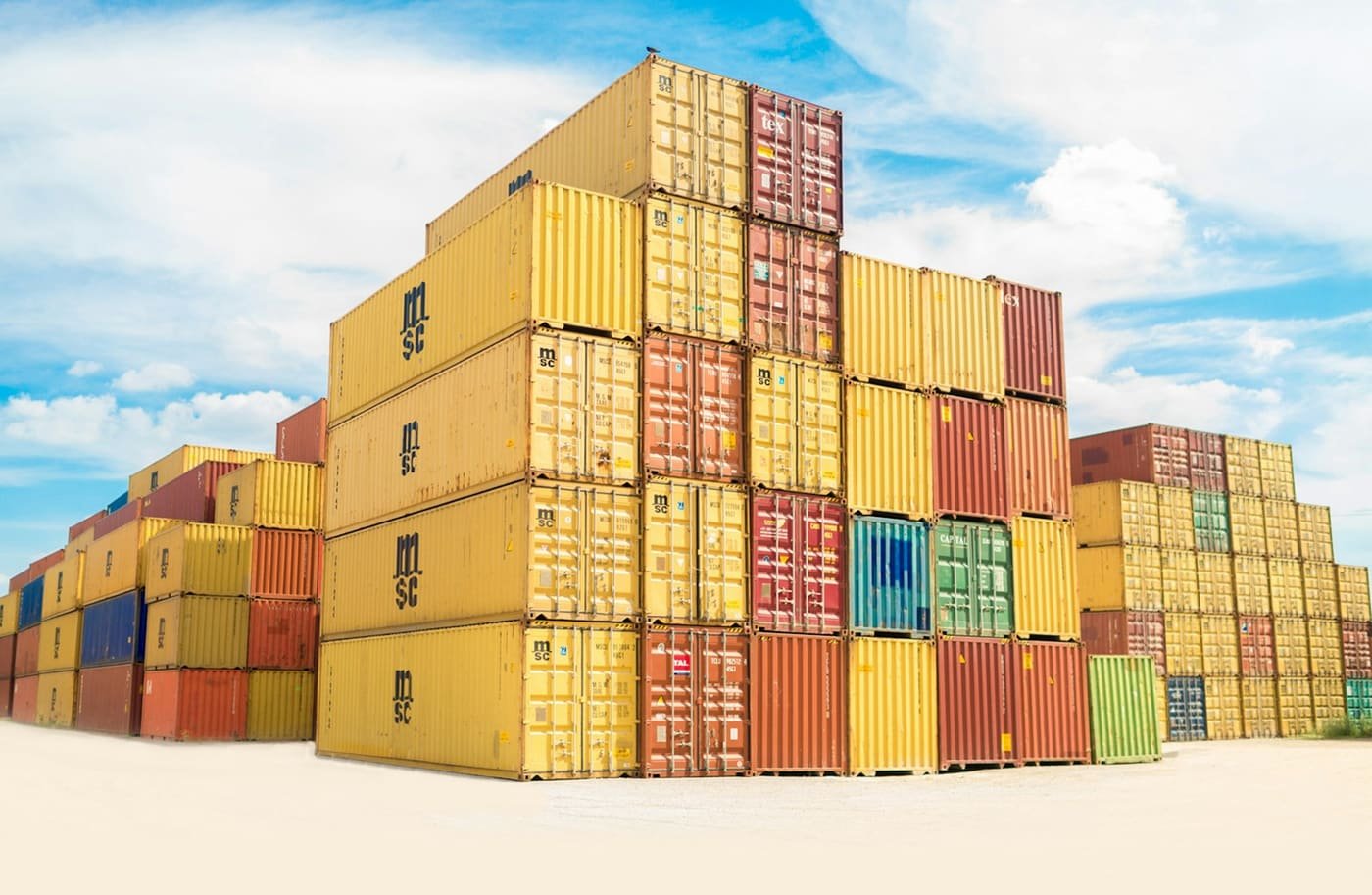
Image credits: header photo by Frank Mckenna on Unsplash. Used under the Unsplash License.
Request a Quote