Air freight is the premium mode between China and India. It moves cargo quickly, but you pay for that speed by the kilogram, and the price depends on how your goods are packed as much as on what they weigh. The question is not whether air is faster. It is whether the speed is worth more to you than the extra cost. This guide sets out when air freight from China to India is the right choice, how it is priced, and what to expect when the cargo lands.
If you are still choosing between modes, start with our complete guide to China to India shipping or the guide to sea freight from China to India.
When Air Freight Is the Right Choice
Air earns its premium in a handful of situations. Check whether yours is one of them before you book.
| Situation | Why air fits | Check first |
|---|---|---|
| A production line or shop is about to run out of a part | The cost of a stoppage can exceed the freight bill | Whether a smaller air shipment can cover the gap while the rest comes by sea |
| High value in a small, light package | Freight is a small share of the goods' value | Insurance cover for the full value |
| A product launch or seasonal date that cannot move | Late stock may earn nothing | Supplier ready date and the carrier's cut-offs |
| Samples, prototypes and urgent documents | Speed matters more than unit cost | Whether courier rules or air cargo suits the consignment |
| Goods that spoil or go out of date quickly | Less time in transit | Any licence or storage conditions for the goods |
A common pattern is a split shipment: the bulk of an order goes by sea on a planned schedule, and a smaller air consignment covers whatever cannot wait. Our guide to air freight vs sea freight from China compares the two modes in more detail.
When Sea Freight Is Still the Better Choice
Air is rarely the right answer for heavy, bulky or low-value goods, or for regular replenishment that you can plan weeks ahead. For those cargoes, the freight cost per unit can be a large share of the product's value when flown, and the speed has no commercial payoff. If you can wait, compare the sea quote first.
How Air Freight Is Priced
Air cargo is priced on chargeable weight. IATA explains that carriers can charge by volumetric weight or actual weight, and whichever is higher is used for pricing. The general rule for volumetric weight, as IATA sets it out, is to divide the shipment's volume in cubic centimetres by 6,000.
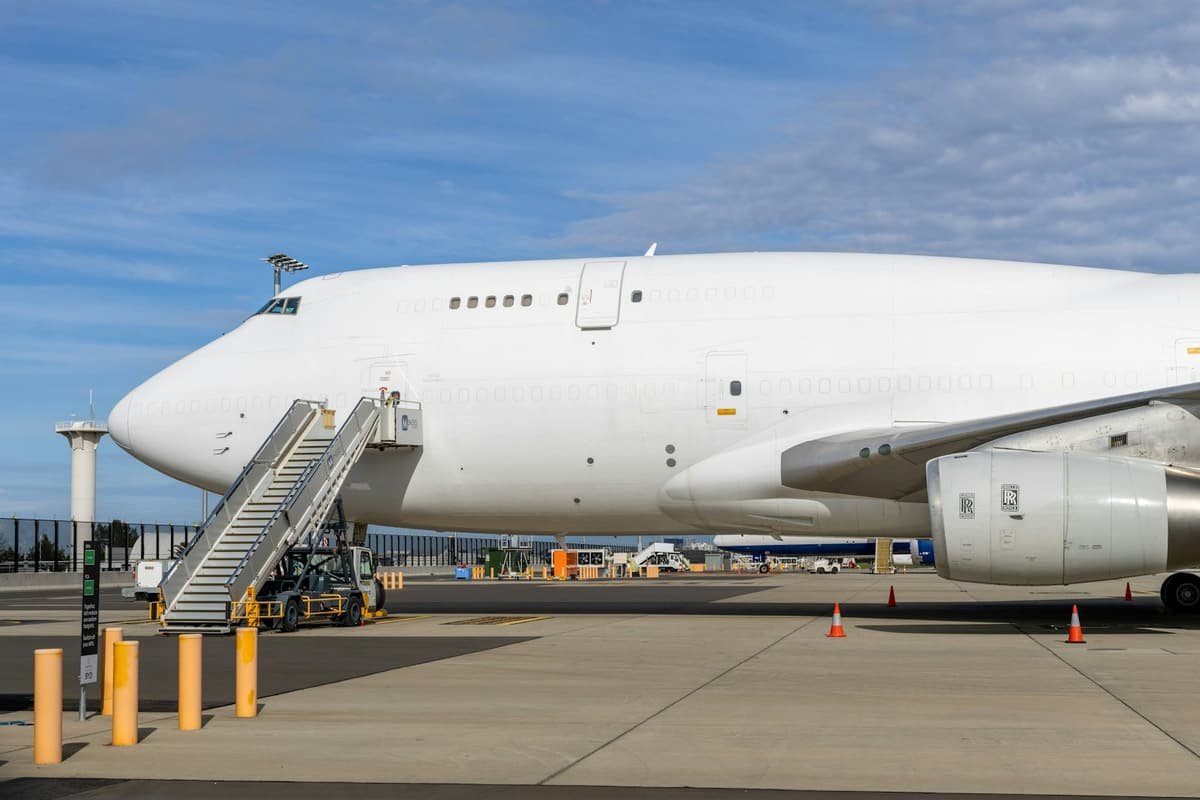
Here is an illustrative calculation with made-up carton sizes. Take 20 cartons, each 60 cm by 40 cm by 40 cm and weighing 8 kg:
| Measure | Per carton | 20 cartons |
|---|---|---|
| Actual weight | 8 kg | 160 kg |
| Volume | 96,000 cm3 | 1,920,000 cm3 |
| Volumetric weight (volume divided by 6,000) | 16 kg | 320 kg |
| Chargeable weight (the higher figure) | 16 kg | 320 kg |
In this example you would be charged for twice the real weight, because the cartons are bulky for what they hold. Repacking into tighter cartons, removing air from packaging and consolidating small parcels can lower the chargeable weight without changing the goods. Ask your forwarder to quote on your packed dimensions, not only on kilograms. Our explainer on how freight forwarding rates are calculated covers the other lines on an air quote.
Weighing Cost Against Value
A simple test helps. Estimate the extra freight cost per unit of flying instead of shipping by sea, then compare it with what faster arrival is worth per unit: sales you would otherwise lose, a stock-out you would avoid, or downtime you would prevent. Include inventory cost if you would hold less stock because replenishment is faster. If the benefit per unit is clearly larger than the extra freight per unit, air is justified. If it is close, consider a partial air shipment or a faster sea service.
What Happens at the Indian Airport
Customs rules are the same whether the goods arrive by sea or air, but the timing cues differ. Under Section 46 of the Customs Act, 1962, the importer presents the bill of entry electronically, before the end of the day preceding the day the aircraft arrives unless the Board prescribes another limit, and it can be presented up to thirty days before the expected arrival. Under Section 15, the duty rate is the one in force on the date the bill of entry is presented, and a bill presented before the aircraft's arrival is deemed presented on the arrival date.
The mandatory import documents are listed in India's Foreign Trade Policy 2023: the airway bill, a commercial invoice cum packing list (separate documents are also accepted), and the bill of entry. Goods subject to restrictions or product-specific rules can need more documents, so check before you ship. Freight is also part of the customs value: Section 14 of the Act includes the cost of transportation to the place of importation and insurance, as the rules specify.
Fast transit does not help if clearance stalls. Goods that are not cleared within thirty days of unloading, or any further time the officer allows, may be sold after notice to the importer (Section 48), so line up the duty payment and delivery before the aircraft lands.
Choosing an Air Freight Service
Air cargo is sold in more than one way, and the differences affect price and speed.
- Airline cargo through a forwarder: your forwarder books space on scheduled flights and often consolidates several customers' goods under one master airway bill. This suits shipments of moderate size.
- Express and courier services: door-to-door parcels, usually for small and urgent consignments, with their own tariffs and clearance routes.
- Charter or dedicated capacity: for very large or unusual cargo, arranged case by case.
Within airline cargo there are usually service levels too, such as a faster premium product and a cheaper deferred one. Ask your forwarder what is on offer for your dates, and how the rate changes if you can accept a later flight. Many carriers also quote lower rates per kilogram at higher weight breaks, so it can be worth asking where the breaks fall when your shipment is close to one.
Packing for Air Freight
Because air rates depend on volume as well as weight, packing is a cost decision, not only a protection decision. Aim for cartons that fit the goods closely, and use fillers that protect without adding bulk. Palletise only when the pallet adds to protection or handling speed, since a pallet adds weight and height. Label every carton with your name, the order number and the carton number, and make sure the weights and dimensions on the packing list match what is actually in the cartons. A mismatch between the packing list and the measured cargo can change the chargeable weight, and with it the price you were quoted.
Goods That Need Extra Care by Air
Some goods are treated as dangerous goods in air transport or need special handling. Lithium batteries are a common example, and products that contain them, such as power banks and some electronics, can be caught by the rules. Tell your forwarder what is in the shipment before booking, and read our guide to lithium battery shipping regulations. Liquids, magnets and goods with a strong odour can also have conditions, so ask early.
Cutting Air Freight Cost Without Losing the Deadline
- Reduce volume first. A tighter pack lowers chargeable weight directly.
- Consolidate. Combining several small shipments into one booking can bring a better rate per kilogram than sending them separately.
- Book early. Last-minute bookings leave you little choice of flight and service level.
- Split by urgency. Fly only the items that cannot wait and send the rest by sea.
- Ask about service levels. A deferred service can be cheaper than a premium one if the delay is acceptable.
- Fix the paperwork before the cut-off. A rejected or incomplete document set can cost you a flight.
A Quick Checklist Before You Book Air Freight
- Confirm the HS code and the goods description with your forwarder.
- Measure the packed cartons and calculate the chargeable weight.
- Ask for the airline cut-off and the cargo-ready date it requires.
- Check whether the goods are dangerous goods or restricted.
- Prepare the invoice, packing list and airway bill details so they match.
- Plan the bill of entry and duty payment before arrival.
- Insure the shipment for its full value.
Plan Your Air Freight with RR Brothers
RR Brothers and Logistics can book air freight from China and support customs clearance in India. Send us your cargo details with packed dimensions and weights, and we will compare air with other options so you can see what the speed costs.
Frequently Asked Questions
When speed or value density justifies the premium: urgent spare parts, high-value compact goods, fixed launch dates, samples and short shelf-life products. For heavy, bulky or planned replenishment cargo, sea freight usually costs less per unit.
On chargeable weight, the higher of actual and volumetric weight. IATA gives the general rule for volumetric weight as volume in cubic centimetres divided by 6,000, so bulky packaging can cost as much as dense cargo.
Yes. Section 46 of the Customs Act allows presentation up to thirty days before expected arrival, and requires it by the end of the day before arrival unless the Board prescribes a different limit.
It can. Under Section 14 of the Customs Act, the value for duty includes, as the rules specify, the cost of transport to the place of importation and insurance, so higher freight can raise the assessable value.
Often yes, but they are subject to dangerous goods rules and airline acceptance conditions. Tell your forwarder what the products contain before booking, so the right documents and packaging are prepared.
It can be. Sending the bulk by sea and a smaller urgent portion by air balances cost against deadline, as long as the air portion is packed and documented separately.
Sources
- IATA: Air cargo tariffs and rules (volumetric weight)
- CBIC: Customs Act, 1962 (Sections 14, 15, 46 and 48)
- DGFT: Foreign Trade Policy 2023, Chapter 2 (para 2.06, mandatory documents)
This article is general information, not legal, tax or customs advice. Rules, rates and procedures change; confirm current requirements with the relevant authority or a licensed customs professional before you ship. Regulatory references were checked against the official sources listed above on 25 October 2026.
Image credits: header photo by Hieu on Unsplash; photo by Peaky_82 on Unsplash. Used under the Unsplash License.
Request a Quote