Fragile industrial equipment is equipment that a normal journey can ruin: calibrated instruments, precision machine parts, control cabinets, optics, glass components and anything else that cannot take shocks, vibration, tilt, moisture or stacking. The equipment can be expensive and hard to replace, so the cost of damage can far exceed the cost of care. The journey also involves several hands and several lifts, from the factory floor to the carrier, the terminal, the vessel or aircraft and the final truck. This guide explains how to transport fragile industrial equipment safely: how to specify the fragility, how to pack in layers, how to secure the load, how to plan the handling chain, how to document condition and how to claim in time.
For heavy items, see shipping heavy machinery internationally. For how airports handle cargo, see how airport handling affects international air cargo.
Know What Can Damage the Equipment
| Hazard | Where it arises | The control |
|---|---|---|
| Shock | Lifts, drops and handling at every transfer | Cushioned inner packing and a rigid outer crate |
| Vibration | Road, rail, vessel or aircraft movement | Cushioning, blocking and secure fastening in the crate |
| Tilt and inversion | Careless loading or lifting | Clear orientation marks and a lifting plan |
| Compression | Stacking in the unit or in the terminal | A crate that can bear load, and a no-stacking instruction |
| Moisture | Rain, humidity, condensation and wet cargo nearby | Moisture barriers and dry packing |
| Contamination | Odours, dust or leaking neighbouring cargo | Sealed inner packing and sensible stowage |
| Tampering or theft | Terminals and transfers | Seals, a secure supply chain and discreet marking |
Specify the Fragility to the Packer
The packer cannot protect against what it has not been told. The IMO/ILO/UNECE CTU Code says the consignor is responsible for describing the goods correctly, including the mass of the total payload, for notifying the packer of unusual transport parameters, for example the offset of the centre of gravity or temperatures which should not be exceeded or undercut, and for ensuring that packages and unit loads are suitable to withstand the stresses expected under normal transport conditions. Write a short handling specification for the equipment:
- orientation, and the maximum tilt allowed;
- whether it can be stacked, and the load it can bear;
- the lifting and tie-down points, with their capacities;
- temperature and humidity limits;
- vibration and shock limits, if the manufacturer specifies them; and
- who may open the crate, and for what.
Pack in Layers
Think of packing as protection in layers from the inside out:
- The equipment itself, with moving parts locked and loose parts removed or fixed.
- Inner protection: wrapping, cushioning and a moisture barrier.
- A rigid outer crate or case that can take the handling and stacking, with the equipment fixed in it so that it cannot move.
- Markings: handling symbols and orientation on every side.
The CTU Code asks packers to observe handling instructions and symbols such as this side up. If the crate is made of raw wood, the standard ISPM 15 requires approved treatment, such as heating to at least 56 °C for 30 continuous minutes, and a mark. Ask the supplier to confirm it, so that the crate is not held at a border for want of a mark.
Load and Secure Inside the Unit
How the crates sit in the container or truck matters as much as how the equipment sits in the crate. The CTU Code's key requirements say, among other things, to fill void spaces when necessary, use blocking or lashing, or both, to prevent the cargo sliding and tipping in any direction, secure each single loaded item independently where necessary, use non-slip material where appropriate and not secure the cargo with devices that overstress the structure of the unit or the cargo. It also says not to stow heavy goods on top of light goods, not to stow goods with tainting odours with sensitive merchandise and not to pack wet and damp goods if it can be avoided. A fragile crate belongs where it will not be crushed, tipped or contaminated, and a loading plan from your forwarder should show where.
Plan the Handling Chain
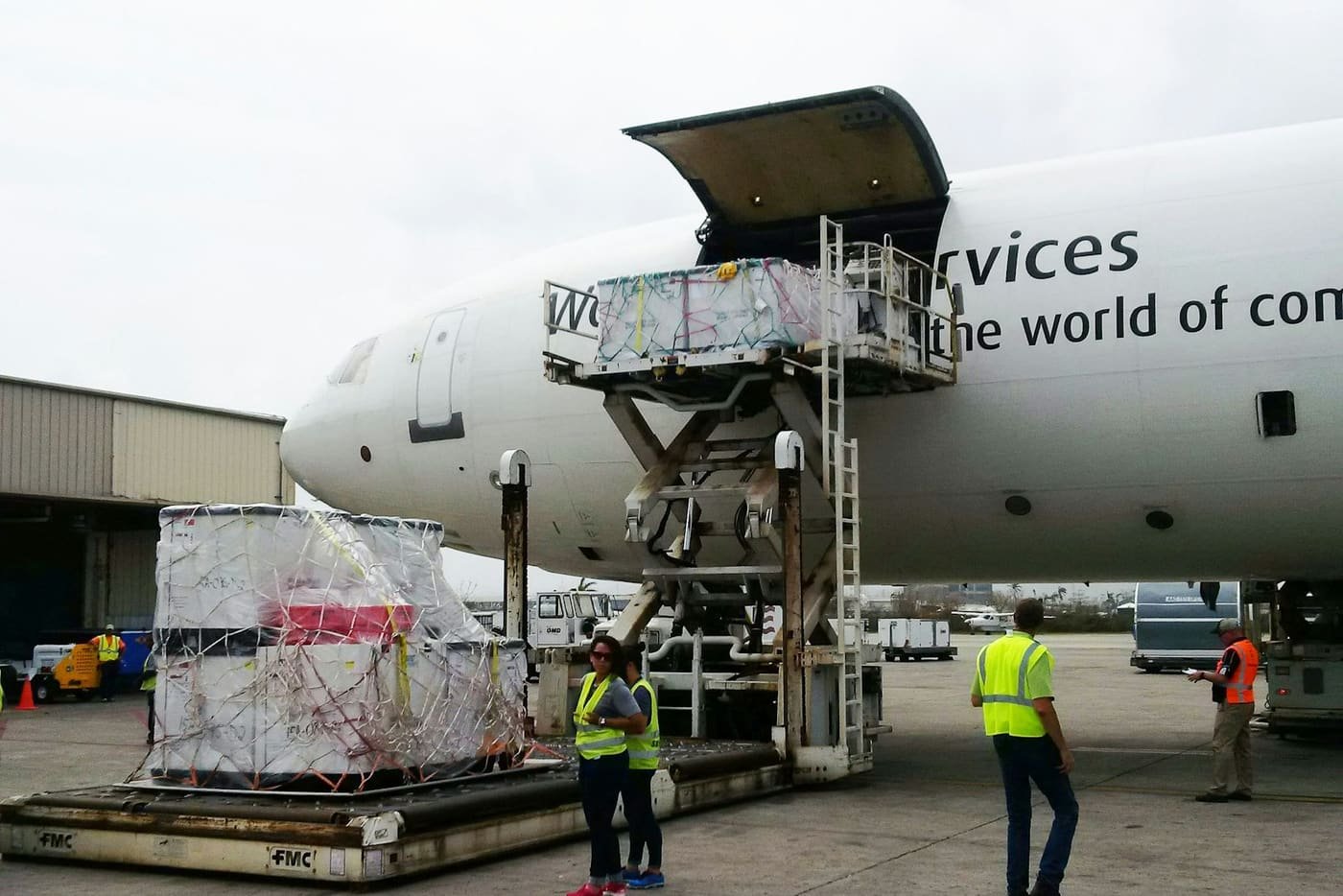
Count the transfers and ask who handles the equipment at each. By air, IATA defines a unit load device as a device for grouping and restraining cargo, and says items should be interlocked so that they are less likely to shift and heavier items belong at the bottom. IATA also says the airline remains responsible for overseeing proper handling of unit load devices even when the work is subcontracted. At sea, the container is lifted, stacked and moved by terminal equipment. At the destination, customs may examine the goods. Section 17(2) of the Customs Act, 1962 allows the officer to examine or test imported goods, with cases selected primarily on the basis of risk evaluation. Tell your customs broker which crates are fragile and how they should be opened and closed, so that an examination does not damage the equipment. Our guide to how airport handling affects international air cargo shows what happens at the airport.
Choose the Mode and Route With Fragility in Mind
Air shortens the time in transit but does not necessarily reduce the number of lifts. Sea is slower, and exposes the equipment to humidity and motion for longer. Ask whether the routing has transfers, because every transfer is another handling event, and choose direct services where you can. Pack for the longest and roughest journey the route allows, not the average one.
Insure and Document the Condition
Insure the equipment for its full value, and ask exactly what the policy excludes and how a claim must be made. Photograph the equipment and the packing before it leaves the factory and again when the unit is closed, and keep a record of the seal numbers. On arrival, inspect before accepting delivery, note any damage on the paperwork, photograph it and keep the packaging as evidence. Under Article 31 of the Montreal Convention, receipt of cargo without complaint is prima facie evidence of good delivery, a complaint about damage must be made within fourteen days of receipt and about delay within twenty-one days, so for air shipments complain in writing within those periods. For sea shipments, ask your forwarder about the time limits that apply under the contract.
Receive and Unpack Carefully
Open crates with the supplier's instructions, in a clean, dry place, and check the equipment against the packing list and the handling specification. If the equipment has travelled between very different temperatures, allow it to settle before powering it up. Keep a condition report with photographs for every piece, and give the supplier and the insurer prompt notice of any damage.
A Made-Up Handling Specification
| Item | Specification (made up) |
|---|---|
| Equipment | A calibrated measuring instrument, packed weight 180 kg |
| Orientation | Upright only, maximum tilt 10 degrees |
| Stacking | None, and nothing on top |
| Lifting | By the base frame only, at four marked points |
| Environment | Dry, 5 to 40 degrees Celsius |
| Packing | Locked moving parts, foam cushioning, moisture barrier, treated wooden crate with the equipment fixed inside |
| Loading | Floor position near the door, blocked and lashed, away from heavy loads |
| On arrival | Inspect before acceptance, photograph and report within the time limits |
Common Mistakes
- Telling the packer nothing about the fragility.
- Using standard export cartons for equipment that needs a crate.
- Forgetting to say which crates can and cannot be stacked.
- Leaving the loading plan to chance.
- Not telling the customs broker that crates are fragile.
- Accepting delivery without inspecting.
- Missing the claim deadlines.
A Checklist for Fragile Equipment
- A handling specification is written and shared.
- The equipment is packed in layers inside a rigid crate, with wooden parts treated and marked.
- The load is blocked and lashed, and fragile crates are placed with care.
- The handling chain and routing have been reviewed.
- The customs broker knows which crates are fragile.
- Insurance covers the full value and its exclusions are understood.
- Photographs, seal numbers and an arrival inspection are planned.
Move Sensitive Equipment With RR Brothers and Logistics
RR Brothers and Logistics plans careful moves of industrial equipment from China, with air and sea freight, project cargo planning and customs clearance. Send us the handling specification and we will plan the packing, the route and the paperwork with you.
Frequently Asked Questions
In layers: the equipment with moving parts locked, inner cushioning and a moisture barrier, and a rigid outer crate with the equipment fixed inside and handling marks on every side. Treated and marked wood is needed under ISPM 15.
Under the CTU Code the consignor must describe the goods and the mass correctly, notify unusual parameters such as an offset centre of gravity or temperature limits and ensure packages can withstand normal transport stresses.
Per the CTU Code, with void spaces filled, blocking or lashing to prevent sliding and tipping, each item secured independently where necessary, and heavy goods not stowed on top of light ones.
Section 17(2) allows the officer to examine or test imported goods. Tell your customs broker which crates are fragile and how to open and close them, so the examination does not damage the equipment.
Under Article 31 of the Montreal Convention, within fourteen days of receipt for damage to cargo and within twenty-one days for delay, and the complaint should be in writing.
Neither is automatically safer. Air shortens transit but involves several lifts, and sea is slower and exposes cargo to humidity and motion for longer. Pack for the roughest journey and choose direct routings.
Sources
- IMO/ILO/UNECE: Code of Practice for Packing of Cargo Transport Units (CTU Code)
- IPPC/FAO: ISPM 15, Regulation of wood packaging material in international trade (2018)
- IATA: What is an aircraft ULD in air transport?
- CBIC: Customs Act, 1962 (Section 17)
- Convention for the Unification of Certain Rules for International Carriage by Air (Montreal Convention 1999), full text
This article is general information, not legal, tax or customs advice. Rules, rates and procedures change; confirm current requirements with the relevant authority or a licensed customs professional before you ship. Regulatory references were checked against the official sources listed above on 26 October 2026.
Image credits: header photo by Sam Moghadam on Unsplash. Used under the Unsplash License.
Request a Quote