Sea freight vs rail freight is a three-way trade between speed, price and risk, and the answer changes with the cargo, the origin and the year. China to Europe is the lane where both modes compete with plenty of published data, so this guide uses it for sourced numbers on capacity, transit time, cost, emissions and risk, then gives a table for choosing. It adds to our earlier piece on China-Europe rail versus the Suez Canal route rather than repeating it, and where rail and sea meet inside one journey, see sea-road versus sea-rail freight.
How Much Cargo Each Mode Can Move
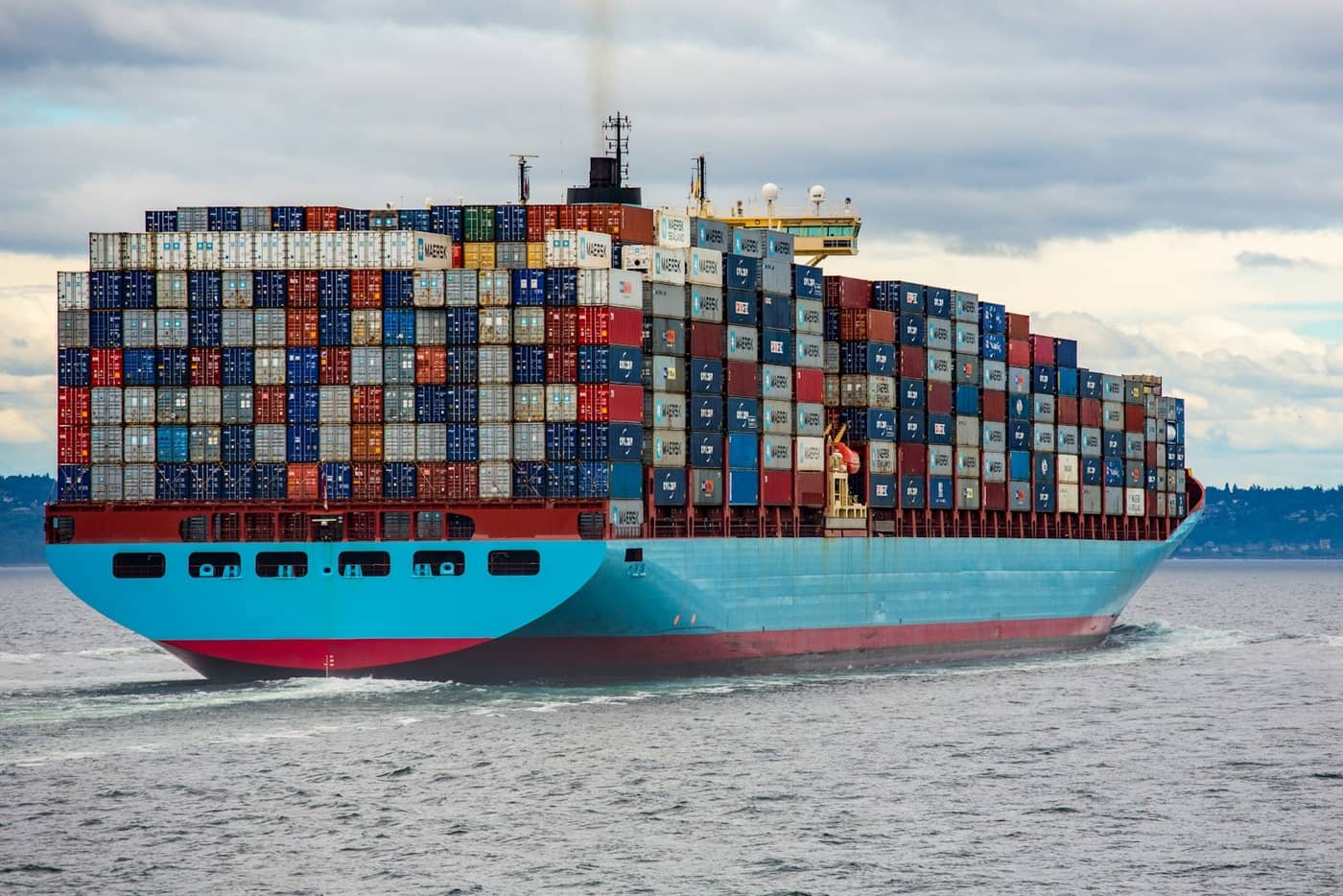
A ship and a train differ in scale by orders of magnitude. Adani's release of 9 June 2025 gives the capacity of MSC IRINA, which it calls the world's largest container ship by TEU capacity, as 24,346 TEUs with a length of 399.9 metres. A China Daily report, updated in December 2021, says that China-Europe trains to Western Europe are limited to no more than 41 40-foot containers, or 82 TEUs, because of shorter platforms at terminals there, while trains through Russia and Belarus can haul up to 70 wagons. On those figures, it would take about 297 trains of 82 TEUs to match one 24,346-TEU ship (24,346 divided by 82). Rail makes up for scale with frequency and inland reach, not with volume per departure.
China State Railway Group's chairman told a forum in Xi'an on 18 November 2025 that China-Europe freight trains had carried nearly 12 million TEUs and now serve 232 cities in 26 European countries, while the figure of nearly 120,000 trips is credited to numbers announced at the forum. Trans.info, citing ERAI, reports that total Eurasian rail volume fell from 745,900 TEUs in 2024 to 572,300 in 2025, and the China-Europe-China corridor from 380,600 to 311,200 TEUs, which it ties mainly to sea freight rates softening through the year. Rail is a real but smaller channel, and its volume responds to sea prices.
Transit Time: What the Sources Publish
| Source | Rail | Sea | Note |
|---|---|---|---|
| China Daily, 2021 | 10 to 15 days | about 30 to 45 days | Air quoted at 4 to 5 days |
| Trans.info, Sept 2025 | Under 2 weeks from Chongqing | 30 to 40 days | Says the Suez detour adds 10 to 15 days |
| FESCO, Vietnam origin | 35 to 43 days to Moscow via China | 34 to 40 days to St Petersburg, with transshipment | End points differ |
The first two rows support the usual claim that rail is faster on China to inland Europe, and Trans.info also reports that the Suez detour lengthens sea transits. The third row, from FESCO's Vietnam services page, is a caution: for cargo starting in Vietnam, the listed rail service via China takes 35 days from Hanoi, 39 from Da Nang and 43 from Ho Chi Minh, while a sea service with transshipment at Yantian is listed at 34 days to St Petersburg from Ho Chi Minh. The destinations differ, so it only suggests that rail is not faster on every lane. These are terminal-to-terminal figures; add the first and last kilometres by road.
What Drives Cost
On the December 2025 Shanghai to Rotterdam figures reported below, sea was the lower-priced mode, and the gap moves. Trans.info reports ERAI data showing that on Shanghai to Rotterdam in December 2025 the sea price was roughly USD 2,150 to 2,600 per FEU and the rail equivalent USD 5,600 to 6,600, while ERAI's composite rail index stayed around USD 3,200 to 3,300 per FEU through the year. The same article gives Drewry's World Container Index at USD 3,986 per FEU in early January 2025, about USD 1,650 in October and USD 2,213 at year end. Rail prices were steadier, and sea prices fell and rose far more.
Policy also moves rail prices. An ERAI report of May 2022 says the share of rail costs covered by Chinese subsidies fell from up to 50 percent in 2018 to 10 percent in 2022, with the amount per 40-foot container dropping from USD 5,000 at the peak to USD 1,000. Disruption moves sea prices: Trans.info's September 2025 article says war-risk cover for the Suez route was rising to 1 to 2 percent of vessel value per trip and cargo insurance rates had nearly quadrupled. For the demand side of sea rates, see our guide to Red Sea reroutes.
Cost drivers to ask about, then:
- Distance from your factory to a rail terminal versus to a seaport.
- The sea rate on the day you book, which can swing sharply.
- Whether the rail price includes any support that may change.
- Insurance and war-risk loadings on the sea route.
- Inland delivery at the European end, which rail may shorten.
Emissions: Factors and a Made-Up Example
The UK government's 2026 greenhouse gas conversion factors, freighting goods sheet, give these values in kilograms of CO2e per tonne-kilometre.
| Mode | kg CO2e per tonne-km |
|---|---|
| Freight train | 0.02583 |
| Container ship, 8,000+ TEU | 0.01266 |
| Container ship, average | 0.01612 |
| Average heavy goods vehicle (non-refrigerated, average laden) | 0.1036 |
Per tonne-kilometre a freight train emits more than a container ship on these UK factors, and far less than a lorry. But the journey lengths differ. Suppose, with invented distances, that 10 tonnes travel 10,000 km by rail and 20,000 km by sea. Rail gives 0.02583 x 10 x 10,000 = 2,583 kg CO2e. Sea gives 0.01612 x 10 x 20,000 = 3,224 kg at the average ship factor, or 0.01266 x 10 x 20,000 = 2,532 kg at the large-ship factor. The two come out close, so the ranking depends on the real routing, the ship size and the load. These factors are UK reporting averages, not measurements of any specific Eurasian service, so ask a provider for a route-specific figure; see also transport emissions reporting standards.
Risk Factors on Each Side
Sea: reliability and congestion. Sea-Intelligence put global schedule reliability at 50.6 percent in September 2026, with an average delay of 6.65 days for late arrivals. Route disruption, such as the Suez detour above, adds days and insurance cost.
Rail: capacity and corridors. The 82-TEU platform limit reported in 2021 would cap train size to Western Europe if it still applies. Corridors also differ in risk. The World Bank describes the Middle Corridor as a multimodal rail and maritime corridor between China and Europe via Central Asia and the Caucasus, and says investments and efficiency measures could cut travel times by half and triple trade flows by 2030. Its press release names the Caspian and Black Sea crossings and border crossings as places to improve. Some rail routings cross Russia and Belarus, so confirm any sanctions exposure for your goods and parties with counsel before booking.
A Table for Choosing
| Factor | Sea tends to suit | Rail tends to suit |
|---|---|---|
| Urgency | Stock is planned and delays are tolerable | Delivery window is tighter than sea allows but not urgent enough for air |
| Origin | Factory near a seaport | Inland factory far from the coast |
| Destination | Port city or coastal distribution | Inland hub reachable by rail |
| Volume | Large, repeated FCL volumes | Container-sized lots that fit a train slot |
| Price | Lowest rate is the priority | A steadier price matters |
| Disruption | Cargo can wait out port or route delays | Cargo needs a land alternative to a disrupted sea route |
Questions to Ask Before You Choose
- Is the quoted transit time terminal to terminal or door to door?
- Which route does the train take, and does it cross countries where sanctions or border rules affect your cargo or parties?
- Is the rail price fixed for your booking period, or tied to an index or to support that may change?
- For sea, which sailing and port, and what is the carrier's own on-time record on that routing?
- Can the supplier load a full container, or would the cargo travel as LCL?
- Do you need an emissions figure for reporting, and on which method?
Work With RR Brothers and Logistics
RR Brothers and Logistics arranges sea freight from Chinese gateways and rail freight with a China-Europe focus, from our Guangzhou headquarters. Tell us your cargo, origin and destination and we will say whether we can compare sea and rail for your lane, or contact our team first.
Frequently Asked Questions
Sources give rail at 10 to 15 days (China Daily, 2021) or under two weeks from Chongqing (Trans.info, 2025) against 30 to 45 days by sea. Rail is not faster on every lane, as FESCO's Vietnam figures show.
On Shanghai to Rotterdam in December 2025, ERAI data reported by Trans.info put sea at USD 2,150 to 2,600 per FEU and rail at USD 5,600 to 6,600. Prices move with sea rates and with subsidy policy.
A 2021 China Daily report says trains to Western Europe were limited to 41 forty-foot containers, or 82 TEU. Adani lists MSC IRINA at 24,346 TEU, so one such ship equals about 297 trains of that size.
UK 2026 factors give 0.02583 kg CO2e per tonne-km for a freight train and 0.01612 for an average container ship. Real results depend on distance, ship size and load, so ask for a route-specific figure.
Sea: schedule reliability (Sea-Intelligence gave 50.6 percent globally for September 2026) and route disruption. Rail: platform and train limits, corridor bottlenecks and sanctions exposure on some routings.
RR Brothers and Logistics arranges sea freight from Chinese gateways and rail freight with a China-Europe focus. Tell us your cargo, origin and destination and we will say whether we can compare them for your lane.
Sources
- Adani: World's largest container ship MSC IRINA makes historic debut at Vizhinjam (9 June 2025)
- China Daily: China-Europe rail freight (updated 7 December 2021)
- Xinhua via the Belt and Road Portal: China-Europe freight train trips hit nearly 120,000 (18 November 2025)
- Trans.info: China's Suez Canal on rails (9 September 2025)
- Trans.info: Cheaper sea freight pulled cargo off Eurasian rail in 2025 (8 April 2026)
- ERAI: Promotion of export rail transportation in China (May 2022)
- UK Government: Greenhouse gas reporting conversion factors 2026
- FESCO: Intermodal transportation between Vietnam and Russia
- World Bank: Middle Trade and Transport Corridor
- World Bank press release: Middle Corridor can boost trade connectivity and supply chain resilience (27 November 2023)
- Sea-Intelligence: Global schedule reliability records a marginal gain in September (28 October 2026)
This article is general information, not legal, tax or customs advice. Rules, rates and procedures change; confirm current requirements with the relevant authority or a licensed customs professional before you ship. Regulatory references were checked against the official sources listed above on 31 October 2026.
Image credits: header photo by Wolfgang Weiser on Unsplash; photo by Ian Taylor on Unsplash. Used under the Unsplash License.
Request a Quote