Sea-road vs sea-rail freight is the choice an importer faces once cargo has crossed the ocean and is sitting at an Indian port. The ocean leg ends at a gateway such as Nhava Sheva, Mundra or Chennai, and the inland leg to a factory or warehouse can go by truck for the whole way, or by train to an inland terminal with a truck at the end. The two options differ in reach, in where customs clearance happens, in cost and in the time that goods spend waiting. This guide sets out what is known from official sources, shows how to compare the options on total cost with a made-up example, and lists the questions to ask before you choose.
For the wider idea of combining modes, see what multimodal transportation is and how it works. For sea freight itself, see sea freight from China to India: costs, process and transit.
Where the Choice Is Made
The decision is really two decisions. The first is where the goods will be cleared by Customs, at the port or at an inland depot. The second is how they will travel from there to your door.
The Customs Act treats an inland container depot as part of a customs port. Section 2(12) of the Customs Act, 1962 defines a customs port as a port appointed under the Act and says it includes a place appointed to be an inland container depot, and Section 2(13) makes a customs port a customs station. Section 45 says that imported goods unloaded in a customs area stay in the custody of a person approved by the Commissioner until they are cleared for home consumption, warehoused or transhipped, and Section 54(3) lets the proper officer allow goods mentioned in the manifest as for transhipment to move on to another customs station without payment of duty at the first station, subject to conditions for their due arrival and, for stations other than those the section names or the Board specifies, if the officer is satisfied that the goods are bona fide intended for transhipment there. Under Section 55 the goods are liable to duty on arrival at the destination station, where they are entered as on first importation. Your customs broker can confirm which of these routes your cargo can use, and the choice affects both cost and timing.
CONCOR, the Ministry of Railways enterprise that runs a network of container terminals, describes its customs-bonded inland container depots in its disclosure under the Right to Information Act as dry ports in the hinterland that bring port facilities, including Customs clearance, to the customer's doorstep.
Comparing the Two Options
| Factor | Sea-road | Sea-rail | What to check |
|---|---|---|---|
| Reach | A truck can serve your door directly | A train runs terminal to terminal, so road is still needed at one or both ends | The distance between the nearest terminal and your site |
| Customs point | Goods can be cleared at the port and trucked on, or, where the route is available, moved to an inland depot and cleared there | Goods can be cleared at the port and railed on, or, where the route is available, railed to an inland depot and cleared there | Where your broker will file the bill of entry and where duty is paid |
| Cost profile | Depends on road distance and truck availability | CONCOR says rail is price-competitive over long distances | Quotes for both options on your exact lane |
| Handling | No terminal transfer between port and door | Terminal lifts at the depot | The handling charges and the free time at the depot |
| Paperwork | A PIB backgrounder says an e-way bill is mandatory for moving goods worth over Rs 50,000 between states by motorised vehicle | The same e-way bill rule applies to any inter-state truck leg, plus depot and rail documents | Which documents your forwarder handles |
| Emissions | Ask the haulier for a figure | The same backgrounder lists a Freight GHG Calculator and Indian Railways' Rail Green Points for freight customers | Compare figures for your lane, not averages |
For the road paperwork, see our guide to the e-way bill and freight documentation.
What the Rail Network Offers
A PIB backgrounder of 16 August 2025 says the two Dedicated Freight Corridors were designed to carry heavy freight, with the aim of easing congestion on existing passenger routes, lowering transportation costs and improving energy efficiency. It puts the Western corridor from Jawaharlal Nehru Port Terminal to Dadri at 1,506 km, and says 2,741 of the 2,843 route kilometres, or 96.4%, were operational as of March 2025. It also records an aim to raise the railways' share of freight from 35-36% to 45% by 2030. The Dedicated Freight Corridor Corporation says its trial runs on the JNPT to New Saphale section on 31 March 2026 completed the Western corridor and that the Union Budget 2026-27 announced an East-West corridor between Dankuni and Surat.
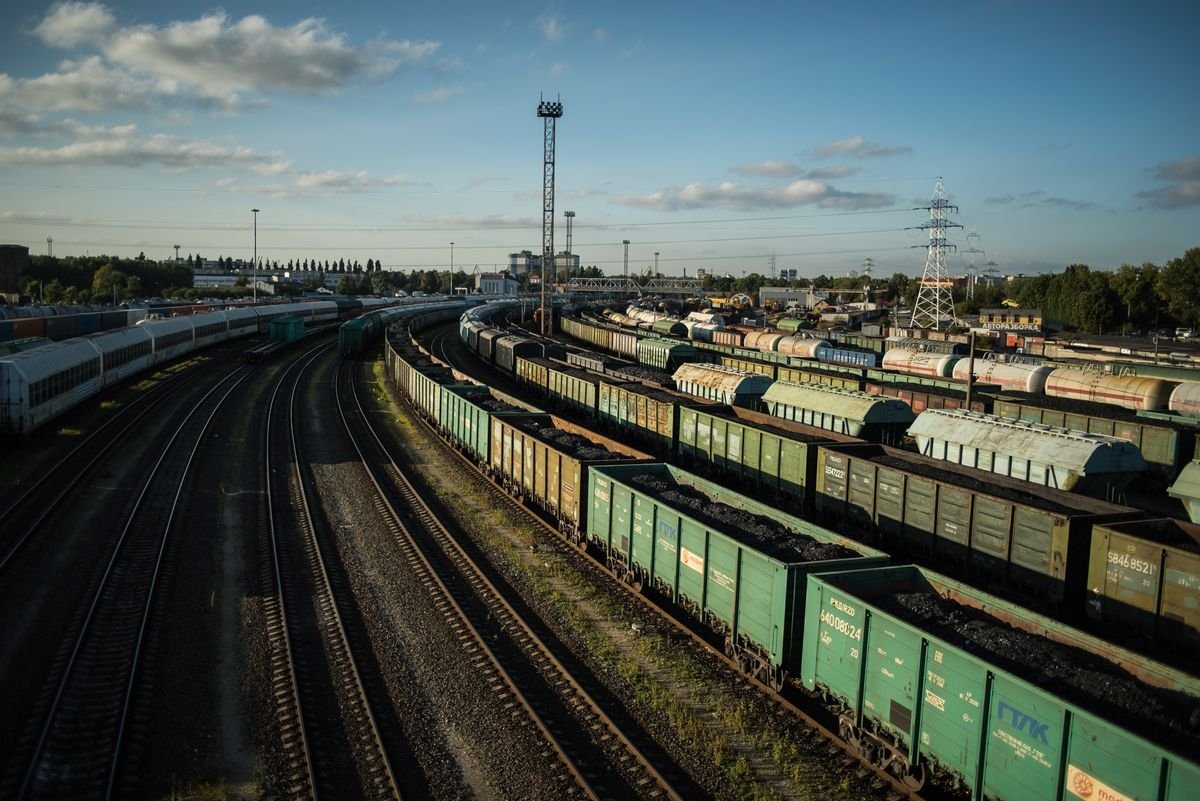
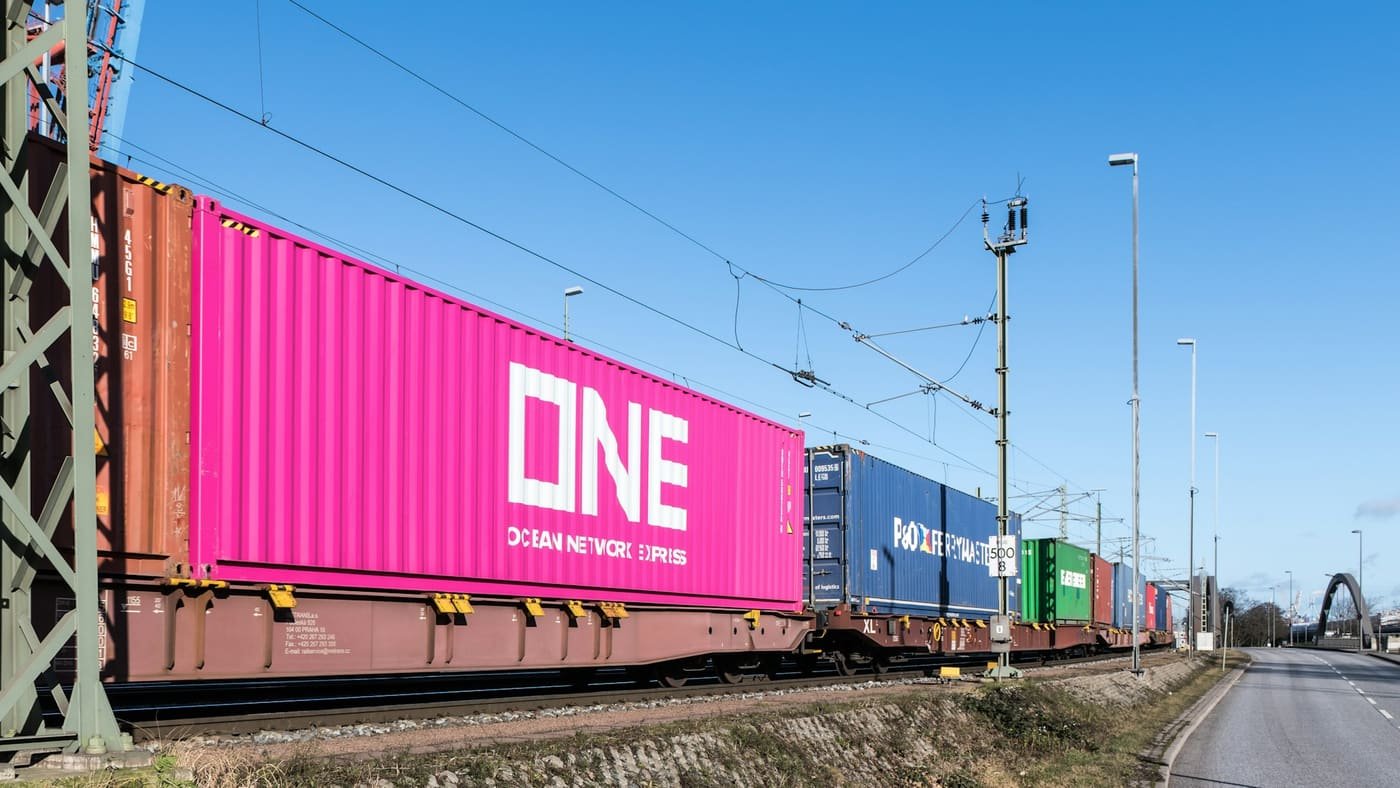
CONCOR says rail is the mainstay of its transport plans, that the majority of its terminals are rail-linked and that it provides road services for first and last mile. Its network stood at 61 locations in the document we read. For inland depots that importers use, see our guides to Tughlakabad in Delhi NCR, Ludhiana and the Ahmedabad and Pune depots, and for the parks that tie modes together, multimodal logistics parks in India.
Total Cost, Not Just the Haul
A cheaper haul can lose its advantage if goods wait longer, because inventory has a holding cost. The example below is made up, in currency units, and it uses a holding cost of 10% a year on the value of the cargo.
| Item | Sea-road (made up) | Sea-rail (made up) |
|---|---|---|
| Haul from port to destination | 1,000 | 600 for rail |
| Depot handling | 0 | 150 |
| Truck for the last leg | included above | 120 |
| Total transport charge | 1,000 | 870 |
| Days from port to warehouse | 3 | 6 |
For a container of goods worth 73,000, the holding cost is 73,000 multiplied by 0.10 and divided by 365, which is 20 per day. The three extra days on the rail route cost 60 more, so the totals including holding cost are 1,060 for road (1,000 plus 3 times 20) and 990 for rail (870 plus 6 times 20). Rail wins by 70. The saving in transport charges of 130 (1,000 minus 870), divided by the daily holding cost of 20, shows that the train could take up to 6.5 more days than the truck before the saving disappears.
Now change only the value of the goods. For a container worth 730,000, the holding cost is 200 per day. The totals become 1,600 for road (1,000 plus 3 times 200) and 2,070 for rail (870 plus 6 times 200), so road wins by 470. The same two routes give opposite answers because the value of the cargo changed. Work out your own daily holding cost before you compare quotes.
Where Time Is Lost
Official data show how much time goods spend at the port or depot, apart from the move itself. The National Time Release Study 2025 from the Central Board of Indirect Taxes and Customs measures the average time from the arrival of goods to the grant of out-of-charge. For bills of entry filed in the first week of January 2025, it was 79 hours 4 minutes at seaports and 83 hours 41 minutes at inland container depots. The study also measured the time from out-of-charge to the cargo leaving the customs station: 27 hours 26 minutes at seaports and 84 hours 50 minutes at depots. For depots it names importer behaviour, free-day provisions and gaps in logistics coordination, automation and storage access as likely determinants of the delay, and it says that depot operators give free time of up to 45 days for storage of containers. For ports it cites importer behaviour, urgency of delivery, storage and transportation planning and logistical constraints.
Two lessons follow for either route. Plan the truck or the rail slot before the out-of-charge order arrives, so that cleared containers do not wait on your side. And file the bill of entry before the cargo arrives, which the study treats as one of several enablers of faster release: at seaports it records an average of 71 hours 23 minutes for bills filed in advance against 158 hours 59 minutes for bills filed late. Our guide to demurrage and detention charges explains what happens when free time runs out.
Questions to Ask Before You Choose
- Where will the goods be cleared, at the port or at an inland depot, and who files?
- How far is the nearest rail-linked terminal from your site, and what road leg remains?
- What are the handling charges and free days at the depot?
- What is the value of the goods, and therefore the daily holding cost of delay?
- Can the truck or rail slot be booked before the container is cleared?
- Which documents does each option need, including the e-way bill for a road move between states?
- What emission figures can the provider give for your lane?
Compare the Options With RR Brothers and Logistics
RR Brothers and Logistics arranges sea freight from China, road freight to inland India after clearance, and customs clearance. Send us your destination and cargo details and we will discuss the road leg after clearance with you.
Frequently Asked Questions
In sea-road freight a truck carries the container from the Indian port to its destination. In sea-rail freight a train carries it between terminals, with a truck for the first or last kilometres.
The Customs Act treats a place appointed as an inland container depot as part of a customs port. Section 54(3) lets goods mentioned as for transhipment move on to another customs station without duty at the first station, on conditions, and Section 55 makes them liable to duty on arrival. Your broker confirms the route.
No. CONCOR says rail is price-competitive over long distances, but depot handling, a road leg and longer waiting add costs. In the made-up example here, the answer flips when the cargo value rises, so compare total cost.
In the study's first-week-of-January 2025 sample, the average from out-of-charge to gate-out was 27 hours 26 minutes at seaports and 84 hours 50 minutes at inland depots. For depots it names importer behaviour, free-day provisions and coordination gaps among the likely determinants; for ports it cites importer behaviour, urgency of delivery and logistical constraints.
It is associated with faster release. In its first-week-of-January 2025 sample, the study records an average of 71 hours 23 minutes at seaports for bills filed in advance, against 158 hours 59 minutes for bills filed after arrival, and treats advance filing as one of several enablers.
A PIB backgrounder says an e-way bill is mandatory for moving goods worth over Rs 50,000 between states by motorised vehicle. Confirm the current rules with your forwarder or tax adviser.
Sources
- CBIC: Customs Act, 1962 (Sections 2, 45, 54 and 55)
- CONCOR: Information under Section 4(1)(b) of the Right to Information Act, 2005
- PIB: Logistics, India's growth engine (backgrounder, 16 August 2025)
- DFCCIL: Milestones
- CBIC: National Time Release Study 2025 (released 20 June 2025)
This article is general information, not legal, tax or customs advice. Rules, rates and procedures change; confirm current requirements with the relevant authority or a licensed customs professional before you ship. Regulatory references were checked against the official sources listed above on 26 October 2026.
Image credits: header photo by Caleb Ruiter on Unsplash; photo by Wolfgang Weiser on Unsplash. Used under the Unsplash License.
Request a Quote