A Freight-Only Backbone for Indian Rail
For most of India's rail history, freight and passenger trains have shared the same tracks, which meant freight movement was routinely deprioritised behind passenger schedules — a structural constraint on how fast and how reliably cargo could move by rail across the country. The dedicated freight corridor India program was conceived to break that constraint by building freight-only rail lines, engineered from the ground up for heavier axle loads, longer trains, and higher sustained speeds than a shared network can support. Development is carried out by the Dedicated Freight Corridor Corporation of India (DFCCIL), a public sector undertaking under the Ministry of Railways, and for anyone moving containerised or bulk cargo in and out of northern and eastern India, the corridor network's progress is directly relevant to routing and lead-time decisions.
Two Corridors: Eastern and Western
The program centres on two major corridors. The Eastern DFC runs broadly from Punjab through Uttar Pradesh, Bihar, Jharkhand and into West Bengal, and was built primarily to move coal and other bulk commodities from the mineral-rich east to power plants and industry further west and north — a route historically choked by mixed freight-and-passenger congestion. The Western DFC connects the Delhi-NCR region, via Dadri, down through Rajasthan and Gujarat to Jawaharlal Nehru Port (JNPT) near Mumbai, and was designed with containerised EXIM cargo specifically in mind, including sections built to carry double-stack container trains — stacking two containers on a single wagon to move more volume per train. Together, the two corridors form an inverted-L shape covering a large share of India's most freight-intensive rail traffic.
Rail Freight Corridor Snapshot
| Corridor | Broad Route | Primary Cargo Focus |
|---|---|---|
| Eastern DFC | Punjab → Uttar Pradesh → Bihar → West Bengal | Coal, bulk commodities, general freight |
| Western DFC | Dadri (Delhi-NCR) → Rajasthan → Gujarat → JNPT | Containerised EXIM cargo, double-stack service |
Current Operational Status
The great majority of both the Eastern and Western Dedicated Freight Corridors have been commissioned and brought into freight service over the past several years, with DFCCIL progressively handing over completed sections for revenue-earning operation as construction milestones were reached. Rather than quoting a specific completion percentage that may already be out of date by the time you read this, we'd point readers to DFCCIL's own project status updates for the current figure — the corridor network has been a rolling, section-by-section rollout rather than a single opening date, and the operational picture continues to firm up as remaining spurs and feeder connections are finished.
Why a Dedicated Track Changes the Economics
The value of a freight-only corridor isn't just about top speed — it's about consistency. On a shared network, a freight train can lose hours waiting in a loop line for a passenger service to pass; on a dedicated corridor, that conflict disappears, and freight trains can also run heavier and longer, spreading fixed costs over more cargo per trip. For a shipper booking rail freight India as an alternative to road, this means the difference between an unpredictable multi-day transit with variable dwell time, and a scheduled, more consistent transit window — a meaningful change for anyone trying to plan inventory and delivery commitments around inland movement.
Connecting to Ports, ICDs and the Wider Network
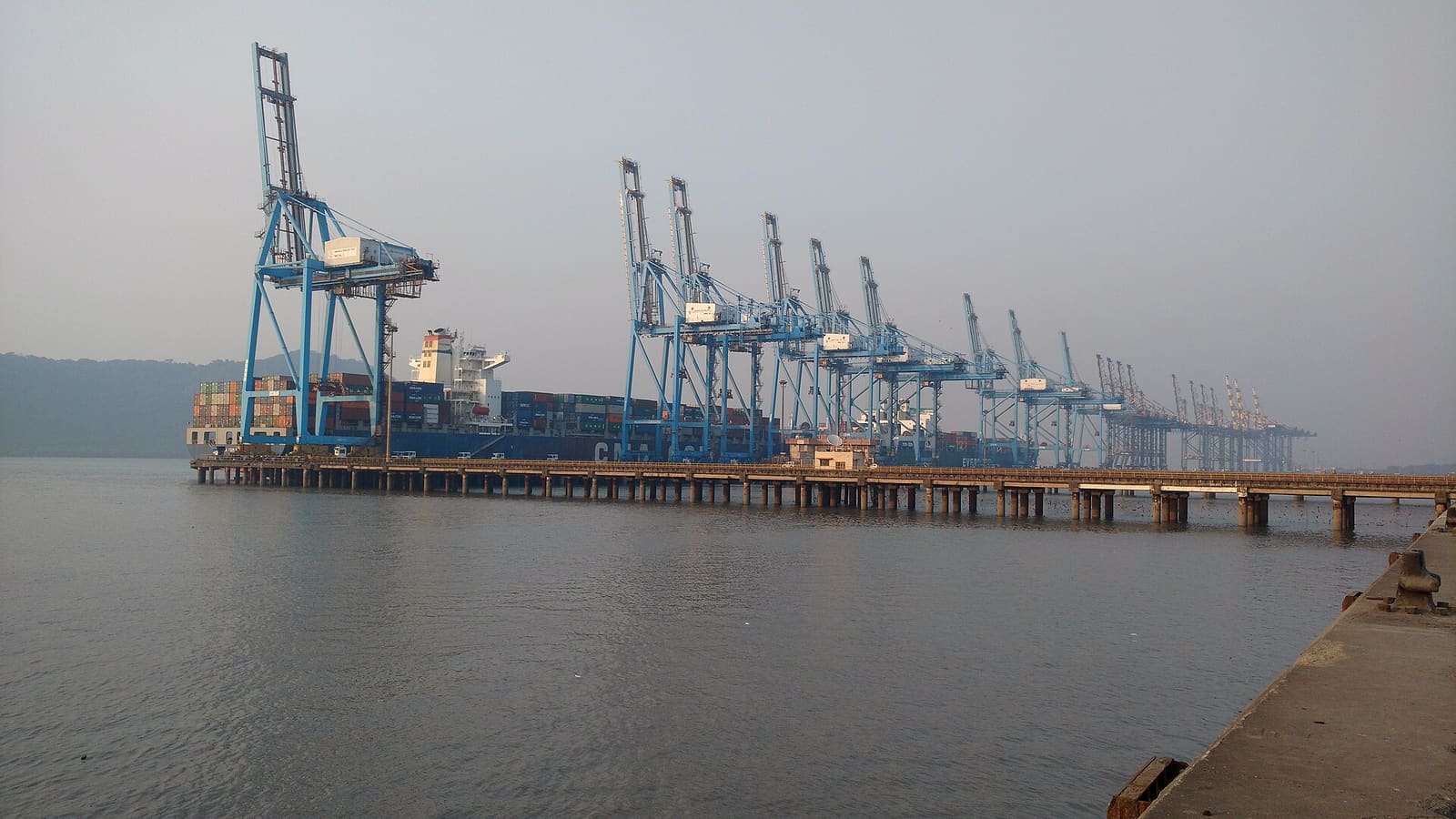
The Western DFC's link to JNPT is its most commercially significant feature for international trade, since it puts India's busiest container port within a dedicated rail connection to inland container depots across northern India — including hubs like ICD Ludhiana in Punjab, which depends heavily on efficient rail linkage to move Punjab's manufacturing and agricultural exports down to the coast. The corridor network doesn't operate in isolation either: it is one of the infrastructure threads that PM Gati Shakti's cross-ministry planning platform is meant to coordinate with roads, ports and logistics parks, so that a container moving off a DFC rake at JNPT has a smoothly connected onward road or warehousing leg rather than hitting a bottleneck at the port gate. Port-side capacity upgrades under the Sagarmala port modernisation program are a natural complement here — faster inland rail is only as useful as the port capacity waiting at the other end of it. For a broader picture of how India's ports fit into China-origin shipping routes generally, our complete all-ports shipping guide to India is a useful companion reference.
Which Industries Benefit Most
Bulk commodity movers — coal, cement, fertiliser and foodgrain shippers along the Eastern corridor — see the most direct benefit from guaranteed, high-volume freight paths that no longer compete with passenger timetables. On the Western corridor, the biggest beneficiaries are exporters and importers moving containerised cargo between Delhi-NCR's manufacturing and consumption base and JNPT: automotive components, machinery, textiles, and general containerised trade that previously moved by road for the full inland leg, or by a slower, congestion-prone rail route. Any importer bringing China-origin cargo into northern India through JNPT, and any exporter sending Indian-made goods out through the same gateway, has a direct stake in how quickly the corridor's remaining connections mature.
Practical Takeaways for Shippers
- Ask your forwarder whether your inland leg can move on the DFC. Where an origin or destination sits near a DFC-linked ICD, rail may now offer a more time-competitive and cost-competitive alternative to road than it did a few years ago.
- Treat corridor status as a moving target. Because commissioning has proceeded section by section, it's worth checking current status with your forwarder or directly with DFCCIL before assuming a particular stretch is fully operational.
RR Brothers and Logistics coordinates multimodal routing for clients moving cargo through northern and western India, and we track which sections of the Eastern and Western Dedicated Freight Corridors are open for revenue service so we can recommend rail legs where they genuinely save time or cost over road. As an NVOCC and freight forwarder handling China-India lanes daily, we treat the corridor's progress as a live input into how we plan inland routing, not a one-time headline to file away. You can review DFCCIL's own project updates directly at dfccil.com, and see how the corridor fits into the wider Gati Shakti planning platform at pmgatishakti.gov.in.
Frequently Asked Questions
Most sections of both the Eastern and Western Dedicated Freight Corridors have been commissioned and brought into freight service in stages over recent years. Because rollout has proceeded section by section, the most current status is best confirmed directly with DFCCIL or your freight forwarder.
Because DFC trains don't share track with passenger services, they avoid the delays caused by yielding priority on a mixed network, and can run longer, heavier trains at more consistent speeds. The practical benefit for shippers is more predictable transit windows rather than a single fixed time saving.
Bulk commodity sectors like coal, cement and fertiliser benefit most on the Eastern DFC, while containerised EXIM cargo — automotive parts, machinery, textiles and general trade moving between Delhi-NCR and JNPT — sees the biggest gains on the Western DFC.
The Western DFC links directly to Jawaharlal Nehru Port (JNPT) and feeds inland container depots across northern India, including hubs like ICD Ludhiana, giving exporters and importers a dedicated rail path between the coast and inland manufacturing regions.