Vietnam to Russia shipping via Vladivostok is priced and timed by a short list of drivers: the Vietnamese port of loading, the sailing frequency, the rail leg onward, the local charges added at each end, and the calendar. This guide takes the drivers one at a time, using published figures and one clearly labelled made-up example. It does not cover the route walk-through or customs paperwork. For the Russian side of the corridor in general, see Vladivostok as a gateway for Russia trade, and for the Vietnamese end, see China to Ho Chi Minh City and Cat Lai.
What the Public Sources Do and Do Not Tell You
Public information on this lane comes mainly from one operator, FESCO, whose Vietnam pages publish sailing frequencies and transit times but show no prices; its site menus link to tariff and pricing pages that we did not use. No source we read gives a freight rate for Vietnam to Russia, so this guide gives none, and every dollar figure in the worked example is invented.
Transit Time: What the Carrier Publishes
FESCO's page on intermodal transport between Vietnam and Russia describes its Vietnam Direct Line as a sea service on the route Vladivostok, Ho Chi Minh, Haiphong, with weekly sailings and transit from 8 days. It lists these port-to-port times.
| Direction | Published transit (days) |
|---|---|
| Ho Chi Minh to Vladivostok | 11 |
| Haiphong to Vladivostok | 8 |
| Vladivostok to Haiphong | 9 |
| Vladivostok to Ho Chi Minh | 7 |
FESCO's separate Vietnam Direct Line page gives 10 days for Ho Chi Minh and 8 days for Haiphong in its schedule table, without saying which direction those figures describe. Ask for the schedule in force and the basis of each figure before you promise a delivery date.
Vladivostok may not be the final destination. FESCO's Moscow container train page gives a transit time of 10 to 14 days, with 10 days to Silikatnaya and 11 days to Khovrino or Belyy Rast in its table. Adding the published ranges for the Vietnam-to-Russia direction gives 18 to 25 days from a Vietnamese port to a Moscow terminal (8 plus 10, and 11 plus 14). That is our arithmetic, and it leaves out the wait for a sailing, port dwell, customs and delivery to the consignee. A weekly service means a container that misses the cut-off can wait up to seven days for the next vessel; see freight booking cut-off times explained.
FESCO also lists groupage (LCL) from 1 tonne and 1 cubic metre, with vessels and trains departing twice a month, so a small shipper trades lower volume for a less frequent departure.
Two other services on the same page show why the shortest sea time is not the whole picture. A rail service from Vietnam to Moscow via China is listed at 35 days from Hanoi, 39 from Da Nang and 43 from Ho Chi Minh. A sea service with transshipment at Yantian to St Petersburg is listed at 34 days from Ho Chi Minh and 40 from Haiphong. The end points differ, so the figures are not like for like. For the sea-versus-rail question in general, see our guide to sea freight versus rail freight.
Cost Driver 1: Port, Terminal and Local Charges
Vietnamese handling charges are set within published ranges. An English-language report dated 6 January 2026 says the Ministry of Construction announced a revised price framework for the Lach Huyen and Cai Mep-Thi Vai ports that raises handling charges for loaded containers by around 10 percent from 1 February 2026. It gives USD 63 to 73 for a loaded 20-foot container and USD 94 to 107 for a 40-foot container on import and export, and USD 37 to 44 and USD 56 to 64 for transit and transshipment boxes. FESCO's pages name Ho Chi Minh and Haiphong, not terminals, so ask which terminal your sailing uses and whether its handling charge is inside the quote or on top.
Carriers add their own local charges. One carrier's published Vietnam export local charges schedule shows how such charges are built. Terminal handling is charged per container and is set higher for reefer and out-of-gauge boxes than for general cargo. The bill of lading fee, telex release fee and amendment fee are charged per bill, the seal fee per unit, and a change of destination after loading is listed at USD 500 per bill. That schedule is a different carrier's and does not mention Russia or Vladivostok, so it shows structure, not the cost of a Vladivostok booking. Per-bill fees weigh more on a one-container shipment than on a ten-container one. For surcharge types, see ocean freight surcharges and how they affect costs.
Cost Driver 2: The Rail Leg and Yard Congestion
Rail and yard conditions can change cost and timing once the box lands. Russian Railways announced a 20.7 percent discount on domestic and import transport of large loaded containers on gondola cars from any Far East Railway station, in force until the end of 2022, to help Far East ports handle a high flow of cargo (PortNews, 27 September 2022). A day earlier, the Transport Minister said terminal stocking at Far East ports should be cut by 20 percent, and a Federal Customs Service deputy head had said two of Vladivostok's five container yards were at 102 to 103 percent occupancy as cargo flows were redirected east (PortNews, 26 September 2022).
These are 2022 examples, not today's conditions, but they prompt two questions: is the rail tariff for my container type fixed or promotional, and what is the free time in a yard before storage charges start? See demurrage and detention charges for how those clocks work.
Seasonal Drivers: Tet and Winter Ice
Vietnam Briefing reported in December 2024 that Tet in 2025 would close businesses and factories for 7 to 9 days, that ports and port warehouses close while terminals stay open for vessels, that production backlogs can build up 1 to 2 weeks before the holiday, and that after it ports resume full capacity but can face heavy congestion at the terminals. On a weekly service that means a rush for pre-holiday sailings; see also Chinese New Year shipping shutdown planning.
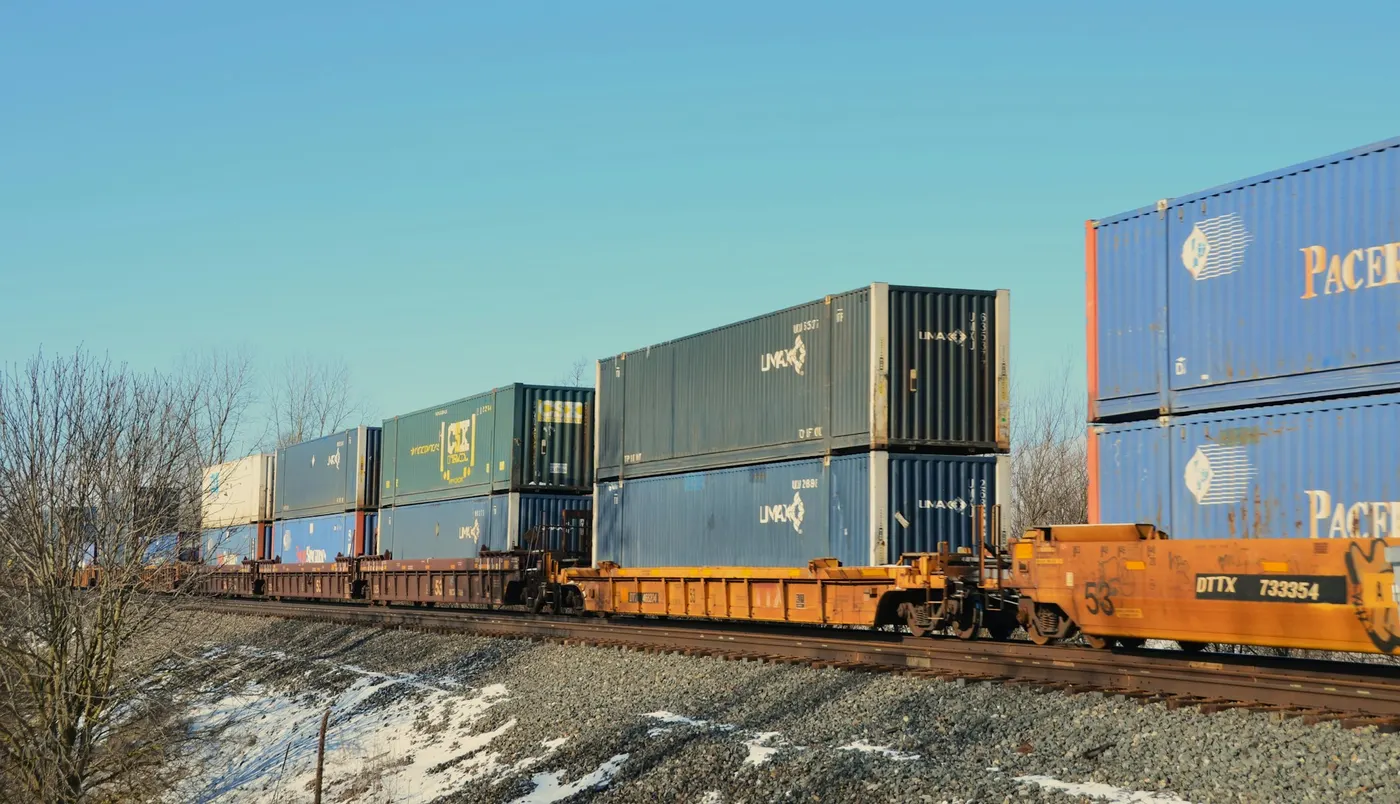
Winter has its own rule at the Russian end. In a notice of 28 December 2017, the Vladivostok harbourmaster declared the ice season from 29 December 2017, allowed only Ice2-class ships to enter and sail, and said icebreakers of ice class no lower than Arc4 would assist ships at the owner's request and expense. The notice is old; the point is to ask whether winter conditions change the vessel, schedule or surcharges on your booking.
Costs Outside the Freight Quote
Baker McKenzie's VAT table lists Russia's standard rate as 22 percent and says in a footnote that the rate rose from 20 percent on 1 January 2026 under Federal Law No. 425-FZ and applies to imports. Duty, the VAT base and any trade-agreement preference are questions for a customs broker, and they sit outside any freight quote.
Sanctions and Banking Checks That Affect Cost and Timing
Russia-related controls are set by several governments and change over time, so they belong in a cost and transit plan. OFAC's Russia-related page lists the Russia Harmful Foreign Activities Sanctions as implemented by Executive Order 14024 as amended. A March 2023 compliance note from the US Departments of Commerce, Treasury and Justice lists warning signs for third-party intermediaries, including a customer's reluctance to share information about end use, last-minute changes to shipping instructions that appear contrary to customer history, and payment from a third-party country or business not listed on the end-user form.
Separately, Ports Europe reported on 24 October 2025 that FESCO said the EU sanctions imposed that day against FESCO PJSC would not significantly affect its core business, which it described as primarily focused on international container shipping with friendly countries, as well as domestic routes within Russia. Whether any carrier, vessel, port, bank or party in your booking is covered by measures that apply to you is a question for sanctions counsel and a customs broker, to be answered before booking. See also our overview of Russia sanctions compliance in logistics.
A Made-Up Cost Build-Up
All figures below are invented. Suppose one 40-foot container of goods worth USD 60,000 moves from a Vietnamese port to a Moscow terminal. Scenario A makes the first sailing. In Scenario B the cargo misses the cut-off and waits 7 days for the next weekly sailing, with 5 days of extra storage at an invented USD 40 a day and inventory holding cost of 10 percent a year.
| Component (USD, invented) | Scenario A | Scenario B |
|---|---|---|
| Origin trucking and local charges | 450 | 450 |
| Ocean freight to Vladivostok | 1,900 | 1,900 |
| Vladivostok terminal handling | 300 | 300 |
| Rail leg to Moscow terminal | 3,100 | 3,100 |
| Extra storage (5 days at 40) | 0 | 200 |
| Holding cost (60,000 x 10% x 7/365) | 0 | 115 |
| Total | 5,750 | 6,065 |
The missed sailing adds USD 315, or about 5.5 percent (315 divided by 5,750), and 7 days to a journey that the published figures put at 18 to 25 days on the water and rails. Price the whole path, including free time and sailing day, not just the ocean line.
Questions to Ask Before You Compare Quotes
- Which Vietnamese port and terminal, and which sailing day each week?
- Is the rail leg to the destination terminal included, and on what tariff basis?
- What free time and storage terms apply at Vladivostok and at the Moscow terminal?
- Which local charges are per container and which are per bill of lading?
- What changes in winter or around Tet?
- Which party is the carrier on each leg, and how has each been screened against the sanctions lists that apply to you?
Work With RR Brothers and Logistics
RR Brothers and Logistics is headquartered in Guangzhou with offices in Coimbatore and Mumbai, and arranges sea freight and handles customs clearance. We do not publish a Vietnam to Russia service, so tell us your cargo, origin and destination and we will advise whether and how we can handle it. For the other lanes in this series, see Thailand to Russia logistics.
Frequently Asked Questions
FESCO publishes 8 days from Haiphong and 11 days from Ho Chi Minh to Vladivostok on its intermodal page, plus 10 to 14 days on its Moscow container train. That adds up to 18 to 25 days to a Moscow terminal before waiting, dwell and customs. Confirm the schedule in force with the carrier.
No. None of the sources we read publish a freight rate for this lane. The worked example uses invented figures to show how a quote is built and what a missed weekly sailing can add.
In one carrier's published Vietnam export schedule, terminal handling is charged per container, while bill of lading, telex release and amendment fees are per bill. Other carriers differ, so ask for the structure of every quote.
Vietnam Briefing reported in December 2024 that Tet 2025 would close businesses and factories for 7 to 9 days, that ports and port warehouses close while terminals stay open for vessels, and that terminals can be congested afterwards. Plan around the holiday dates each year.
A 2017 harbourmaster notice declared an ice season, allowed only Ice2-class ships and offered icebreaker assistance at the owner's expense. It is an old notice, so ask your carrier how winter affects the vessel, schedule and surcharges now.
Sources
- FESCO: Intermodal transportation between Vietnam and Russia
- FESCO: Marine transportation from Vietnam to Russia (FVDL)
- FESCO: Container train Vladivostok to Moscow (FESCO Moscow Shuttle)
- en.sggp.org.vn: Container handling fees at deep-water ports to rise from February 1 (6 January 2026)
- RCL: Vietnam export local charges schedule (30 April 2026 update)
- PortNews: Russian Railways offered 20.7-pct discount for container transportation from Far East ports (27 September 2022)
- PortNews: RF Transport Ministry calls on 20-pct reduction of stocking up at Far East container terminals (26 September 2022)
- Vietnam Briefing: Vietnamese New Year (Tet) 2025, how to prepare your business
- PortNews: Ice season announced in the Port of Vladivostok (28 December 2017)
- US Departments of Commerce, Treasury and Justice: Tri-Seal Compliance Note on third-party intermediaries (2 March 2023)
- US Treasury OFAC: Russia-related sanctions
- Ports Europe: FESCO publishes statement regarding sanctions (24 October 2025)
- Baker McKenzie Resource Hub: Russia VAT/GST rates
This article is general information, not legal, sanctions, tax or customs advice. Rules, rates and schedules change; confirm current requirements with sanctions counsel and a licensed customs broker before you book any shipment involving Russia. Regulatory references were checked against the official sources listed above on 31 October 2026.
Image credits: header photo from SONVU9491 on Pixabay; photo by Julia Taubitz (justmejuliee) on Unsplash; photo from SONVU9491 on Pixabay; photo from zzkonst on Pixabay; photo by Roger Starnes Sr (rstar50) on Unsplash; photo from SONVU9491 on Pixabay. Used under the Unsplash License and the Pixabay Content License.
Request a Quote