Breakbulk shipping moves cargo that is handled piece by piece, instead of packed inside a standard container. The Port of Rotterdam describes breakbulk, also called general cargo, as including cargo that does not fit into containers, and lists heavy lift and project cargo, steel, forest products and non-ferrous metals among its types. If your cargo is too long, too wide, too heavy or too awkward for a container, breakbulk may be the way it travels. This guide explains what breakbulk is, how it differs from container and bulk shipping, when it is the right choice and how to plan a breakbulk move.
For container alternatives, see our guide to container types. For heavy and oversized shipments in general, see project cargo logistics.
What Breakbulk Means
On its breakbulk page, the Port of Rotterdam describes the cargo it handles as "all types, sizes, and weights of breakbulk, also called general cargo", including "heavy lift and project cargo, steel, forest products or non-ferrous metals". On its cargo overview, the port sets breakbulk beside the other categories: breakbulk includes cargo that does not fit into containers, containers are the backbone of global trade, dry bulk includes raw materials for industry, construction and energy, and liquid bulk concerns liquid energy carriers and chemical products.
In practical terms, breakbulk cargo is loaded, lashed and discharged as individual items, bundles or crates, using the ship's or the quay's cranes and other equipment, and not as boxes handled by the standard container system.
Breakbulk, Containers and Bulk Compared
| Category | How it is handled | Typical cargo |
|---|---|---|
| Container | Packed in a standard box and handled as a unit | Boxed and palletised goods |
| Breakbulk | Handled as individual pieces, bundles or crates | Heavy lift, project cargo, steel, forest products, non-ferrous metals |
| Dry bulk | Loose, in large quantities | Raw materials for industry, construction and energy |
| Liquid bulk | Pumped in bulk | Liquid energy carriers and chemical products |
When Breakbulk Is the Right Choice
- The cargo does not fit in a standard container by length, width or height.
- A single piece is too heavy for a container's payload or for the route.
- The cargo is a set of long items, such as pipes, beams or structural steel.
- The pieces are awkward or irregular and need special lifting points.
- It is part of a project, with several large items that must arrive together.
A Fit Check Against Container Dimensions
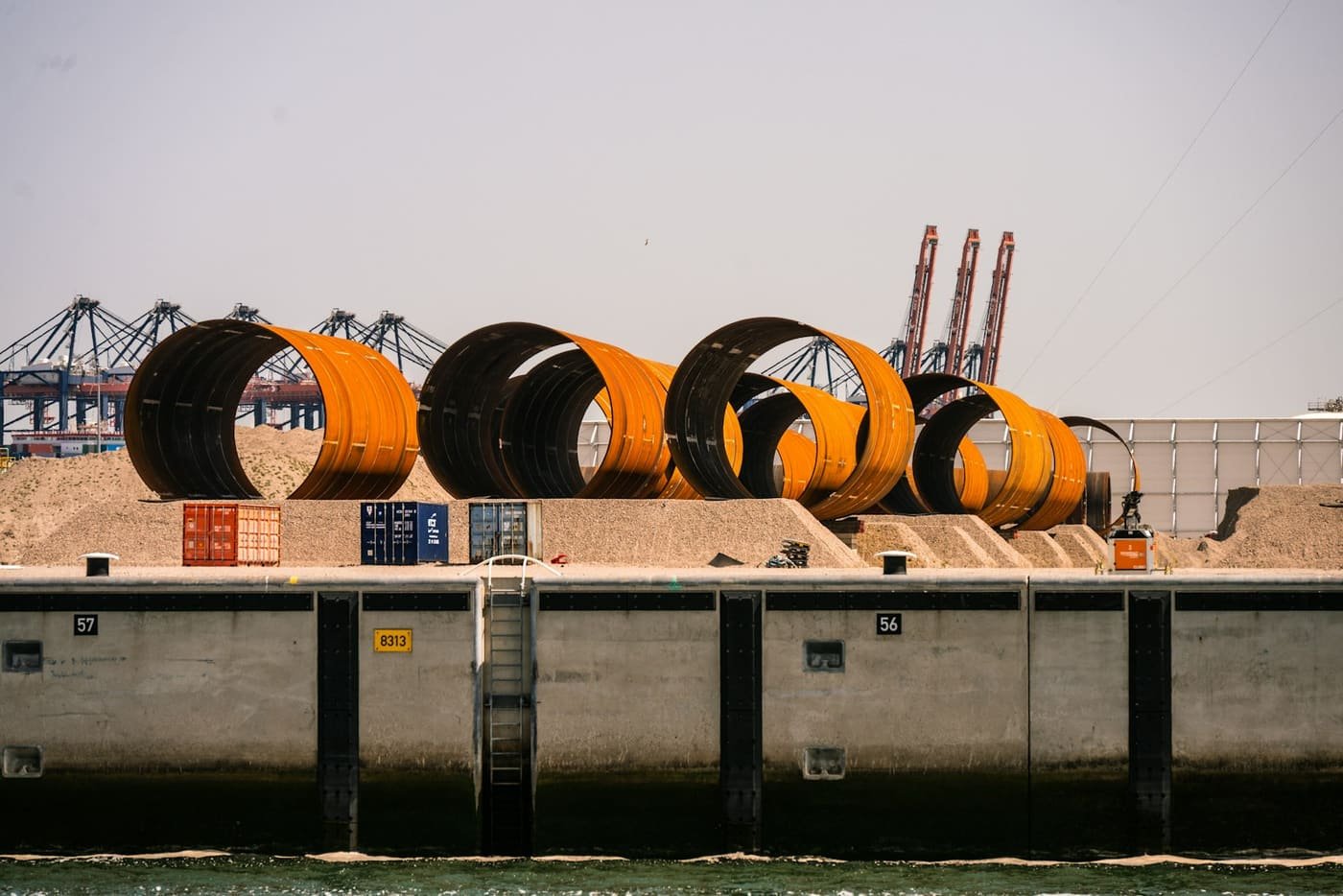
A quick check shows why some cargo cannot go in a closed container. ONE's published specification lists the internal dimensions of a standard dry container as 2,350 mm wide, with a door opening of 2,340 mm wide by 2,280 mm high, and an internal length of 12,032 mm for a 40ft. A made-up steel fabrication that is 12.0 m long, 3.0 m wide and 3.0 m high fails the test twice over: it is wider than the container's inside width and taller than the door. It would need an open top or flat rack, or it would travel as breakbulk. Add the packing and any lifting frames to your measurements, because they count.
Container Alternatives for Awkward Cargo
Before you choose breakbulk, check the options that stay inside the container system. An open top container allows loading from above, and a flat rack carries cargo that is too wide or too tall for a closed box. They can be easier to book than a conventional breakbulk move, but they have their own limits and may carry extra charges for over-dimension cargo, so ask. Our guide to container types explains each one.
Data You Need Before You Ask for a Quote
- Length, width and height of each piece, with packing and lifting frames.
- Weight of each piece and the total weight.
- The centre of gravity and the lifting points, if the cargo is a single large item.
- How the cargo is packed and whether it is sensitive to weather, shock or corrosion.
- The number of pieces and when they will be ready.
- The origin and destination, including how the cargo reaches the port and leaves it.
Port, Vessel and Equipment Planning
Breakbulk depends on equipment and space. Ask your forwarder about the cranes and lifting capacity at the loading and discharge ports, the quay and yard space for storing cargo, the type of vessel and its deck or hold arrangements, and any restrictions on dimensions or weight at the terminal. A terminal that is excellent for containers may not be set up for your cargo, so confirm that it is suitable before you book.
Stowage and Securing
Cargo that is not in a container has to be stowed and secured on board by the ship. The IMO's cargo securing page lists the Code of Safe Practice for Cargo Stowage and Securing (CSS Code) and explains that IMO developed its codes in this area to deal with the problems and hazards arising from improper stowage and securing of certain cargoes on ships. Ask the carrier or your forwarder how your cargo will be secured, who prepares the lashing plan and whether a survey is required or advisable.
Packing and Protection
Breakbulk cargo is handled more times and is more exposed than cargo inside a container. Crate or wrap it as the cargo requires, protect it against moisture and corrosion, and mark lifting points and the centre of gravity clearly. If any packaging is raw wood, the international standard ISPM 15 covers crates, boxes, packing cases, dunnage, pallets and similar wood packaging made from raw wood, and requires approved treatment and a mark. For example, heat treatment needs a minimum of 56 °C for at least 30 continuous minutes throughout the wood, and the mark must be legible, durable and visible when the packaging is in use.
Costs You Can Expect to See
Breakbulk quotes tend to be more varied than container quotes, so ask for each line:
- ocean freight, with the basis it is charged on, by piece, weight or volume;
- loading and discharge, including cranes or special lifting equipment;
- lashing, dunnage and securing materials;
- port handling, storage and any waiting charges;
- surveys, permits or escorts, where needed;
- inland transport at both ends, which may need special vehicles;
- insurance for the full value of the cargo.
Documents and Customs
A breakbulk shipment needs a transport document, an accurate packing list with dimensions and weights, and the commercial invoice. For imports into India, the Foreign Trade Policy 2023 lists the bill of lading, the commercial invoice cum packing list and the bill of entry as mandatory documents. Section 14 of the Customs Act, 1962 includes, as the rules specify, transport and handling costs to the place of importation in the transaction value, so heavy-lift and special handling charges can matter for duty as well as for budget. Ask your broker.
Risks and How to Manage Them
- Damage during repeated handling: use proper crating and lifting points, and agree the lifting method in advance.
- Weather exposure: protect cargo and ask how it will be stowed and covered.
- Delays waiting for space: book early and confirm the vessel and the terminal.
- Underestimated dimensions: measure the packed cargo, not the product.
- Unclear responsibility: agree in writing who arranges lifting, securing and surveys at each port.
Questions to Ask a Breakbulk Provider
- Have you moved cargo of this size and weight before, and on which routes?
- Which ports will be used, and what lifting equipment and storage do they have?
- Who prepares the stowage and lashing plan, and is a survey recommended?
- What dimensions and weights is the quote based on, and what happens if they change?
- Which charges are fixed, and which depend on weather, waiting time or port conditions?
- How is the cargo insured, and who is responsible at each stage of handling?
- What documents do you need from me, and by when?
Plan Breakbulk With RR Brothers and Logistics
RR Brothers and Logistics offers project cargo and dangerous goods services and sea freight from China. Send us your cargo details with dimensions, weights and photographs, and we will tell you whether a container, an open top, a flat rack or breakbulk suits the move.
Frequently Asked Questions
Shipping cargo that is handled piece by piece instead of packed in a standard container. The Port of Rotterdam describes breakbulk, also called general cargo, as including cargo that does not fit into containers.
The Port of Rotterdam lists heavy lift and project cargo, steel, forest products and non-ferrous metals. In general, it is cargo that is too large, heavy or awkward for a container.
When the cargo does not fit a container by length, width, height or weight, or when it needs special lifting. Check open top and flat rack containers first, because they can be simpler to book.
It is stowed and secured individually on board. IMO lists the Code of Safe Practice for Cargo Stowage and Securing, so ask the carrier how your cargo will be secured and who prepares the lashing plan.
Yes if it is made from raw wood. ISPM 15 requires approved treatment and a mark, for example heat treatment to at least 56 °C for 30 continuous minutes, shown by a legible, durable mark.
Dimensions and weight of each piece with packing, the centre of gravity and lifting points, how the cargo is packed, the number of pieces and ready dates, and the origin and destination.
Sources
- Port of Rotterdam: Breakbulk
- Port of Rotterdam: Cargo (containers, breakbulk, dry and liquid bulk)
- ONE: Dry container specifications (20 ft, 40 ft and 40 ft high cube)
- IMO: Cargo securing and packing (CSS Code)
- IPPC/FAO: ISPM 15, Regulation of wood packaging material in international trade (2018)
- DGFT: Foreign Trade Policy 2023, Chapter 2 (para 2.06, mandatory documents)
- CBIC: Customs Act, 1962 (Section 14)
This article is general information, not legal, tax or customs advice. Rules, rates and procedures change; confirm current requirements with the relevant authority or a licensed customs professional before you ship. Regulatory references were checked against the official sources listed above on 25 October 2026.
Image credits: header photo by Julia Taubitz on Unsplash. Used under the Unsplash License.
Request a Quote