
China to Russia shipping runs on more than one route. Cargo can leave a Chinese port by sea, reach Vladivostok on a container line and continue inland by rail, or it can cross the land border by rail from the start. Which route fits depends on the cargo, where the consignee is and the timetable. Before any of that, it depends on whether the goods and every party to the deal can lawfully move on this lane. This guide uses published sources to set out the 2025 trade picture, the sea and rail options operators describe, what the Eurasian Economic Union (EAEU) Customs Code says about release, and the checks to finish first.
Short answer: cargo can go from China to Russia by sea to Vladivostok followed by rail or road inland, or by rail across a land border crossing. Sanctions and export controls apply first, and transit times and prices come from a carrier's current quotation, not from a guide.
China to Russia Trade in 2025: What the Figures Say
The Moscow Times, reporting a Reuters story based on China's General Administration of Customs, put 2025 trade between the two countries at $228.1 billion, a 6.9% decrease from the record $244.8 billion of 2024. Chinese exports to Russia fell 9.9% year on year. The article gives a 3.4% fall for the flow in the other direction and links it to lower oil prices. For the export side it points to weaker demand for Chinese cars in Russia, with vehicle exports down 46% between January and November 2025.
These are dollar values, not container counts. A fall in the value of car exports does not show the number of boxes or wagons that moved, and the article gives no container figures. For a shipper the point is narrower: the commodity mix changes from year to year, so check last year's assumptions again.
The Sea Route: Chinese Ports to Vladivostok
FESCO is the operator whose published material is the clearest on this route. Its cargo page for the Commercial Port of Vladivostok says it delivers containerized cargo from China, Vietnam, Japan, Korea and countries of Southeast Asia via the port of Vladivostok to any destination in Russia and the CIS, and lists its China lines as FCDL-1, FCDL-2, FCDL-3 and FCDL-5. The page gives no transit times or rates.
| Item | What the source says |
|---|---|
| Lines from China | FCDL-1, -2, -3 and -5 (FESCO cargo page) |
| Route headings on the FCDL page | FCDL-5: Vladivostok, Shanghai. FCDL-3: Yantian, Shantou, Xiamen, Ningbo. FCDL-2: Xingang, Dalian, Rizhao, Lianyungang. FCDL-1: Ho Chi Minh, Haiphong, Nansha |
| Volume, January to March 2026 | Over 74,000 TEU, up 38% on the same period of 2025; imports above 58,000 TEU, exports about 16,000 TEU (Interfax, 28 April 2026) |
| Capacity | Interfax gives 5,000 TEU a week in April 2026; the FCDL page says 3,400 TEU weekly. The sources differ, so ask the carrier |
| FCDL-5 at launch | Shanghai to Vladivostok, ships depart once a week, three days, two ships of about 3,200 TEU combined (Interfax, 9 December 2024) |
The last row describes the launch in December 2024, not today's rotation. The FCDL page lists day counts beside each port without saying what they measure, so confirm transit times and the current schedule in writing. Ask each quotation to name the discharge port and the onward rail leg, because a price that stops at the Russian quay is not the same product as one that includes the train.
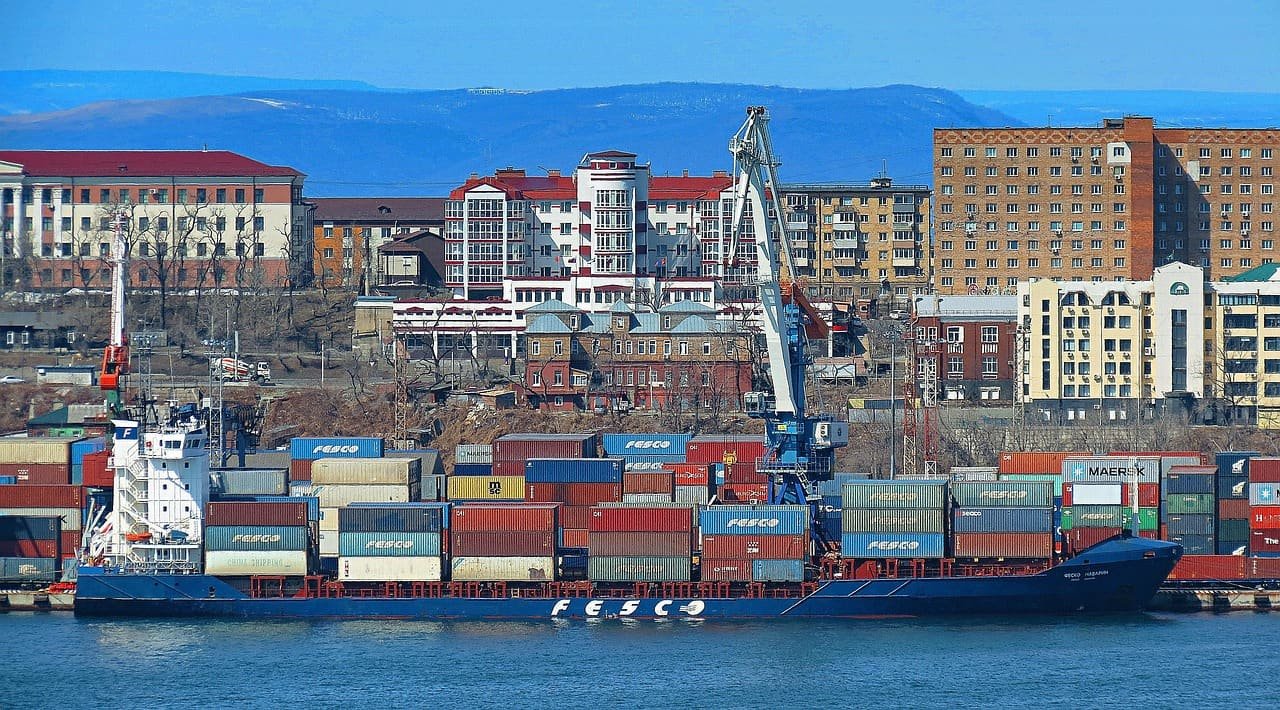
For the port itself, see Vladivostok Port: Russia's Far East Gateway for India Trade.
Rail: Land Border Crossings and Container Trains
Rail can serve the lane as a train that runs overland from the start, or as a train that picks up boxes after a sea leg. For the second, FESCO says it organizes accelerated container trains on its own assets, an average of 30 to 40 trains per week, from Vladivostok throughout Russia and to CIS countries.
For the land crossings, Russian Railways figures reported by SeaNews cover January to September 2025. Total cargo through the Russia-China rail border checkpoints was 30.4 million tonnes, down 1%. The report breaks out four crossings, in the direction of exports to China:
| Crossing | Exports to China, Jan-Sep 2025 (million tonnes) | Change on 2024 |
|---|---|---|
| Zabaikalsk-Manzhouli | 15.3 | +0.2% |
| Grodekovo-Suifenhe | 6.4 | +1.7% |
| Nizhneleninskoe-Tongjiang | 4.8 | +18.2% |
| Kamyshovaya-Hunchun | 1.9 | -32.9% |
These tonnages run from Russia to China, and coal alone made up 12.6 million tonnes, or 44% of the export total. The report gives no container or TEU figures and no import breakdown. It shows which crossings carry traffic, not how much China-to-Russia container space exists.
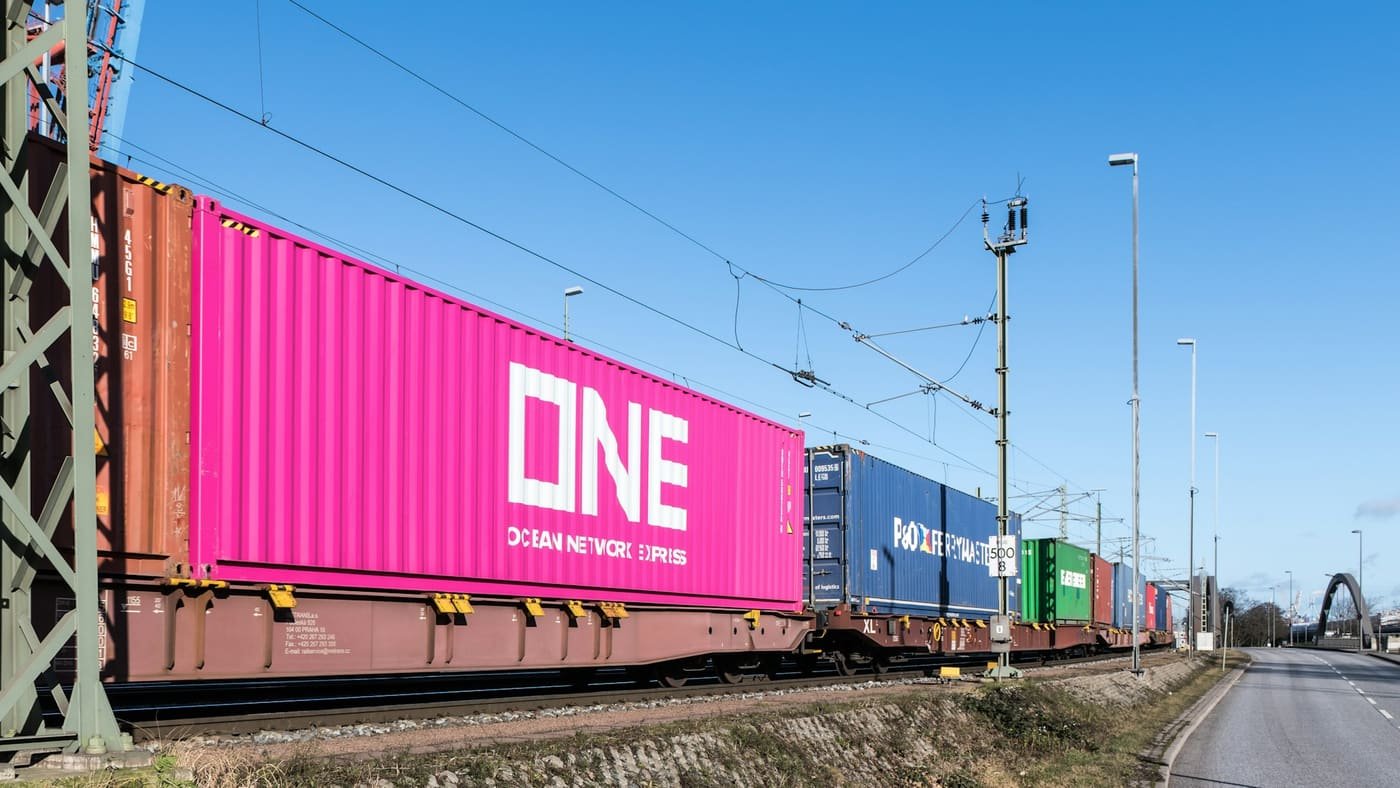
Our rail freight service has a China-Europe focus, with rail combined with sea, air or road legs under one contract. Our case study of moving industrial machinery from China to Moscow by rail is labelled as a representative scenario, not a named client. It shows how open-top equipment and a screening step before booking fit into one plan.
Customs in Russia: What the EAEU Customs Code Says
Russia applies the Customs Code of the Eurasian Economic Union. The unofficial English translation of the treaty, executed on 11 April 2017, sets the statutory frame. It is a translation of the original text and has been amended since, so use it to understand the structure and confirm current wording with a Russian customs broker.
- Electronic declaring: Article 104 says customs declaring is carried out in electronic form, with written declaring permitted in listed cases such as goods under the transit procedure.
- Release periods: Article 119 says release of goods is completed within 4 hours from registration of the declaration. It becomes no later than 1 business day if, within that time, customs requests supporting documents or organises other forms of control, or if the declarant asks to change or fails to correct declared data. An extended release must be completed within 10 business days.
- Supporting documents: Article 108 lists what confirms the declared data: transaction and commercial documents, transport documents, documents confirming compliance with prohibitions and restrictions, origin documents, documents supporting classification, and documents confirming the customs value. The declarant must hold them when submitting the declaration, with some exceptions.
These are legal limits, not a forecast of clearance time. A missing or inconsistent document is one way the longer paths can apply. For general causes of border delay, see common reasons for customs clearance delays.
Sanctions and Export Controls Come First
These rules decide whether a shipment can move at all. The position changes, so treat the following as examples of what to check, not as a current legal list.
- European Union: Covington's summary of the 21st package, adopted on 23 July 2026, says Regulation (EU) 2026/1848 amends Regulation 833/2014 and expands the export-restricted goods in Annex VII. It also says Annex IV was updated with entities in Russia and third countries, including China and Hong Kong.
- China: Morrison and Foerster's note on the Regulations on Export Control of Dual-Use Items says the regulations and the Dual-Use Items List took effect on 1 December 2024, that the list identifies 10 categories of controlled items, and that exporters may apply for licences directly without prior registration.
- Other jurisdictions: Depending on who is involved, other countries' rules can reach the parties, the vessel, the bank or the insurer.
Screen the goods, buyer, consignee and any intermediary before booking, and confirm the position with a customs broker or sanctions counsel. For how screening fits into a booking, read sanctions and compliance in logistics to Russia. Nothing here is advice on avoiding any control.
Choosing the Route: Questions That Decide It
| Question | Why it matters | What to ask the carrier or forwarder |
|---|---|---|
| Does the cargo fit a standard container? | Oversized units need open-top or flat-rack equipment | Which equipment, and who secures the load |
| Where is the consignee? | A port-city consignee and an inland one need different onward legs | Does the quote end at the quay, the rail terminal or the door |
| Which documents will customs ask for? | Article 108 ties release to the supporting documents | Who prepares each one and by when |
| Has everyone been screened? | A failed check stops the shipment, not just delays it | Which parties were screened and against which lists |
| Is the schedule current? | Launch-time figures age | The dated rotation and cut-off, in writing |
A Worked Comparison With Made-Up Numbers
All figures here are invented. Suppose a Siberian consignee receives two quotes for one 40 ft container.
| Line | Quote A: sea to Vladivostok, then rail | Quote B: rail from China |
|---|---|---|
| Ocean freight | USD 1,200 | not applicable |
| Origin terminal charges | USD 150 | included |
| Vladivostok port charges | USD 220 | not applicable |
| Rail leg | USD 2,100 | USD 3,600 (all-in rail) |
| Russian customs broker | USD 180 | not included |
| Destination terminal handling | included | not included, USD 250 |
| Total as quoted | USD 3,850 | USD 3,600 |
| Total once missing lines are added | USD 3,850 | USD 4,030 |
On the headline, B is USD 250 cheaper. After adding the broker's USD 180 and the USD 250 terminal charge that B left out, B costs USD 430 more than its headline, or USD 180 more than A. Ask each forwarder to price the same scope, from the same pickup point to the same delivery point, before comparing. For the wider method, see how to calculate the landed cost of imported goods.
Booking Checklist
- Confirm the goods, buyer and consignee against sanctions and export-control rules, and keep the record.
- Decide the scope: port to port, port to rail terminal or door to door.
- Ask for the carrier's dated schedule and the named discharge port.
- List the Article 108 documents and who prepares each.
- Choose the container type or rail equipment for the cargo's dimensions and weight.
- Agree who files the Russian declaration and who pays duties and taxes.
- Review cargo insurance for China-origin shipments and detention terms.
Work With RR Brothers and Logistics
RR Brothers and Logistics is an NVOCC with headquarters in Guangzhou. Our sea freight page lists Guangzhou/Nansha, Shenzhen/Yantian, Shanghai and Ningbo as Chinese gateways, and our customs clearance service covers HS-code classification, declaration and document checks. Russia is not among the destination ports on our sea freight page, so we do not quote a Russia schedule or price here. Tell us your cargo, quantity and consignee location and we will advise whether and how we can handle it, subject to sanctions and export-control screening.
Frequently Asked Questions
The sources describe two broad options: a sea leg from a Chinese port to Vladivostok followed by rail or road inland, and rail across a land border crossing. The route depends on the cargo and the consignee, and sanctions and export-control checks come before any booking.
The FCDL page of FESCO, read on 29 October 2026, lists Nansha, Yantian, Shantou, Xiamen, Ningbo, Shanghai, Xingang, Dalian, Rizhao and Lianyungang across its China routes. Rotations change, so confirm the current schedule with the carrier.
Article 119 of the EAEU Customs Code, in the unofficial translation we read, sets release within 4 hours of registering the declaration, 1 business day if customs requests documents or other control, and 10 business days if extended. These are statutory periods, not forecasts, and the Code has been amended since 2017.
No. EU measures such as Regulation (EU) 2026/1848 restrict some goods and entities, and China has dual-use export controls effective 1 December 2024. Confirm your goods and parties with a customs broker or sanctions counsel.
Article 108 lists transaction and commercial documents, transport documents, documents on prohibitions and restrictions, origin, classification and customs value documents, among others.
Our sea freight page lists Chinese gateways and destinations in India, Europe, the US and Canada. Send us your cargo details and we will advise whether and how we can handle it.
Sources
- The Moscow Times: China posts first annual decline in trade with Russia since 2020 (14 January 2026)
- FESCO: Delivery of cargo via Commercial Port of Vladivostok
- FESCO: China Direct Line (FCDL) page
- Interfax: FESCO China Direct Line volumes, Q1 2026 (28 April 2026)
- Interfax: FESCO launches direct Vladivostok-Shanghai line (9 December 2024)
- SeaNews: Russia-China cross-border rail traffic, 9 months of 2025 (31 October 2025)
- Treaty on the Customs Code of the Eurasian Economic Union (unofficial English translation)
- Covington: EU adopts 21st package of Russia sanctions and extends Belarus sanctions (July 2026)
- Morrison Foerster: China's new export control framework, key changes for dual-use items (16 December 2024)
This article is general information, not legal, tax or customs advice. Rules, rates and procedures change; confirm current requirements with the relevant authority or a licensed customs professional before you ship. The points above were taken from the pages listed under Sources, which include operator pages, news reports, law-firm summaries and an unofficial translation, read on 29 October 2026. They were not checked against official legal texts, so confirm current rules with the relevant authority.
Image credits: header photo by leoon liang on Unsplash; photo from zzkonst on Pixabay; photo by Wolfgang Weiser on Unsplash; photo by Lucas van Oort on Unsplash. Used under the Unsplash License and the Pixabay Content License.
Request a Quote

