One Country, Two Very Different Gateways
Most discussion of China Turkey shipping focuses on a single port, and understandably so — Istanbul's Ambarlı terminal dominates the country's container volume. But Turkey's real value as a trade route lies in the fact that it offers importers and re-exporters a genuine choice of coastline: Istanbul and the Sea of Marmara facing Europe and the Black Sea, and Mersin on the eastern Mediterranean facing the Middle East, North Africa and Cyprus. For a freight forwarder thinking about Turkey as a trade route rather than a single port call, that choice of gateway is often more consequential than the underlying sea freight rate. We've covered Ambarlı's specific terminal operations, Middle Corridor rail routing and Turkish customs mechanics in detail in our dedicated China to Turkey: Istanbul and Ambarlı port shipping guide; this guide takes a step back to compare the two coasts and help shippers decide which gateway actually fits their cargo.
Istanbul and Ambarlı: The Default Choice for Europe-Facing Cargo
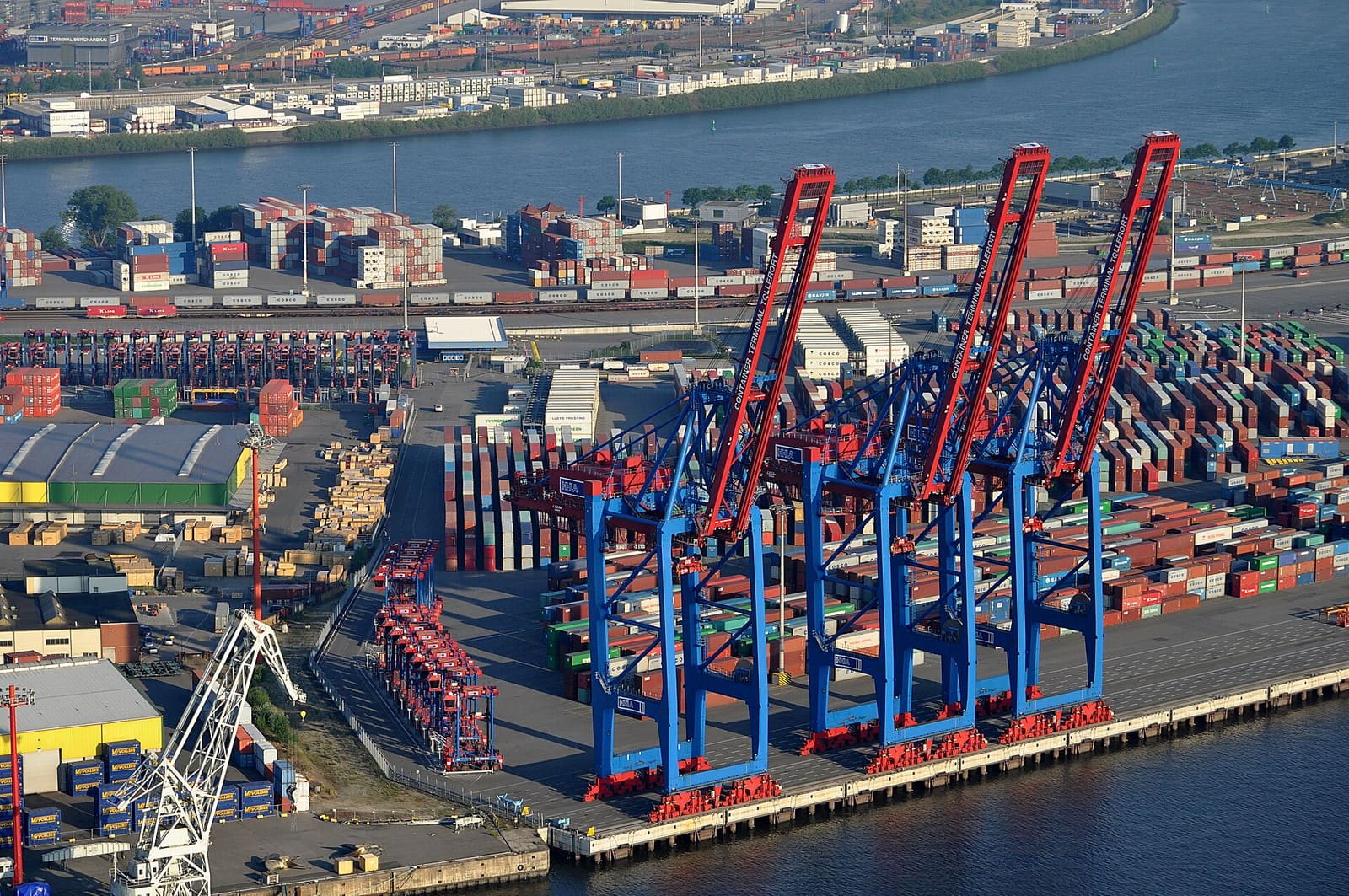
Ambarlı, on Istanbul's Marmara shore, remains Turkey's largest container port complex and the natural first choice for cargo destined for Istanbul's own vast consumer market, the industrial belt in Thrace, and onward distribution into Ankara and central Anatolia. Its scale, sailing frequency and connections into the Middle Corridor rail route toward the Caucasus and Central Asia make it the default routing for the majority of China-origin containers entering Turkey — a role we go into at length in our Ambarlı-specific guide. As a pure volume play, Istanbul wins; the question this article is really addressing is when it doesn't.
Mersin: The Mediterranean Alternative
Mersin sits on Turkey's south-central Mediterranean coast, considerably closer to the Suez Canal approach than Ambarlı, and closer still to the eastern Mediterranean, the Levant and North Africa. For cargo that will ultimately move onward to Syria, Iraq, Lebanon, or be re-exported into the wider Middle East, routing through Mersin rather than Ambarlı can shave meaningful inland transit time and avoid the added leg of trucking goods across Anatolia from the north. Mersin also serves southern Turkey's own substantial industrial base directly — Adana and the Çukurova region's textile, agriculture and light manufacturing sectors — without the congestion that can build up around Istanbul's port and road network. It is a smaller operation than Ambarlı in absolute container volume, but for the right cargo profile it is the more efficient gateway, not a fallback.
Realistic Transit Times by Gateway
Sea freight transit time to either Turkish coast has been shaped by the same Red Sea disruption affecting most Asia-Europe and Asia-Mediterranean trade since late 2023, with most carriers now routing around the Cape of Good Hope rather than through the Suez Canal. Mersin's geographic proximity to Suez means it is, in principle, better positioned to benefit whenever direct Suez transits do run, while Ambarlı-bound cargo faces the full length of whichever routing is currently in use.
| Routing | Mode | Approx. Time |
|---|---|---|
| China to Mersin via Cape of Good Hope | Sea (FCL/LCL) | 36–46 days |
| China to Mersin via Suez (when running) | Sea (FCL/LCL) | 23–29 days |
| China to Ambarlı/Istanbul, either routing | Sea (FCL/LCL) | 25–48 days |
Turkey's Role as a Bridge Between Europe and the Middle East
What makes Turkey genuinely distinctive as a trade route, rather than simply another destination market, is its customs union with the European Union combined with direct land access to the Middle East and Central Asia via the Middle Corridor. Cargo landed at Ambarlı can move onward into the EU under customs union terms for many product categories, while cargo landed at Mersin sits closer to onward distribution into Iraq, the Gulf, and North Africa by road. Some importers and trading companies use Turkey as a re-export or light-assembly base precisely because it straddles these two commercial zones — a strategy that only really works if the forwarder managing the shipment understands which Turkish gateway actually shortens the onward leg.
Choosing a Gateway Port, Not Just a Country
In practice, we advise clients to think about the final destination of the goods, not just "Turkey," before booking. If the end customer is in Istanbul, Thrace, or central/northern Anatolia, or if the cargo will move onward via the Middle Corridor rail route, Ambarlı is almost always the right call, and our dedicated Ambarlı guide covers the customs and rail specifics in depth. If the cargo is destined for southern Turkey, or will be re-exported toward the Levant, Iraq or North Africa, Mersin frequently produces a shorter and less congested overall journey. FCL remains standard at both ports for established importers, LCL consolidation is available into both though better developed at Ambarlı given Istanbul's scale, and Turkish Customs procedures — filed through the same BİLGE electronic system nationally — apply consistently regardless of which coast the cargo lands on.
Turkey Compared With Other Mediterranean-Adjacent Trade Lanes
Turkey rarely sits in isolation on a shipper's route map; it is frequently considered alongside Egypt as a Mediterranean and Suez-adjacent gateway, particularly for cargo weighing a Turkish versus an Egyptian re-export base for Middle East and North Africa distribution — a comparison our China to Egypt shipping guide covers from the Suez Canal and Alexandria side. Businesses also sometimes compare Turkey's dual-coast flexibility with the more binary routing choices on other long-haul lanes, such as the nearshoring-driven Pacific routing covered in our China to Mexico shipping guide. Reviewing trade flow trends published by UNCTAD alongside a forwarder's own routing data is a sensible way to sanity-check whether a particular gateway choice still makes sense as conditions change through the year.
Customs Documentation Applies Equally at Both Coasts
Whichever Turkish port receives the cargo, the underlying customs mechanics are the same: a commercial invoice, packing list, bill of lading and certificate of origin, filed electronically, with conformity requirements for many industrial and consumer goods aligned closely with EU standards given the customs union. Classification questions on unusual product categories are worth checking against the harmonised system framework maintained by the World Customs Organization, since Turkish tariff codes follow the same underlying international structure.
Two Tips for Choosing Between Istanbul and Mersin
- Map the onward destination before booking the port of discharge. A shipment destined for Iraq or the Levant that lands at Ambarlı instead of Mersin can lose days to unnecessary cross-country trucking.
- Ask which routing your carrier is currently running to each coast. Suez availability affects Mersin's relative advantage more directly than it affects Ambarlı, so the "faster" gateway can shift depending on current Red Sea conditions.
RR Brothers and Logistics treats Turkey as one of our core markets and books cargo into both Ambarlı and Mersin depending on where a shipment is actually headed once it clears Turkish customs. Whether the destination is Istanbul itself, the Anatolian interior, or onward into the Middle East, we aim to route each shipment through the gateway that genuinely shortens the journey rather than defaulting to whichever port is best known.
Frequently Asked Questions
Ambarlı, on Istanbul's Marmara coast, handles the largest share of China-origin container cargo by volume. Mersin, on the Mediterranean coast, handles considerably less overall volume but is the more efficient gateway for cargo headed toward southern Turkey and the Middle East.
Turkey's customs union with the EU gives Ambarlı-landed cargo relatively smooth onward access to European markets for many product categories, while Mersin's Mediterranean position gives cargo landed there a shorter overland route into Iraq, the Levant and North Africa.
Currently around 25–48 days depending on the destination port and whether the carrier is routing via the Cape of Good Hope or through the Suez Canal, with Mersin generally benefiting more from any Suez transits that are running.
It depends on the final destination rather than the port's overall size. Cargo for Istanbul, Thrace or central Anatolia is best routed through Ambarlı; cargo headed for southern Turkey or onward re-export to the Middle East and North Africa is often better served through Mersin.