Vietnam Russia cargo shipping combines a warm, humid packing site, a long sea voyage and an inland journey that can pass through winter. Each condition can damage cargo that was sound when it left the factory. This guide covers cargo safety only: container condition, packing and lashing, moisture and cold, wood packaging, insurance, seals and documents. The route, ports, customs rules and free trade agreement are in Vietnam to Russia shipping via Vladivostok, and the hub's role is in why Vladivostok matters for Russia-Asia trade. Sanctions questions belong with your broker and counsel; see Russia sanctions and compliance in logistics.
Why Does a Long Voyage Raise Cargo Risk?
The main reference here is the IMO/ILO/UNECE Code of Practice for Packing of Cargo Transport Units, the CTU Code. IMO describes it as a non-mandatory global code of practice that applies throughout the intermodal chain and guides both those who pack and secure cargo and those who receive and unpack it. The Code's own text says that during longer voyages climatic conditions, temperature and humidity, are likely to vary considerably and can cause condensation on cargo or internal surfaces. A Vietnam to Russia booking adds rail or road forces to the sea leg. IMO also notes that improper stowage and securing has resulted in numerous serious ship casualties and links incidents in transport to poor packing practices.
Is the Container Fit to Load?
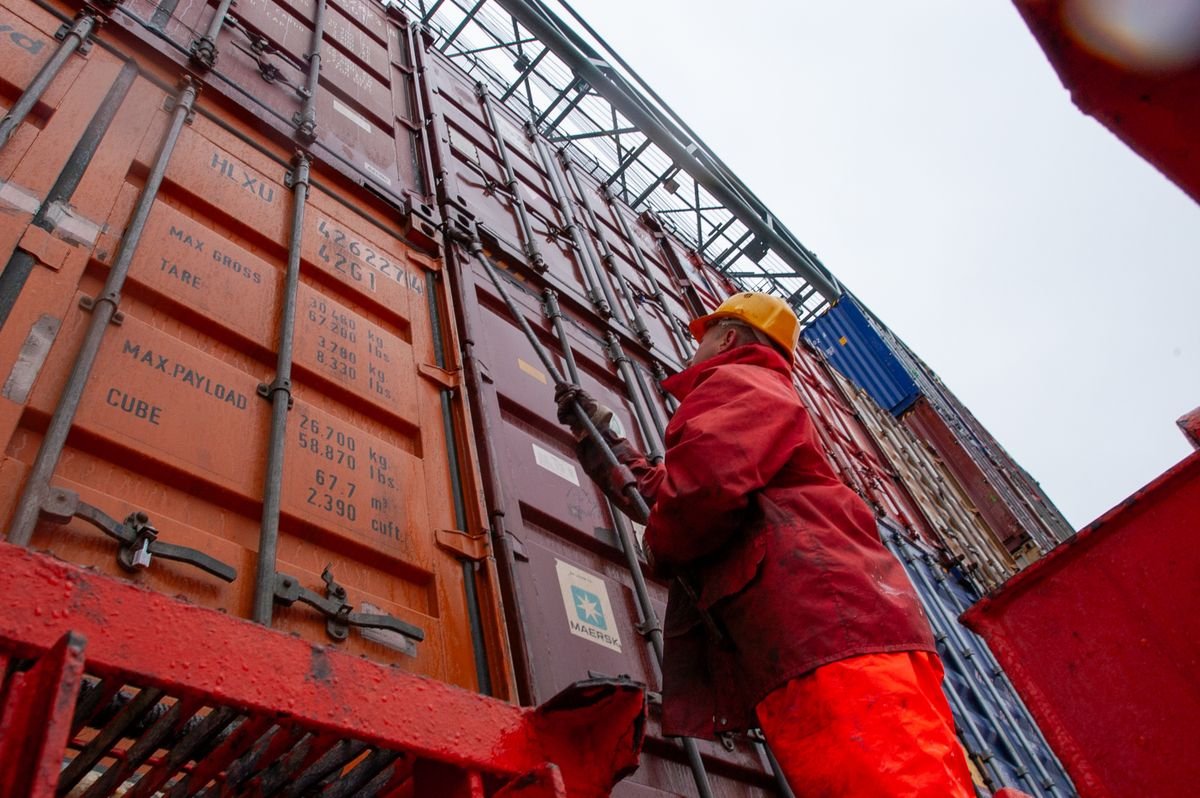
Start with the box. The CSC convention, in force since 6 September 1977, has the manufacturer affix a safety approval plate to approved containers and makes the owner responsible for periodic examination. The CTU Code says the plate is fixed at the rear of the container, and the packer should read two values on it: the maximum gross mass, which should not be exceeded, and the allowable stacking mass. A container without a plate should not be used in international traffic. The CSC requires a thorough examination 5 years after manufacture and at least every 30 months afterwards, with the next date on the plate or a decal, or an ACEP mark where the owner runs an approved continuous examination programme. The packer is responsible for checking the container before packing and confirming its condition suits the cargo.
Ask whether the container is shipper-owned or carrier-owned, the two options listed on FESCO's Vietnam line page, and check the plate and the floor, walls and doors before loading. See container types explained for choosing the type.
How Should Cargo Be Packed, Blocked and Lashed?
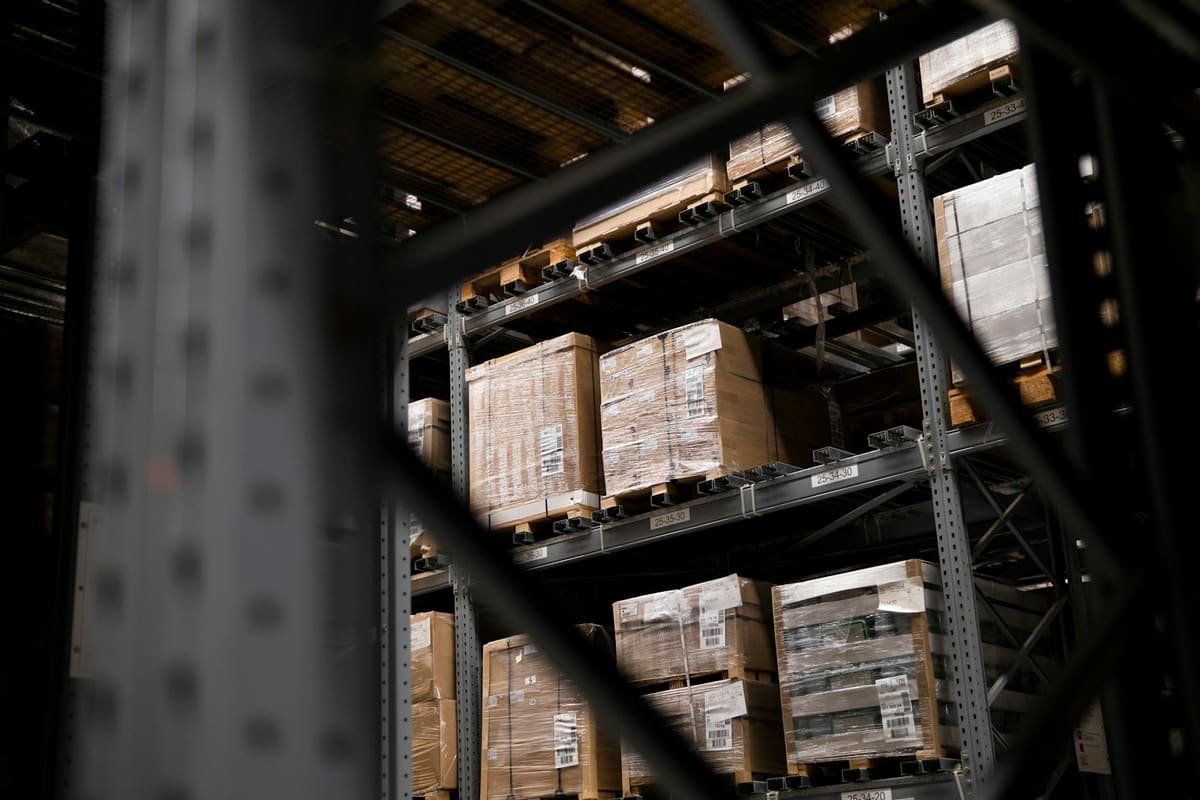
The CTU Code's key requirements are plain. Distribute heavy cargo over the floor, load with the centre of gravity correctly located, do not stow heavy goods on top of light goods, do not stow goods with tainting odours with sensitive merchandise, do not pack wet and damp goods if it can be avoided, fill void spaces when necessary, and use blocking or lashing, or both, to stop cargo sliding and tipping in any direction.
Its reasoning is physical. Force is mass multiplied by acceleration, and the Code gives separate acceleration coefficients for road, rail and sea, citing braking or a rapid lane change by a road vehicle and the motion of a ship in heavy sea, with a = 0.8 g as an illustration. Lashing designed for one leg may not suit another, so tell the packer about the whole journey. For delicate items, see how to transport fragile industrial equipment safely.
Smaller consignments need a check on cargo class. FESCO says its groupage containers are available for almost all goods except dangerous goods and goods needing a special temperature regime, and that dangerous and liquid cargo are accepted by agreement. See FCL vs LCL.
What Can Moisture and Cold Do to Cargo?
Annex 3 of the CTU Code defines condensation damage as damage from internal humidity, especially in freight containers on long voyages. It lists corrosion, mildew, rot, breakdown of cardboard packaging, leakage and staining, and names the sources: the cargo itself and, to some extent, timber bracing, pallets, porous packaging and moisture introduced by packing in rain or snow or in high humidity and high temperature.
| Situation | What the sources say | Step to consider |
|---|---|---|
| Dunnage and pallets | Dry dunnage at 12 to 15% moisture can leave a closed container at about 60 to 75% relative humidity; the Code points to active drying, or desiccants with sealed plastic wrapping | Dry packing materials and agree a humidity plan |
| Metal goods and machinery | Ferrous products should be coated or kept below 40% relative humidity, the corrosion threshold | Coat or protect the goods |
| Temperature swings at sea | Stowage on top of the deck stow can mean daily swings of more than 25 degrees Celsius and sweat dripping from the roof; hold positions show marginal variation | Ask about below-deck stowage for sensitive cargo |
| Warm packing site, cold arrival | Hygroscopic goods should be unpacked immediately after unloading; in the Code's example, coffee in bags left unopened for days in a cold climate is soaked by condensation from the roof | Collect and unpack promptly |
| Frost-sensitive cargo | Certain chemicals need protection from frost, in insulated, temperature-controlled units that can be refrigerated or heated | Check the cargo's lower temperature limit |
The Container Handbook adds that where there is a risk of expansion due to freezing, temperature-controlled transport must be used and containers should be stowed below deck in winter. FESCO lists a reefer range of minus 25 to plus 25 degrees Celsius on its Vietnam line. The sources give no Russian winter temperatures, so ask the carrier what its rail and port handling can protect against. See cold chain and reefer shipping.
What Does ISPM 15 Require for Wood Packaging?
ISPM 15 is the International Plant Protection Convention standard for wood packaging in international trade. Its approved measures are debarked wood plus an approved treatment, shown by a mark with the symbol, a country code, a producer or treatment provider code and a treatment code: HT (heat treatment), DH (dielectric heating), MB (methyl bromide) or SF (sulphuryl fluoride). Conventional heat treatment needs at least 56 degrees Celsius for 30 continuous minutes throughout the wood, including the core. The standard excludes wood 6 mm or less thick, packaging made wholly of processed wood such as plywood, particle board or oriented strand board, and wood components permanently attached to freight vehicles and containers. Use marked pallets and crates, and ask your broker whether Russia's plant protection authority applies the standard to your consignment. We did not verify Russian rules for this article.
What Does Cargo Insurance Cover and Exclude?
The Institute Cargo Clauses (A) of 1/1/09 cover all risks of loss or damage except as excluded. Four groups of clauses bear on safety, three exclusions and one cover-duration clause:
- Clause 4.3 excludes loss from insufficiency or unsuitability of packing or preparation to withstand the ordinary incidents of the transit, where packing is done by the assured, their employees or before cover attaches. For these clauses, packing includes stowage in a container.
- Clause 4.4 excludes inherent vice, and 4.2 excludes ordinary leakage, loss in weight and wear and tear.
- Clause 4.5 excludes loss caused by delay.
- Clause 8.1 has cover end on the first of several events, including 60 days after discharge overside at the final port of discharge.
Clause 16 adds a duty to take reasonable measures to avert or minimise loss and to preserve rights against carriers. Poor packing can defeat a claim where clause 4.3 applies, and under clause 8.1.4 cover can end 60 days after discharge at the final port of discharge, even if the cargo has not reached its destination. Ask the insurer in writing whether the policy covers this lane and the inland leg; see cargo insurance for China-origin shipments and freight forwarding insurance explained.
How Can You Reduce Theft and Tampering?
The Canada Border Services Agency's seals guidance is a useful model, though it is a Canadian programme and not a Russian rule. It says high-security seals must meet or exceed PAS/ISO 17712, may carry an "H" stamped on the seal and can be removed only by cable cutters. Only trained people should attach them, the seal number should be recorded on the cargo documentation, and a missing seal, signs of tampering or a number that differs from the documents must be noted. Photograph the loaded container, record the seal number on the packing list and bill of lading, and compare it at each handover. For fraud and theft trends, see cargo theft prevention technology.
Why Does Document Accuracy Affect Safety?
Under the SOLAS rule, IMO says the shipper is responsible for providing the verified weight in the shipping document, and the verified gross mass is a condition for loading a packed container onto a ship. It is found by weighing the packed container, or by weighing all packages and cargo items including pallets, dunnage and securing material and adding the container's tare, using a method approved by the competent authority of the State where packing was completed. The U.S. International Trade Administration says a packing list itemizes the contents of each package and includes weights, measurements and detailed lists of the goods. Keep weights, quantities and descriptions consistent across the packing list, invoice and bill of lading; see packing list vs commercial invoice.
A Cargo Safety Checklist
- Check the CSC plate, the next examination date or ACEP mark and the container's condition.
- Dry the pallets and dunnage and plan for humidity.
- Block and lash for road, rail and sea forces.
- Use ISPM 15 marked wood and confirm Russian requirements with your broker.
- Confirm the cargo's lower temperature limit and the carrier's options.
- Record the seal number and photograph the load.
- Check the verified gross mass and document consistency.
- Get the insurance wording and its lane confirmation in writing.
Work With RR Brothers and Logistics
RR Brothers and Logistics arranges sea freight from Guangzhou, with offices in Coimbatore and Mumbai. Vietnam to Russia is not a lane we publish, so tell us your cargo, packing and destination and we will advise whether and how we can handle it through our network. You can also contact our team with questions.
Frequently Asked Questions
Moisture. Annex 3 of the CTU Code describes condensation damage as damage from internal humidity, especially in freight containers on long voyages, including corrosion, mildew and breakdown of cardboard packaging.
Read the CSC safety approval plate for the maximum gross mass, stacking mass and next examination date or ACEP mark, and check the floor, walls and doors. The CTU Code says a container without a plate should not be used in international traffic.
ISPM 15 sets the treatments and the mark for wood packaging in international trade. Ask your broker whether Russia applies it to your consignment, because we did not verify Russian rules.
Clause 4.3 of the Institute Cargo Clauses (A) excludes loss from insufficient or unsuitable packing where the assured or their employees pack, and packing includes stowage in a container. Check your actual policy wording.
Find the cargo's lower temperature limit. The CTU Code says certain chemicals need protection from frost and should travel in insulated, temperature-controlled units. Ask the carrier what protection it offers.
We do not publish this lane. Tell us your cargo, packing and destination and we will advise whether and how we can handle it through our network.
Sources
- IMO: International Convention for Safe Containers (CSC)
- IMO: CTU Code
- IMO/ILO/UNECE: Code of Practice for Packing of Cargo Transport Units (full text)
- IMO: Cargo stowage and securing
- IMO: Verification of the gross mass of containers
- IPPC: ISPM 15, Regulation of wood packaging material in international trade
- Institute Cargo Clauses (A) 1/1/09 (copy hosted by an insurer)
- Container Handbook: Loss prevention measures for avoiding temperature damage
- Canada Border Services Agency: Seals
- U.S. International Trade Administration: Packing list
- FESCO: Marine transportation from Vietnam to Russia (FVDL)
- FESCO: Transportation between Vietnam and Russia
This article is general information, not legal, tax or customs advice. Rules, rates and procedures change; confirm current requirements with the relevant authority or a licensed customs professional before you ship. Regulatory references were checked against the official sources listed above on 31 October 2026.
Image credits: header photo by Lee Milo on Unsplash; photo by Arum Visuals on Unsplash. Used under the Unsplash License.
Request a Quote